


By Admin. Updated 9:41 p.m., Thursday, March 7, 2024, Atlantic Standard Time (GMT-4).
The Ministry of Education, Culture, Science, and Technology (MoECST) in Belize has affirmed its support for a programme to teach the Garifina language in schools.
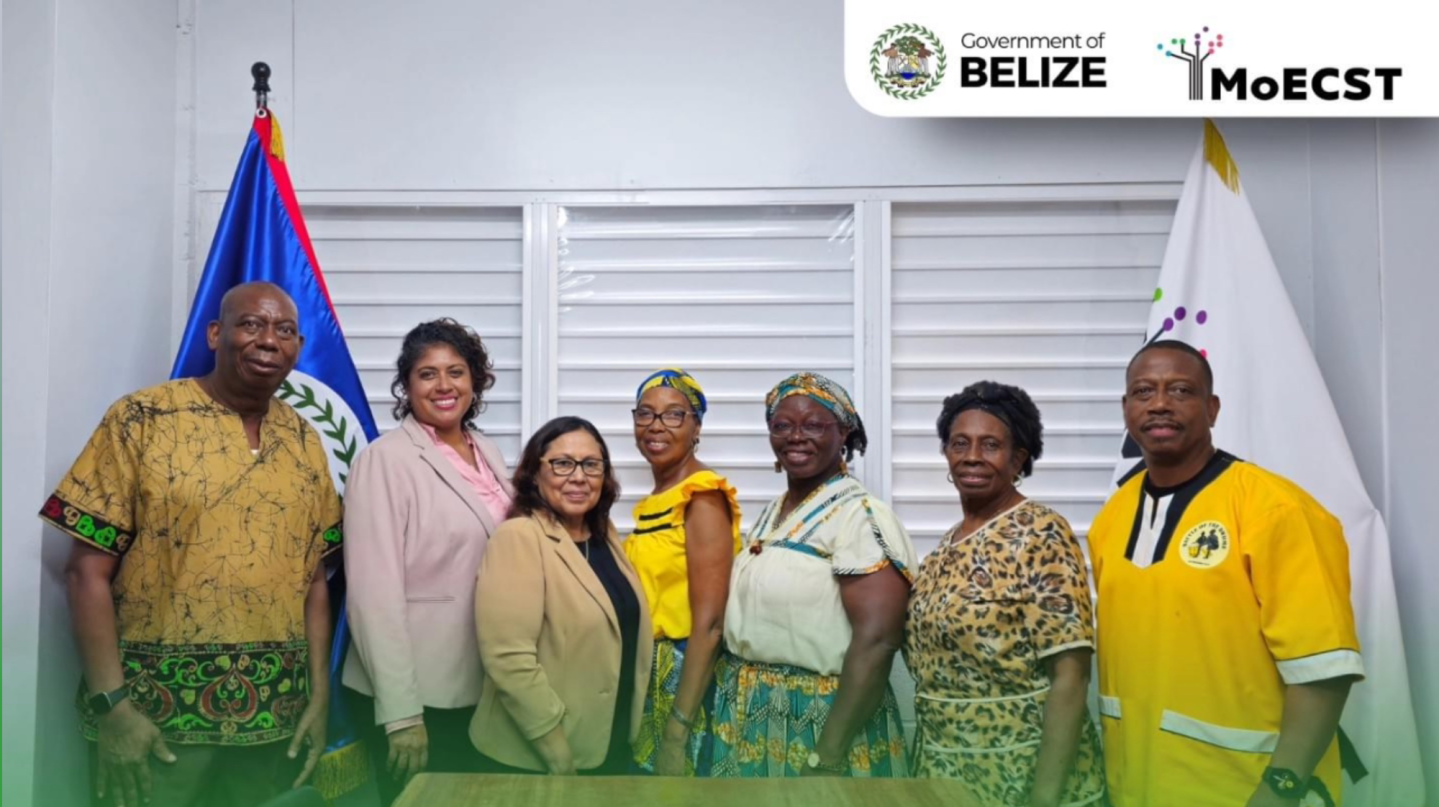
In a February 27 post on its official page, MoESCT said: “Mrs Dian Maheia, Chief Executive Officer in the MoECST and Ms Yolanda Gongora, Chief Education Officer, today held cordial discussions with the National Garifuna Council on the Garifuna Language in Schools Programme”.

“CEO Maheia affirmed the Ministry’s support in this vital endeavour. The Garifuna Language in Schools Programme is crucial in the preservation of the Garifuna language. It helps to maintain cultural heritage, foster intergenerational communication, and safeguard the linguistic diversity of the Garinagu,” the post said.
“In 2008, the United Nations Educational, Scientific and Cultural Organization incorporated the language, dance and music of the Garifuna into its list of Intangible Cultural Heritage of Humanity,” the post added.

The Ministry’s statement comes as St. Vincent and the Grenadines is also looking into introducing the teaching of the language in schools across the country.
In 2022, during remarks at the annual Wreath Laying Ceremony at the Obelisk in Dorsetshire Hill, St. Vincent and the Grenadines Minister of Culture – Mr. Carlos James said:

“It is my hope that we can see the introduction of the Garifuna language in our schools and I’m hoping we can begin work on this initiative in the not too distant future”.
In Belize, the Garifuna Language in Schools Programme seeks to teach the Garifuna language in communities that are located mainly in the south of Belize.
The Garifuna language and brief history
The Garifuna language is spoken mainly by people who identify as Garifuna.
Garifuna is a hybrid race that came about when African slaves from Barbados escaped to St. Vincent and inter-bred with Yellow Caribs (Kalinagos) in St. Vincent.
Those people led a long resistance against British colonization of St. Vincent ensuring the country had the shortest period of slavery in the Anglophone Caribbean.
The fire of the resistance was doused when Paramount Chief Joseph Chatoyer was ambushed and killed by the British on March 14, 1795.
After his killing, many of the Garifuna were exiled to Balliceaux, then to Rotaan, and then to British Honduras (Belize) and other Central American territories.
Those in Belize were able to preserve their language and other important aspects of their culture.
Some Garifuna in Belize view St. Vincent as their ancestral homeland.
Today, in St. Vincent and the Grenadines (SVG) the Garifuna Heritage Foundation and other organizations have partnered with organizations in Belize to teach the Garifuna language to people in Garifuna communities across St. Vincent.

 One News SVG