

By Admin. Updated 3:04 p.m., Wednesday, April 10, 2024, Atlantic Standard Time (GMT-4).
Phase One of a project to modernize St. Vincent and the Grenadines’ Arrowroot Industry and provide jobs for indigenous people is now complete.
The USD 1.34 million dollar project is being funded by the Government of India under the India-UNDP partnership Fund.
“The project’s aim has been enhancing the livelihoods of the indigenous communities involved in the farming and processing of arrowroot with a special focus on creating job opportunities for women,” a press release from the Indian High Commission said.
Most of the indigenous communities in St. Vincent and the Grenadines (SVG) are located North of the Rabacca Dry River, the same region in which the new Arrowroot factory is being built. Arrowroot has been a major staple in that region.

Arrowroot (Maranta arundinacea L.) is a tropical herb used for its tubers, which contain a highly valuable starch, according to Feedipedia. It can be used to make cereals and other products.
According to the press release, the project began in 2019 but met with challenges due to the Soufriere volcano eruption on the Island on 9 April 2021.
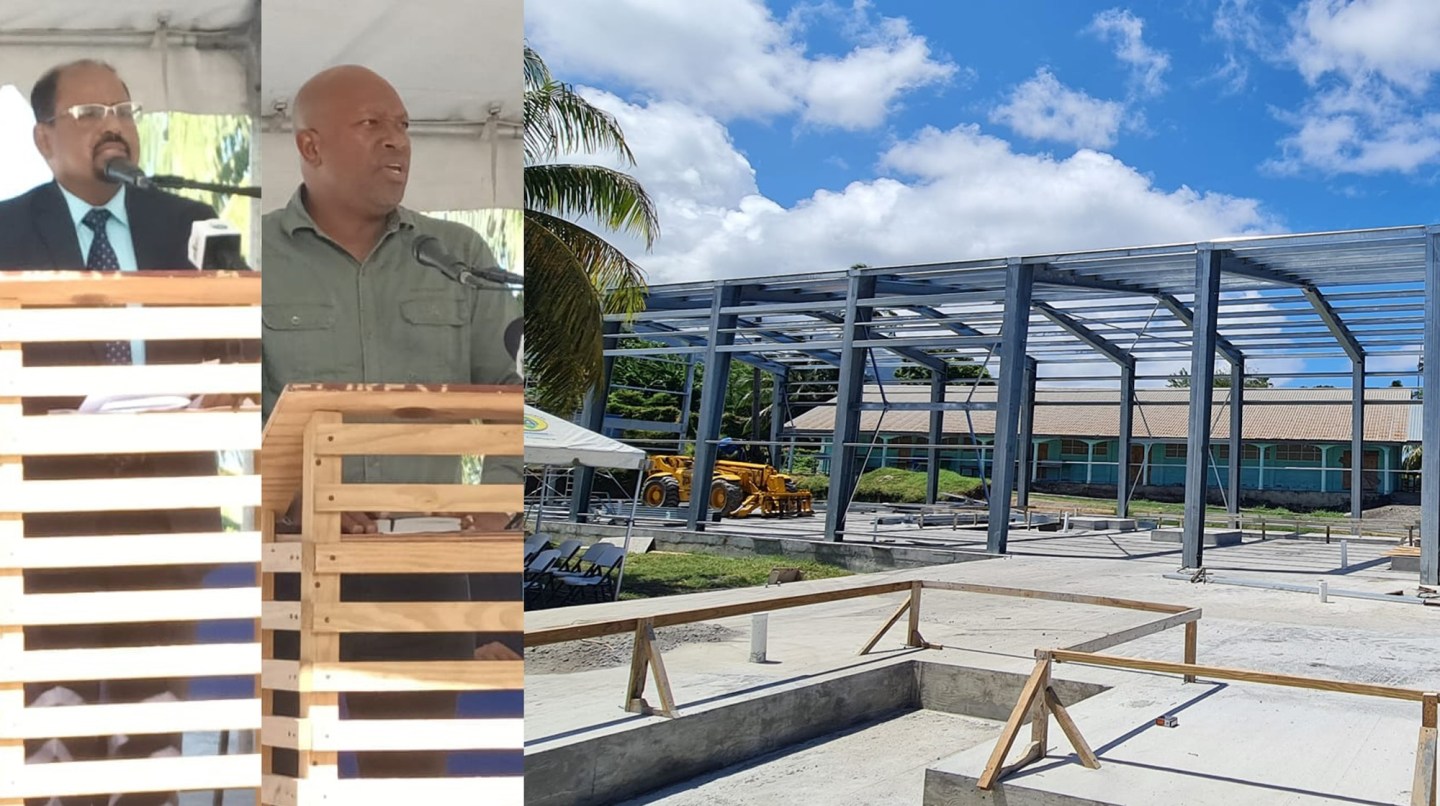
A Plaque Unveiling ceremony was held on 9 April 2024 at the factory site at Orange Hill.
Dr. The Honourable Ralph E. Gonsalves, Prime Minister of St. Vincent & the Grenadines, and Dr. Shankar Balachandran, Ambassador of India to Suriname and concurrently accredited as the non-resident High Commissioner of India to SVG, unveiled the plaque in English and Hindi, commemorating the completion of the first phase of the Arrowroot modernization project at Orange Hills, SVG, according to the press release.

Also present at the event were Deputy Prime Minister and Parliamentary Representative for North Windward – Hon. Montgomery Daniel, Minister of Agriculture – Saboto Caesar, UNIDO Representative Mr. Raymond Victory, Arrowroot Industry Manager Mr. Selmon Walters addressing the gathering and Permanent Secretary of Agriculture Ms. Nerissa serving as the Chairperson.
“The speakers thanked India for her contribution to the project very important for local consumption, exports and sustainable development. The Honourable Prime Minister recalled the day three years ago when the volcanic eruption left a trail of destruction and said this day was a day of hope and renewal and a sign that the SVG had put behind the past and was looking forward to a bright future,” the press release said.
“It was a realization of the joint vision of his brother Prime Minister Modi and his that a place destroyed by the volcano had seen a factory structure coming up. The High Commissioner congratulated the government of SVG and UNIDO for the completion of the project,” the press release said.

“He highlighted that the project reflected India’s commitment to South-South cooperation and added that India’s support for developing nations was guided by the philosophy of “VasudhaivaKutumbakam” (the world is one family) and is based on inclusive growth. He expressed confidence that the new facilities and skills acquired would propel the arrowroot industry and contribute to the nation’s economic growth and the well-being of its people,” the press release said.
Among the guests were senior civil servants, stakeholders, farmers and members of the Indian community.
A brief history of project changes
According to the press release, the project began in 2019 but met with challenges due to the Soufriere volcano eruption on the Island on 9 April 2021. The original cost of the project was USD 1,034, 226 million but a further USD 300,000 enhanced allocation was approved in view of cost and time escalation due to the Covid pandemic and the supply chain disruptions. The Ministry of Finance, Economic Planning, Sustainable Development & Information Technology and the United Nations Industrial Development Organization (UNIDO) along with the Ministry of Agriculture of SVG were the local partners. The planned work involved setting up a foundation for a new factory with a factory shell, plumbing and electrical installations. The main goal of the project was to increase the contribution of the Arrowroot industry to the sustainable economic development of the country by strengthening resilience to climate change and improving livelihoods in vulnerable communities. The project’s aim has been enhancing the livelihoods of the indigenous communities involved in the farming and processing of arrowroot with a special focus on creating job opportunities for women.

 One News SVG
1 comment