

By Admin. Updated 5:33 p.m., Wednesday, August 14, 2024, Atlantic Standard Time (GMT-4).
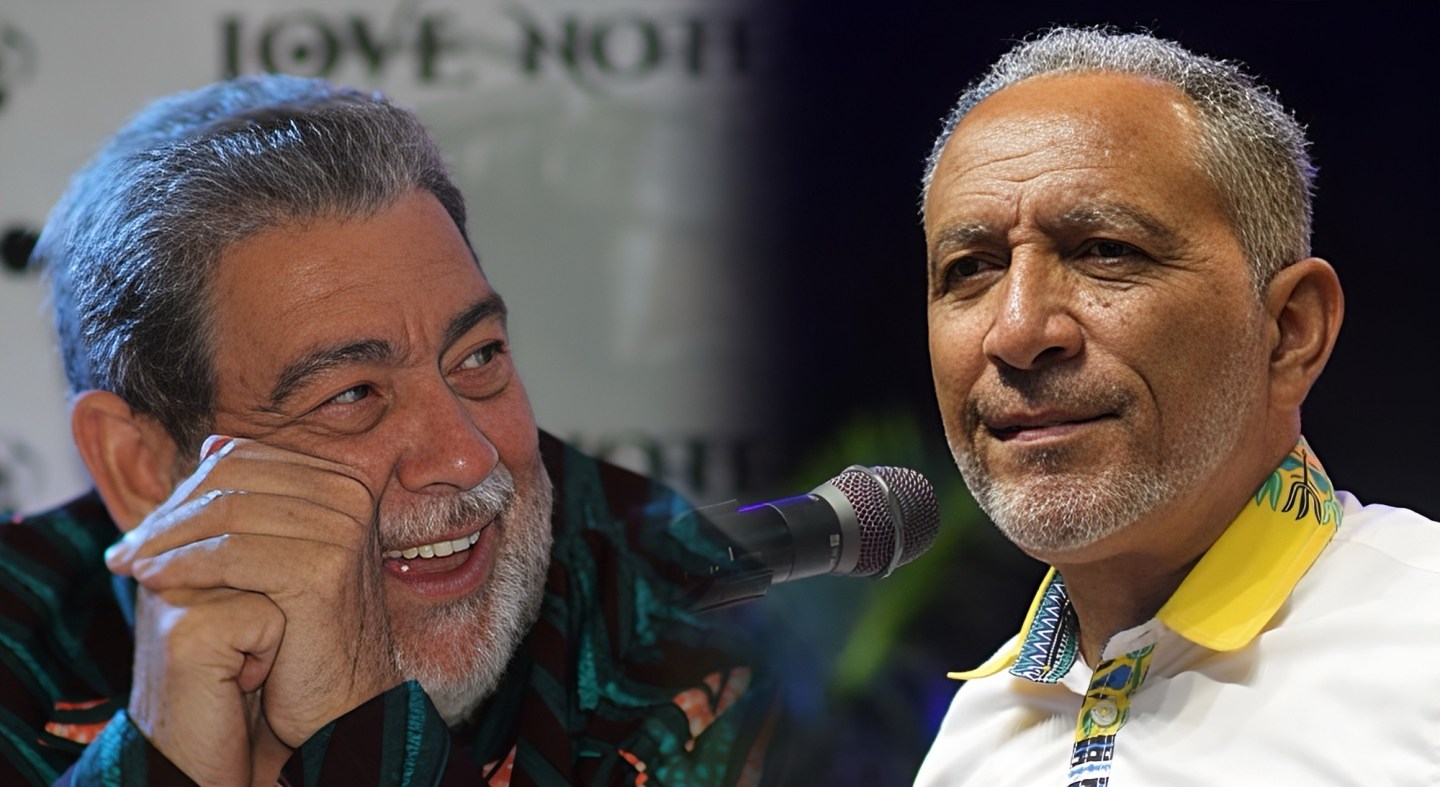
A recently conducted political poll shows that Prime Minster Dr. Ralph Gonsalves and Opposition Leader Dr. Godwin Friday share a near similar approval rating among the population.
The survey conducted by the Caribbean Institute for Governance and Policy was released to the media today (August 14).
“This survey was conducted utilizing a digital instrument with in-person surveying. The survey was conducted over the period June 1st to June 16th, 2024 in 15 constituencies, and in total, there were 1,123 respondence [sic] with a 99 percent response rate to the questions,” the organisation said.
The research was led by Devaron Bruce, a respected academic with a Bachelor of Science in Political Science & International Relations and a Master of Philosophy in Political Science. Mr Bruce, a public intellectual, is a Project Officer at the University of the West Indies, Cave Hill Campus.
The results of the independent political poll conducted in Saint Vincent and the Grenadines. Commissioned by the Caribbean Institute for Governance and Policy Research, this marks the first in a bi-annual series of political polls to be conducted in the country, the Caribbean Institute for Governance and Policy stated.

According to the poll results, Dr. Gonsalves who leads the ruling Unity Labour Party is slightly ahead of Dr. Friday who leads the main opposition New Democratic Party – NDP when it comes to Vincentians’ approval of the performance of the two political leaders.
“As it relates to Vincentians approval of Prime Minister Ralph Gonsalves, 35.2 percent of
respondence have approved his performance as prime minister. This is particularly notable as prime minister Gonsalves is outperforming the ULP as only 20 percent of respondence gave a positive
assessment of the ULP, whereas, 40 percent of respondence disapproved of prime minister
Gonsalves’ performance,” the poll results stated.
“This 40 percent is generally in line with the level of disapproval of the ULP. A notably high percent of respondence, 25 percent, indicated that they were unsure or won’t share their perceptions of prime minister Gonsalves’ Leadership. This percentage is in line with the percentage of person who rate the ULP as fair. Traditionally, wont’ say or unsure voters tend to vote with the government as persons who are supportive of change are generally more forthcoming in their responses. Therefore, these won’t say or unsure respondence likely fit into the “fair” rating category for the ULP,” the poll results said.

Regarding Vincentians’ perspectives on the leadership of Dr Godwin Friday, 32 percent of
respondence approve of Dr Friday’s performance which is relatively in line with Dr Gonsalves’
approval of 35.2 percent.
“Additionally, his disapproval numbers are relatively in line with Dr. Gonsalves’ at 42.4 percent and 39.2 percent respectively. It is also of note that 24.8 percent of respondence were unsure of the performance of Dr Friday, and these are likely swing or apathetic voters,” the poll results document stated.
The poll also touched on a number of other issues including employment, cost of living, and projections for the next general elections (constitutionally due by November 2025 with an additional three-month grace period).
On the issue of employment status, the poll results stated “a relatively low number of respondence, 30.6 percent, indicated that they were fully employed, while 15.8 percent indicated that they were employed part-time, and 23 percent indicated that they were self-employed. Alternatively, a relative high number of respondence, 30 percent indicated that they were unemployed”.

As it relates Vincentians’ attitudes to cost of living and other national issues, the poll results stated, “the most important national issues of concern, 36.1 percent indicated that the cost of living was their most pressing issues. A distant second was
unemployment/ underemployment which stood at 18.1 percent, with crime representing 128
percent. Responses to this question was particularly interesting as 30 percent of Vincentians
indicated they were unemployed but just over half of this number indicate that employment was
their key concern”.
The poll also touched on Vincentians’ perception about the performance of the ruling Unity Labour Party.
“Regarding Vincentians perception on the performance of the governing ULP government, almost 50 percent of respondence gave the ULP a poor rating with 23.3 and 26.4 percent giving the ULP no more than a 2 out of 5 rating. It is particularly noteworthy that only 20 percent of respondence thought the ULP was doing a good job, whereas 28.4 percent thought the ULP was doing a fair job,” the poll results stated.
“Given the parliamentary composition and electoral results over the last few elections, it is the 28 percent of respondence that believe that ULP is doing a fair job that determines the electoral results,” the results stated.
The poll also touched on Vincentians’ appetite for a younger leader and who they think would do a good job.
“Regarding Vincentians’ appetite for electing a younger leader, a major, 53.5 percent are supportive, whereas, less than a quarter, 24 percent, of respondence rejected the idea of electing a younger leader. 22 percent of respondence indicated that they were unsure as to whether a younger leadership should be elected. This response provides some indication that there is broad based support for change considering the age group of both political leaders,” the poll results stated.
“Regarding possible alternatives to become prime minister, Opposition leader Dr Godwin Friday
was the most preferred option at 21 percent. Following Dr Friday is Dr Kishore Shallow at 19
percent, followed by Saboto Caesar at 17 percent. Although by small margins, it is notable that a
ULP candidate is the third choice for an alternative prime minister. It is also notable that the
opposition leader Dr Friday and Dr Shallow share close results despite Dr Friday’s position as the Leader of the Opposition. This may in part be connected to majority of Vincentian’s appetite for a
younger leader and the overall leadership qualities that Dr Shallow has despite him not yet being
elected which is a remarkable accomplishment,” the poll results further stated.
The poll results said: “Regarding Vincentians views on who stands a better of defeating prime minister Gonsalves, opposition leader Godwin Friday leads with a percentage of 26.4 percent. Following Dr Friday is Dr Kishore Shallow with 18.6 percent and St Clair Leacock with 15 percent. Given Dr Friday’s
position as the Leader of the Opposition, his standing comes as no surprised. On the other hand,
Dr Kishore Shallow has an impressive showing of support despite not being yet being elected.
Given the age difference between Dr Friday and Shallow, there is an early indication of confidence
in Dr Shallow as a future leader in St Vincent and the Grenadines. Consideration however must be
given to where Dr Friday’s support will go in his absence”.
The poll canvassed Vincentians’ perception on who they think will win the next general elections.
“Regarding Vincentians perception on which party would win the next election, 33.7 percent felt
that the ULP would retain office, while 30.1 percent felt that the NDP would capture government.
This result can provide some inference as to where the base of the two parties rests. There is a
sizeable percentage of respondence, 36.1 percent that answered unsure. Similarly to Question 6 on
the approval of the ULP government, this percentage highlights that the election will be determined by the swing voter particularly given the closeness of support between the two parties,” the poll results said.
“Regarding the percentage of Vincentians who indicate that they will be voting in the next election,
57 percent said that they will be voting, while 20 percent said they will not be voting and 22.9
indicate that they were unsure whether they were voting. This 57 percent of respondence who
indicated that they were voting is in line with the combined total of respondence, 63 percent, who
indicated which party they felt would win the upcoming election. This 57 percent of respondence
who indicated that they will be voting therefore likely represents the total active base of the ULP
and the NDP. Given the historical electoral trends in St Vincent and the Grenadines, it is likely that
about 50 percent of respondence who indicated that they were unsure whether they will vote will
likely turn out to the polls during the next election. It will be these respondence who will likely
determine the outcome of the next election,” the poll results added.
 One News SVG