
By Ananda-le Henry. Updated 9:55 a.m., Sunday, September 8, 2024, Atlantic Standard Time (GMT-4).
Ananda-le placed second in the inaugural One News SVG Youth Journalism Summer Challenge. This is her story which she completed after independent research.
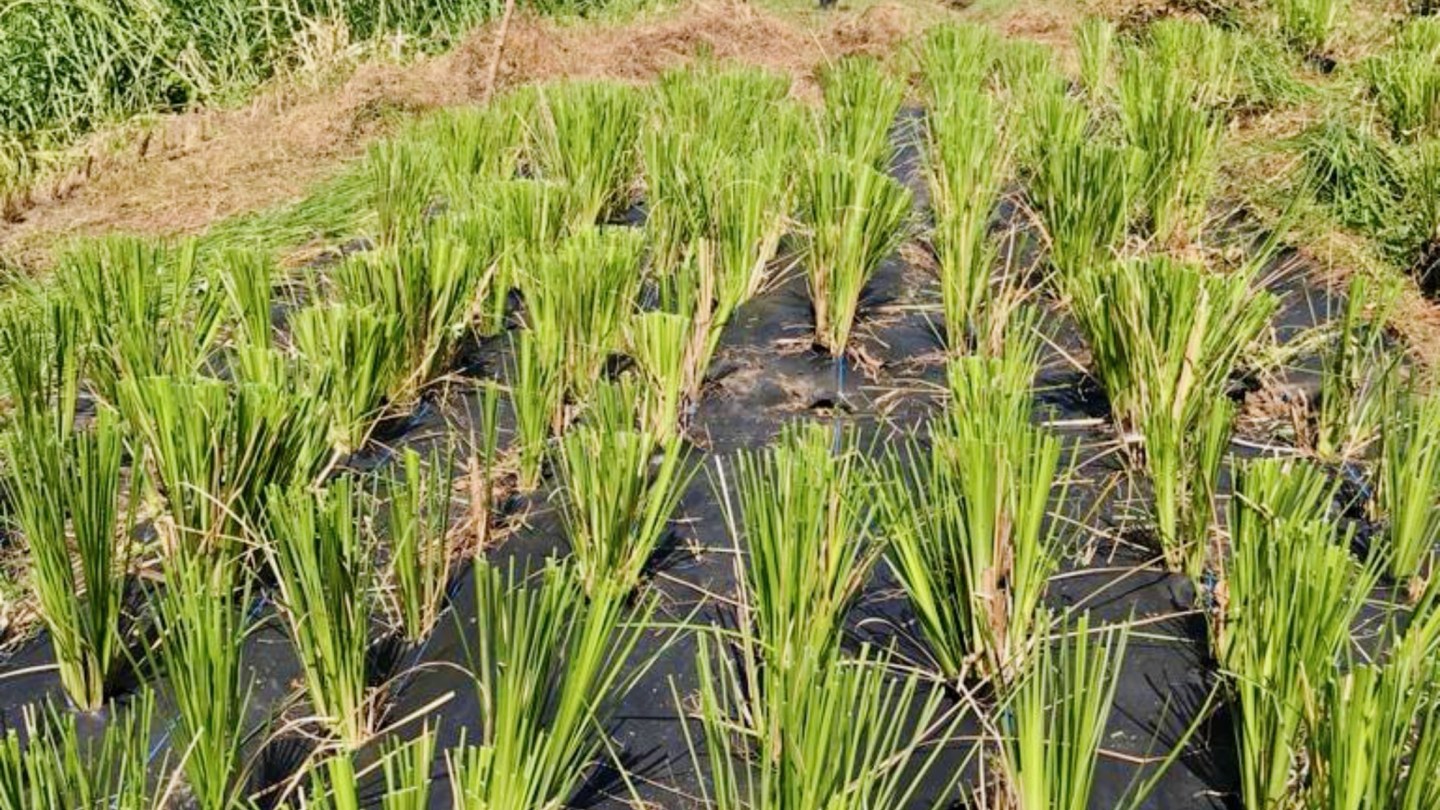
A plant once seen as a disturbance and a nuisance to the environment is now seen as a saving grace in sustaining the environment, and rehabilitating and holding land together by supporting ecosystems. So too, is the vetiver grass in the life of prisoners in St. Vincent and the Grenadines.
Inmates get a second chance by using Vetiver grass to create products that people in luxury resorts now seek after, something that demonstrates a powerful transformation.
Wang (2000) says vetiver grass with the scientific name Chrysopogon zizanioides and also known as “Khus–khus” in India, “Miracle grass” in Thailand, and “Xiang-Gen-Cao” or “Yan-Lan-Cao” in China and Taiwan, has a number of medicinal and physical uses.
Here in St. Vincent and the Grenadines, Ms. Vonnie Roudette, Project Manager/Designer of local NGO Hand2Earth and Coordinator of the Vetiver Grass Craft Project in SVG Prisons, says the inmate reform initiative that uses vetiver grass to make creative decorative pieces and artworks began nearly a decade ago.
Inmates get a second chance, using Vetiver grass to create products that attract buyers from people in luxury resorts who now seek after their pieces of work, something that demonstrates a powerful transformation.
The project began at the His Majesty’s Prison, in Kingstown, the capital, (HMPK) in June 2015 after Ms. Roudette was asked by the Department of Forestry and the UN Food and Agriculture Organization (FAO) to conduct the programme as a sustainable alternative livelihoods project.
During the period 2016-2018 period, the Initiative was supported by the Mustique Charitable Trust, which enabled its expansion from the Kingstown Prison HMPK to the Belle Isle Correctional Facility. The programme then set about training trainers enabling inmates who have long sentences to train other inmates with lesser sentences. After more than 9 years, the program is still operating.
But how effective has the programme been in rehabilitating helping to rehabilitate prisoners?
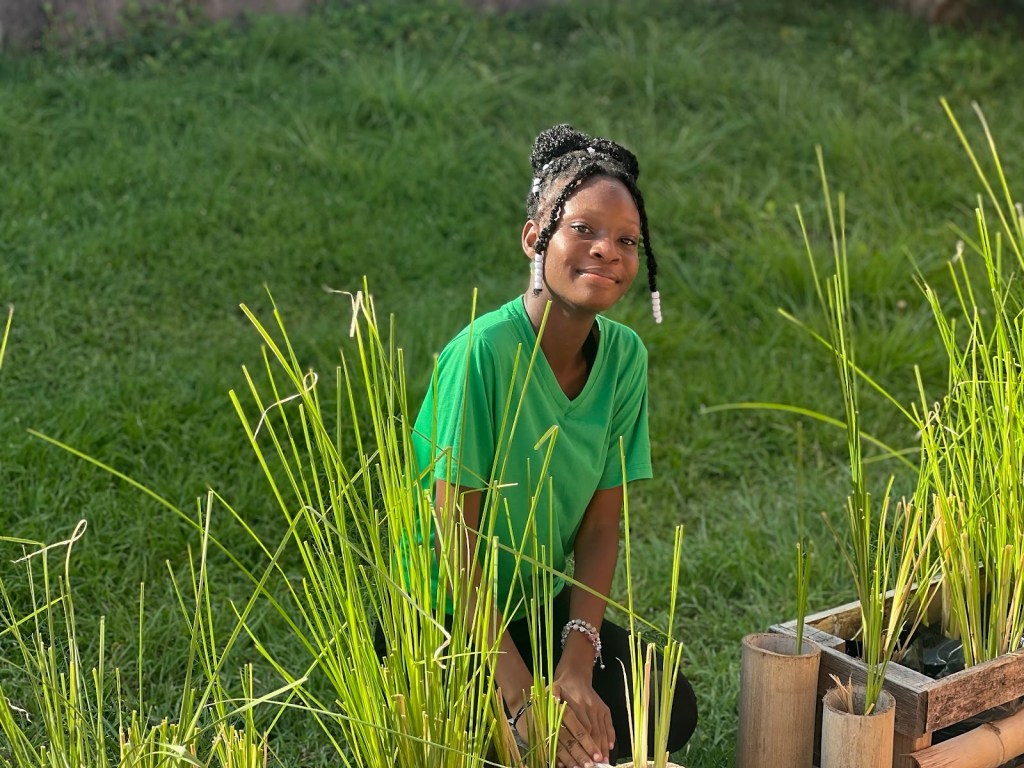
In excess of 150 inmates have been passed through the programme so far, in making hand crafted items from vetiver grass such as mats and baskets.
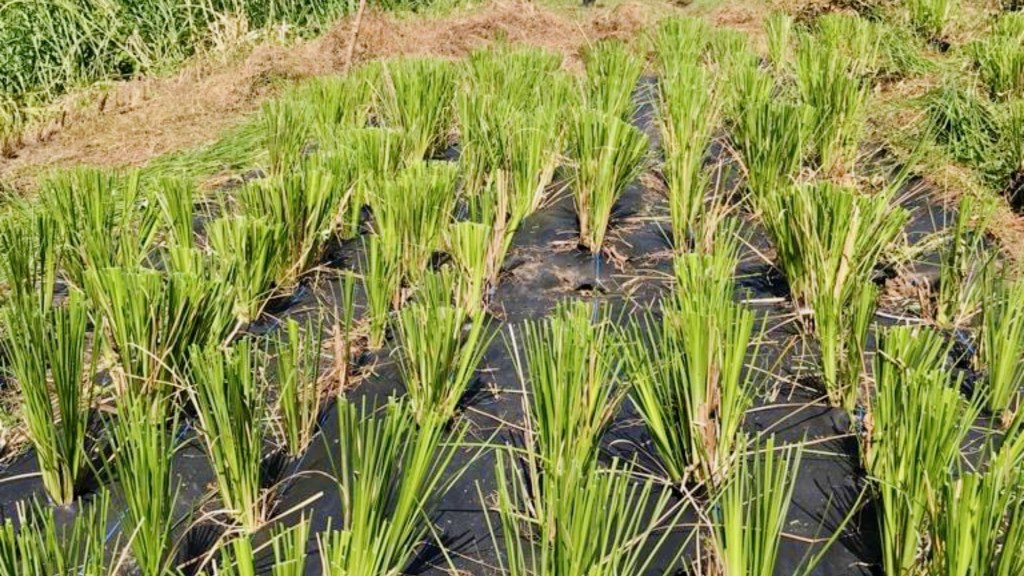
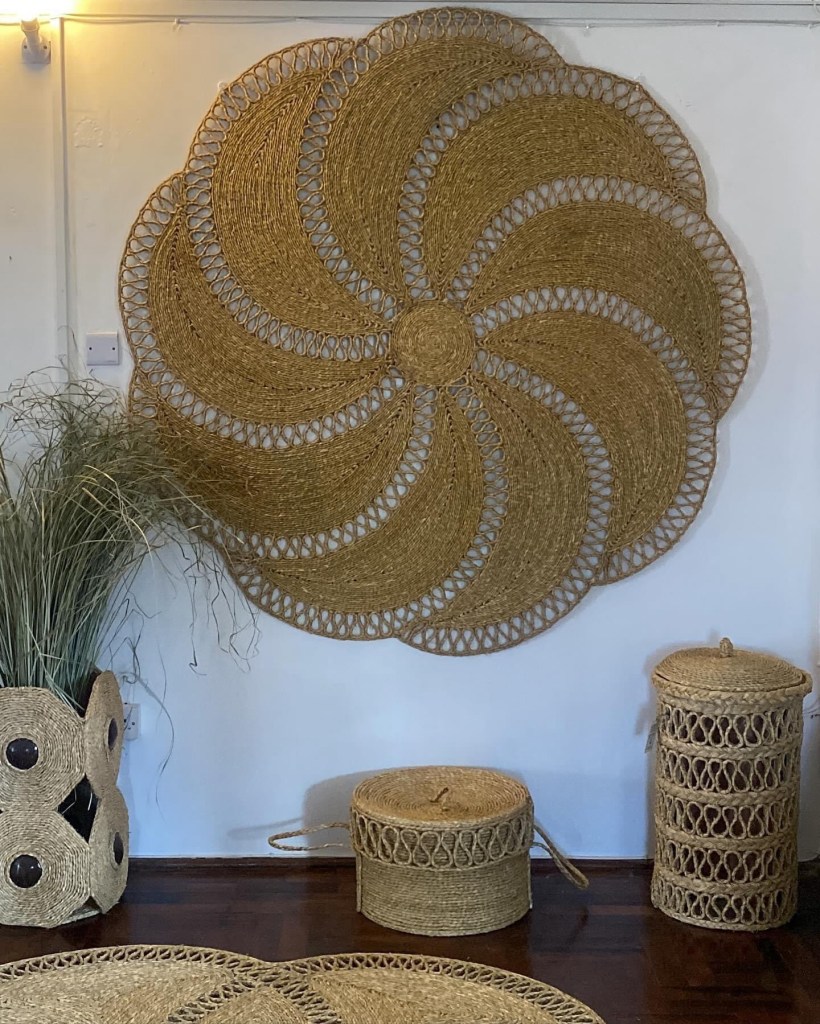
The vetiver grass is now grown in the prison’s vetiver systems farm set up in 2022 by Hand2Earth and sponsored by SVG Conservation Fund. After harvesting, it is put to dry on racks. Prisoners then take the dry grass and plait it into ropes. These ropes are used to create the artworks by combining and sewing them together in creative ways. They make baskets, mats, bags, hats, and even stools.
The products have generated a lot of local interest as well as the high-end visitor markets such as tourist resorts, and well as influential people such as the country’s Prime Minister – the Hon. Dr. Ralph Gonsalves.
According to Carlton Williams, an ex-prisoner who is a part of the Vetiver Grass Grow In Time Project, the money generated helped him during his time in prison and saved his family money by not having to spend or send money. He said he used the money he gained to provide for his family while in prison and to purchase items for himself which his family would have had to provide for him without that source of income at the commissary. The proceeds from the project provided for prisoners who had no family support and those with poor families.
The project does not only benefit prisoners financially but mentally and emotionally as well. The project reforms, rehabilitates and helps to decrease offenders. According to Roudette’s records, 98 percent of the inmates who participate in this programme do not re-offend.

The Vetiver Grass Project is prisoner-focused. meaning everything done and contributed, happens within the prisons, focusing on the development of only the prisoners in mind. The project imparts technical skills, whilst not needing lots of input (equipment), this is because it only requires the prisoner, farming, and sewing equipment, vetiver grass, and creativity.
It helps with the development of entrepreneurial skills abilities as the prisoners learn how to distribute and manage their businesses for societal use. This training prepares them for when they are reintegrated into society. The project also provides training for the inmates to develops interpersonal skills and helps change their attitudes, perceptions, and self-image within prisoners as they and gain an understanding of the fact that they are more than prisoners and criminals. It also helps them to know that even though they are prisoners they can still make use of themselves. It develops teamwork among the prisoners because whilst working on large projects, they progress into working and getting along with others, rather than isolating themselves. Most importantly the project develops discipline for the prisoners by implementing a routine. This is beneficial when they are reintroduced into society.

Ms. Roudette believes that the project helps inmates with resocialisation. It also gives them a source of independence in the prison as they make money from selling their pieces and keep their proceeds which they can use for the commissary or to help their families outside.
The prisoner officials also believe that the Vetiver Grass Project is beneficial to the prisoners. Superintendent of Prisons Mr. Bailey said: “It has been proven that inmates who engage in meaningful rehabilitation programs especially that of the Vetiver Grass Project hardly ever return to the Belle Isle Correctional Facility”. He also noted that they can be extremely creative with their designs whilst earning from their work, which encourages them even more.”
The Prison also contributes to the Vetiver Grass Project by using the Prison’s resources to get the raw materials needed for the prisoners and prison officers to facilitate programs and space allocated towards the project, Mr. Bailey said.
Mr. Bailey said: “We are trying to make a deliberate effort in rehabilitating inmates so much so that I’m currently putting together a unit specifically geared towards developing new programs geared towards this.”
As it specifically relates to the future of the Vetiver Grass programme, he said work is currently being done with the boys at the Liberty Lodge to extend the grass program.
According to Ms. Roudette, Vetiver grass is seen as unimportant and is forgotten whereas it is used to keep the soil stable, just as the prisoners’ lives are seen as unimportant and mundane, so too it is transforming the lives of inmates in St.Vincent and the Grenadines and keeping them stable.
Similarly, as they transform a blade of grass into rope and manipulate it into a beautiful piece of artwork, the Vetiver Grass Project transforms the prisoners, Ms. Roudette said.

 One News SVG