
By Admin. Updated 3:03 p.m., Tuesday, September 17, 2024, Atlantic Standard Time (GMT-4).
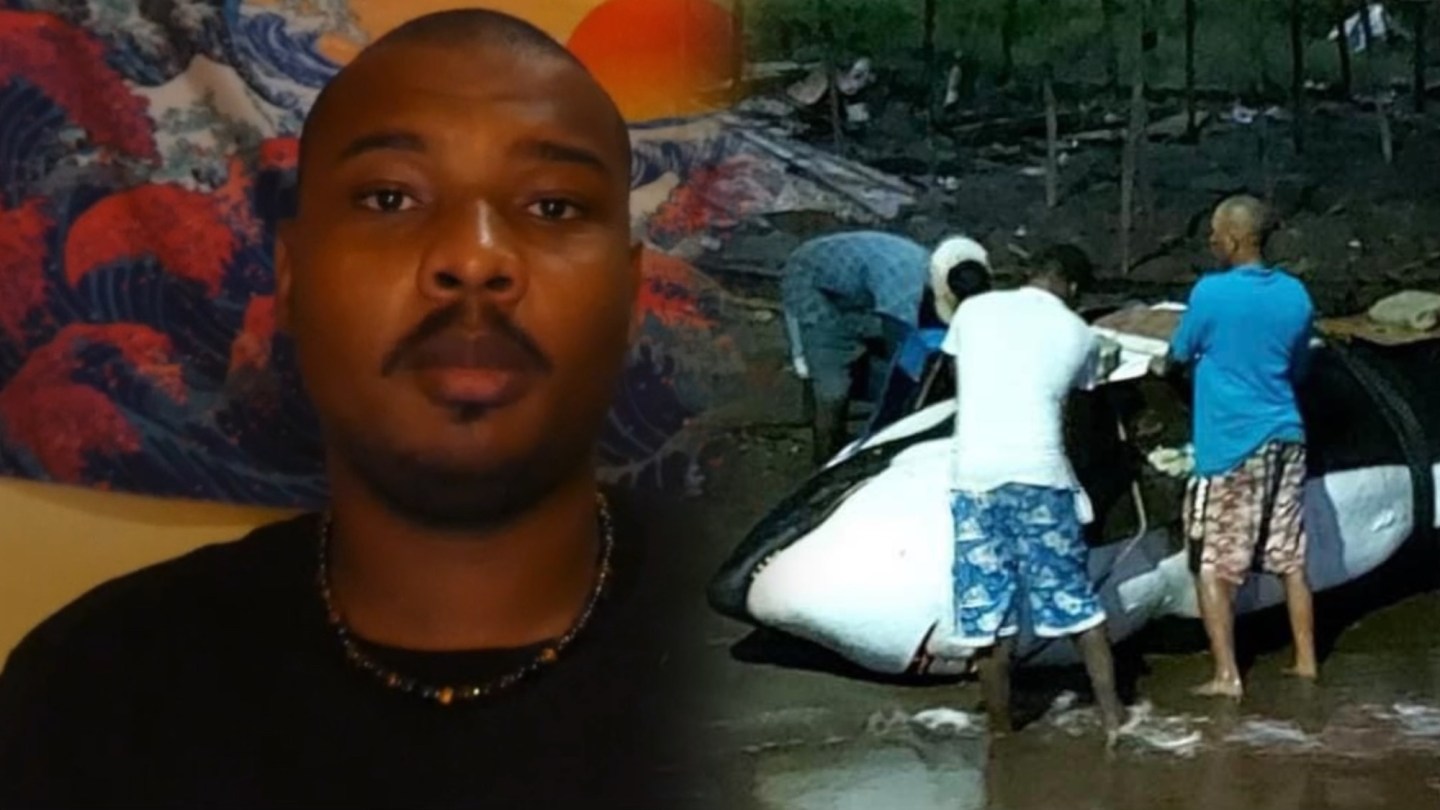
A Marine Biologist and Conservationist from Martinique – Mr. Alexis Agathine is advising Vincentians to reconsider their consumption of Orca meat.
St. Vincent and the Grenadines (SVG) has a whaling tradition and though Orcas are large members of the dolphin family, their harvesting is done in a similar manner to that of whale catching.
Mr. Agathine who is part of a research team currently studying Cetaceans, in general, including Orcas (Killer Whales) in the Caribbean waters sent a video explaining what people should know about Orca meat. (Updated).
Here is the video. The transcription is posted below.
Here is the transcription for the video. Links to the scholarly sources used can be found below.
VIDEO TRANSCRIPTION:
0:00) Hello, my name is Alexis Agathine. (0:03) I’m a marine biologist and conservationist from Martinique. (0:07) I was trained in ecotoxicology and more specifically in the study of pollutant behaviour in the (0:13) environment and within the food chain.
(0:16) In July, I was part of the Caribbean Cetacean Society expedition. (0:20) The aim of this mission was to catalogue Cetacean between Martinique, Dominica and Guadeloupe. (0:26) It was during this expedition that I was able to observe a pod of orcas.
(0:33) While I cannot confirm that the orca that was killed in Saint-Vincent Sunday was part of this pod, (0:39) it’s plausible. (0:41) Orcas are apex predators, which means they are at the top of the food chain. (0:47) As a result, they tend to accumulate a lot of pollutants in their bodies (0:51) through a process called bioaccumulation.
(0:56) A study has been published about the mercury content of orcas and the risks associated(1:02) with consumption of orcas. (1:05) But since the knowledge about orcas’ exposition to pollutants is pretty limited, we can only (1:11) speculate about the concentration and diversity of pollutants present in these animals. (1:18) Additionally, there is also a risk of pathogenic transmission between Cetaceans and humans.
(1:24) Regarding these facts, I don’t want to blame anybody, but I strongly advise the Vincentian (1:30) community to reconsider its choice of proteins.(1:35) I know that whaling have been an important part in Vincentian history and that for long (1:42) it was a mean to have sufficient protein access in the Vincentian diets. (1:49) But today, I believe we should work together to find a solution to protect the whale and (1:56) also help with the Vincentian food security.
(2:00) I put some information link below the video in the description in case you want to delve (2:07) deeper in the topic. (2:09) Thank you very much for listening.
END OF VIDEO TRANSCRIPT.

He sent the following links to One News SVG and asked us to share them with our readers in case you need to delve into the topic some more.
Bolaños-Jiménez, J., Kiszka, J. J., Bouveret, L., Ferrer, G. R., Ramos, E. A., Henriquez, A., … & Criollo, L. S. (2023). The killer whale in the caribbean sea: an updated review of its ecology, exploitation, and interactions with fisheries. Aquatic Mammals, 49(2), 184-194.
Information about bioaccumulation
Bryan, G. W., & Darracott, A. (1979). Bioaccumulation of marine pollutants. Philosophical Transactions of the Royal Society of London. B, Biological Sciences, 286(1015), 483-505.
Information about mercury contamination
Fielding, R., Kiszka, J. J., Macdonald, C., McCormack, M. A., Dutton, J., Ollivierre, A. D., … & Reid, V. (2021). Demographic and geographic patterns of cetacean-based food product consumption and potential mercury exposure within a Caribbean whaling community. Human and Ecological Risk Assessment: An International Journal,27(6), 1671-1695.
Information about pollutants found in orcas in other countries
Lachmuth, C. L., Alava, J. J., Hickie, B. E., Johannessen, S. C., Macdonald, R. W., Ford, J. K. B., … & Department of Fisheries and Oceans, Ottawa, ON(Canada); Canadian Science Advisory Secretariat, Ottawa, ON(Canada). (2010). Ocean disposal in resident killer whale(Orcinus orca) critical habitat: science in support of risk management (No. 2010/116). DFO, Ottawa, ON(Canada).
Information Document 2.4b Toxic Tides, Troubled Whales: How Chemical Pollution harms Cetaceans, Whale and Dolphin Conservation (WDC)
Information about pathogen found in cetacean
Tryland M, Lunestad BT, Nesbakken T, Robertson L, Skjerve E, et al. (2011) Human pathogens in marine mammal meat. Doc. no.: 08-108-final. Norwegian Scientific Committee for Food Safety (VKM).
Cowan DF, House C, House JA (2001) Public Health. In: Gulland FMD, Dierauf LA, editors. CRC Handbook of Marine Mammal Medicine: Health, Disease, and Rehabilitation. 2 nd ed. New York: CRC Press, pp. 767-778.


 One News SVG