

By Admin. Updated 8:46 a.m., Tuesday, October 8, 2024, Atlantic Standard Time (GMT-4).
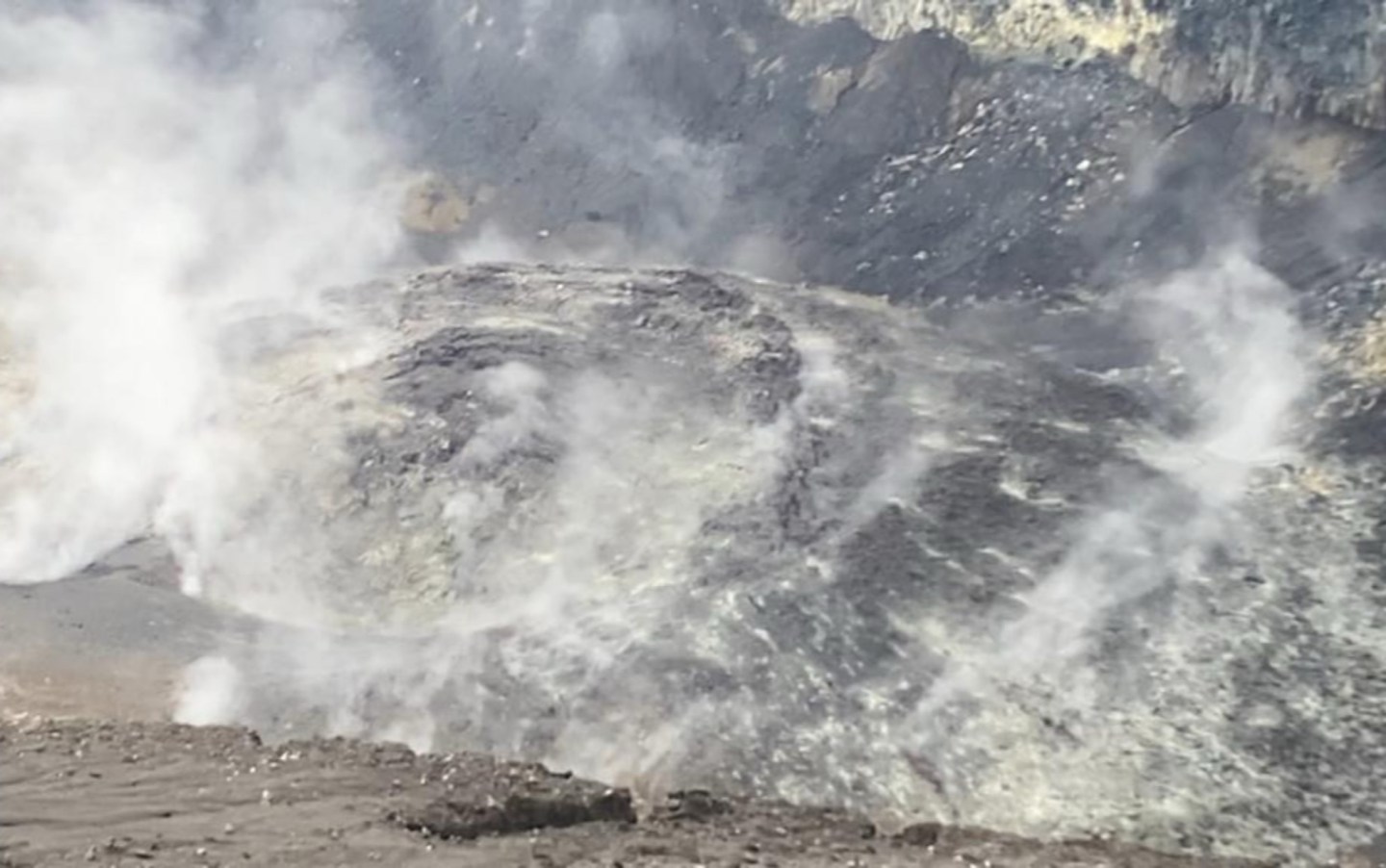
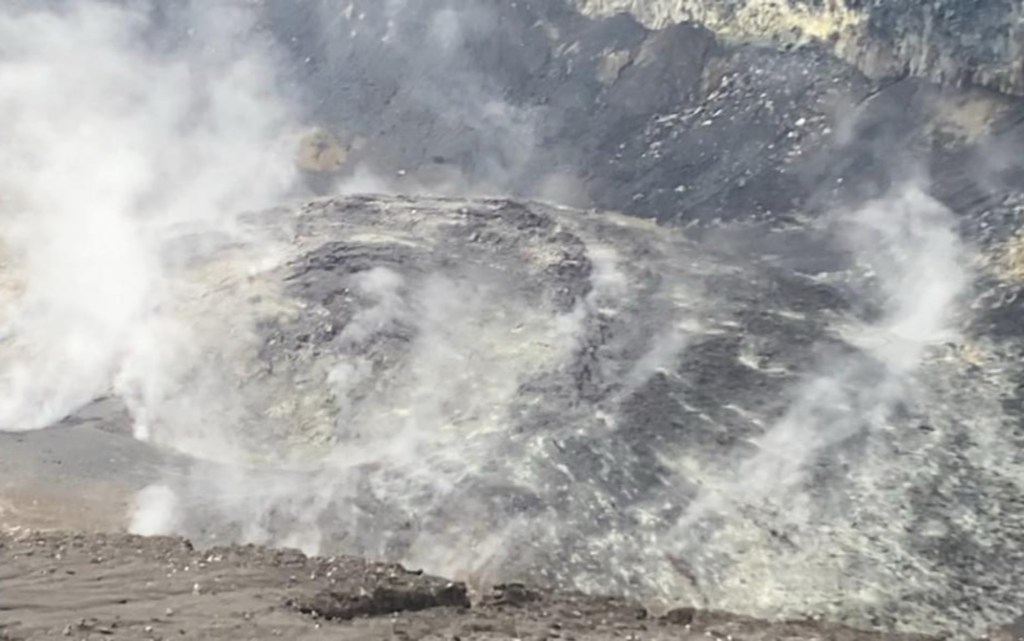
Scientists at the Seismic Research Centre and the Soufriere Monitoring Unit are exploring three possibilities in connection with abnormal temperature recorded at the La Soufriere volcano.
On October 7, the National Emergency Management Organisation – NEMO announced that a satellite picked up an abnormally hot area on the volcano on Sunday.
Speaking on the state-owned National Broadcasting Corporation NBC Radio this morning (October 8) Professor Richard Robertson of the University of the West Indies Seismic Research Center based in Trinidad and Tobago said they are exploring what the development means, and they are exploring three possibilities.
He said the first possibility is that there could have simply been a sulfur fire.
The other possibility, he said is that there could have been a Phreatic small explosion where hot rocks that were buried could have been exposed leading to the unroofing of hot material.
The third possibility, Professor Robertson said, was that we could have had the start of something like a new dome.

He said, however, there is no clear indication that the volcano’s activity has changed from the background, but they are in the process of verifying that. The volcano alert level still remains at green.
Professor Robertson said, “at present, we haven’t seen the hotspot persist. We don’t know which of the three options”.
He said this is the first time we have had an above-normal thermal signal since the last eruption in 2021, and Thermal hot spots are normal at volcanos that are erupting, not volcanos in the state that Soufriere is in.
He said, however, the hot material from the last eruption would be there for a long time.
La Soufriere volcano last erupted explosively in April 2021.

Professor Robertson said one of the things they have been looking at is the gas data, especially for sulfur dioxide, and tests are ongoing.
Meanwhile, Director of the National Emergency Management Organisation – NEMO, Ms. Michelle Forbes reiterated that people should avoid visiting the summit of the volcano and to continue to listen to information being sent out by NEMO.
END

 One News SVG