

By Admin. Updated 12:31 p.m., Wednesday, October 9, 2024, Atlantic Standard Time (GMT-4).
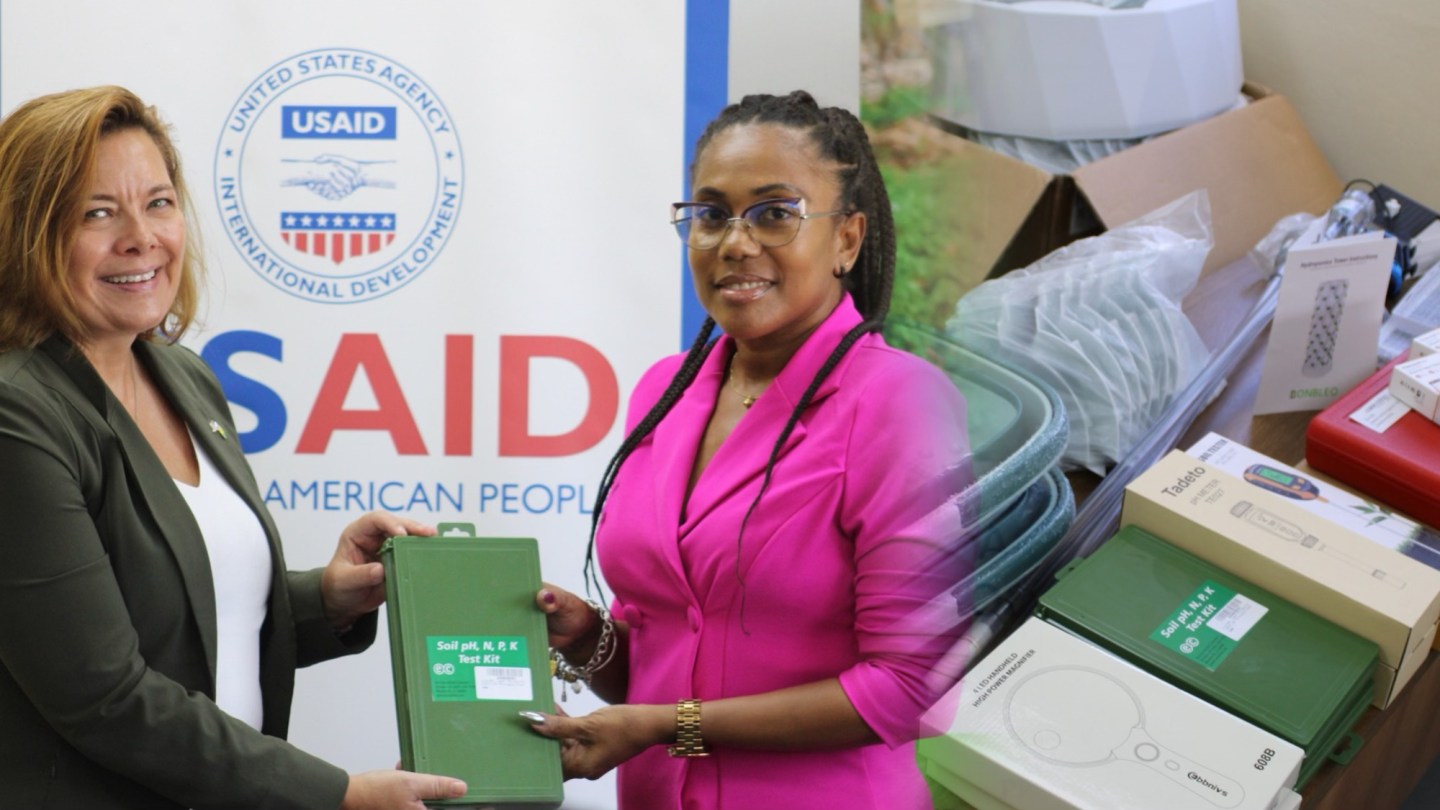
The students in the agriculture programme at the Division of Technical and Vocational Education (DTVE) of the St. Vincent and the Grenadines Community College are now better equipped to learn climate smart agriculture after a donation of items funded by USAID.
The United Nations Food and Agriculture Organization – FAO defines Climate-Smart Agriculture (CSA) as (CSA) an approach that helps guide actions to transform agri-food systems towards green and climate resilient practices.
The items to promote climate smart agriculture were handed over on October 8 at a ceremony at the DTVE under a USAID Caribbean Agricultural Productivity improvement Activity (CAPA) project.
They include Soil Moisture Meters which are essential for accurately monitoring soil moisture levels to optimize watering practices and prevent over or under-watering; pH Meters which are crucial for measuring soil pH levels, ensuring nutrient availability, and promoting overall plant health; and Thermometers with Hygrometers for the Greenhouse which are necessary for maintaining the appropriate temperature and humidity, essential for plant growth and development.
The items also include Plastic Foot Baths which are to be placed at the entrances of the campus’ greenhouses to prevent the spread of soil-borne pathogens and pests; 12-inch Soil Probes which are important for sampling soil at different depths, providing critical information about soil conditions and nutrient levels; Solar Water Pump for Aquaponics to ensure a sustainable and energy-efficient water supply, vital for the success of the campus’ aquaponics system, and 1-2 Agronomy Tower Farms which are Imperative for demonstrating the latest technologies in agriculture, providing hands-on experience with vertical farming, and showcasing modern, space-efficient, and sustainable farming practices to our students.
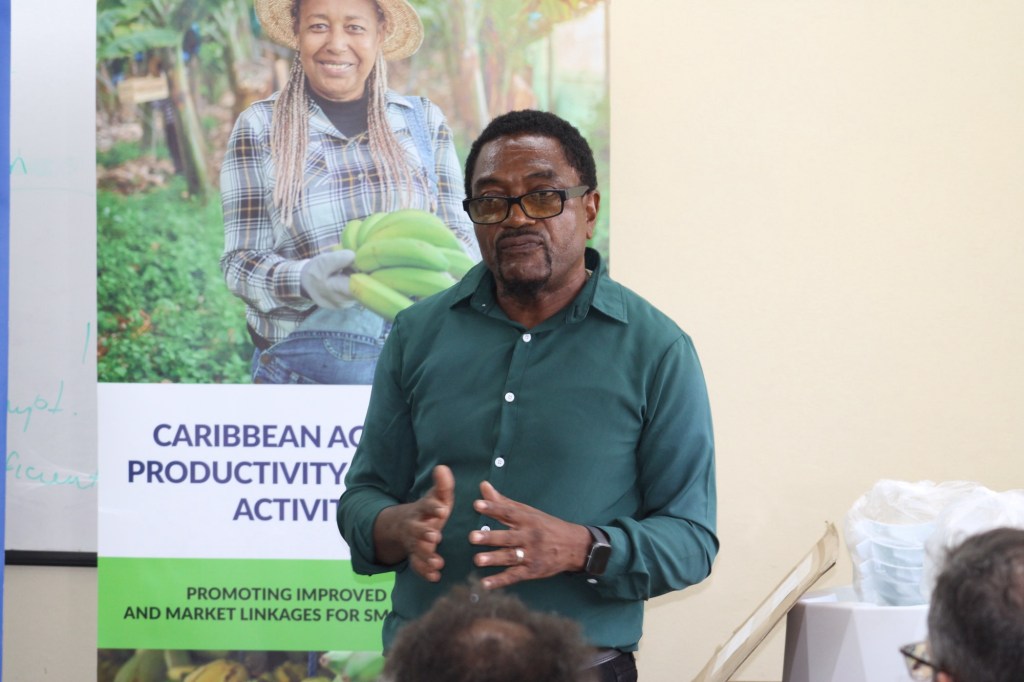
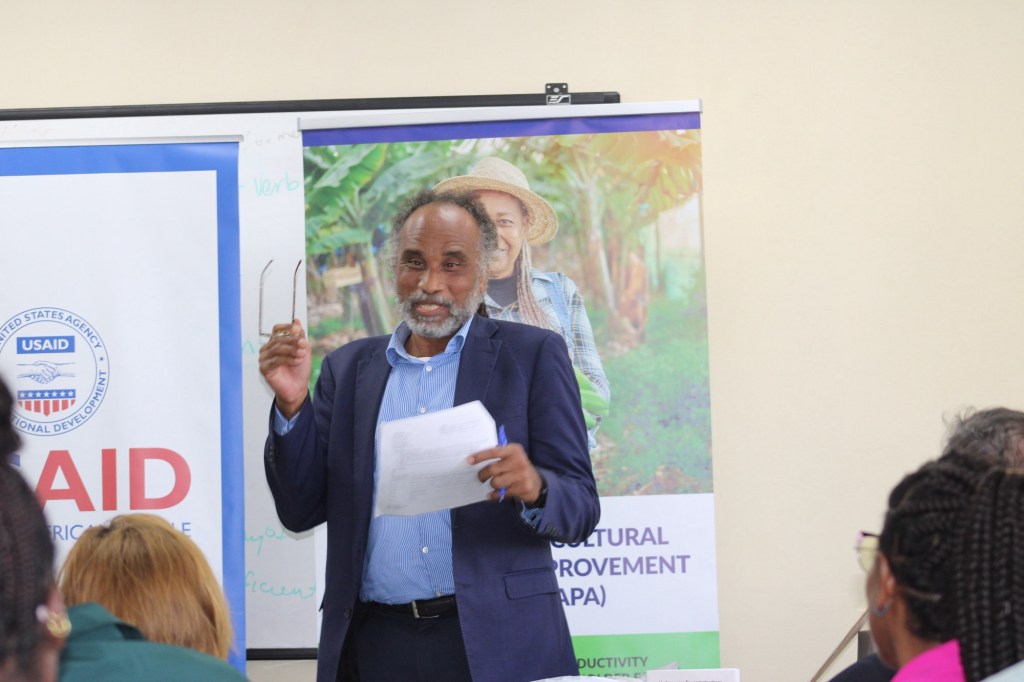
The handing over ceremony was attended by divisional heads, USAID and CAPA representatives, students, and SVGCC administration.
One of the speakers at the ceremony was Mr. Osborne Bowens, Dean of the Division of Technical and Vocational Education (DTVE).
Mr. Bowens emphasized the need for climate-smart agriculture saying there is a need for food safety and food security to be advanced in St. Vincent and the Grenadines (SVG), and the DTVE is pleased with the investment as, “it is going to advance what our students do,” and how the college shapes agriculture in the country.
He said the Agriculture programme is one of the oldest programmes offered at the college which has been in existence since the 1970s, and that many persons working in Agriculture have passed through the Technical College.
At present, there are 30 students across two agriculture programmes at the college, namely the Associate in Agriculture and the Certificate in Agriculture programmes, and their studies will be further enhanced as a result of the equipment.
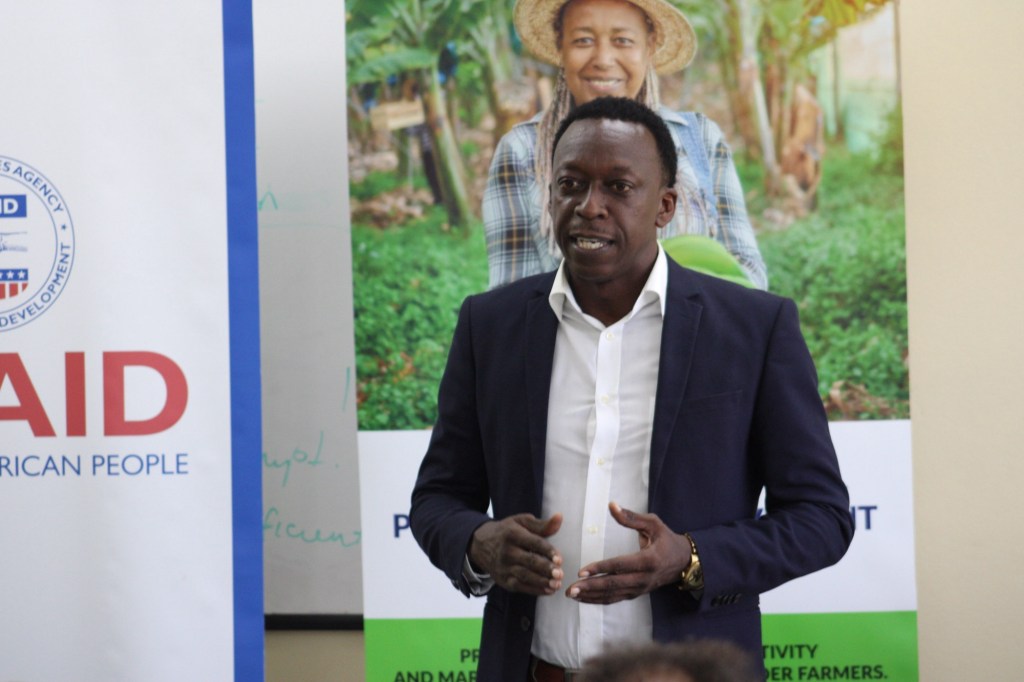
Meanwhile, the Bursar of the SVGCC Mr. Kenrick Chambers thanked USAID and the CAPA project for the donation, adding that the agriculture industry is so fragile. “We need this type of aid, we welcome this type of aid”.
Mr. Sandiford Edwards – CAPA Programme Director also spoke. He said the equipment is for the community college to be able to have capacity building in Climate-smart agriculture.
He encouraged the young agricultural students present to invest in their skills. He said there seems to be an aging population of farmers, so it is imperative that the students are well trained and able to contribute to the sector.
Currently, the DTVE’s campus has two greenhouses, a poultry area, and a new agricultural building equipped with a modern food processing laboratory for its agriculture students. The college also partners with organizations such as Hellen’s Daughters to provide funding and technical support to students.


 One News SVG