

By Admin. Updated 8:37 a.m., Saturday, January 25, 2025, Atlantic Standard Time (GMT-4).
St. Vincent and the Grenadines won a gold and a bronze medal in the third annual Caribbean STEM Olympiads (CSO) which was held from 13 – 19 January 2025 in a virtual format.
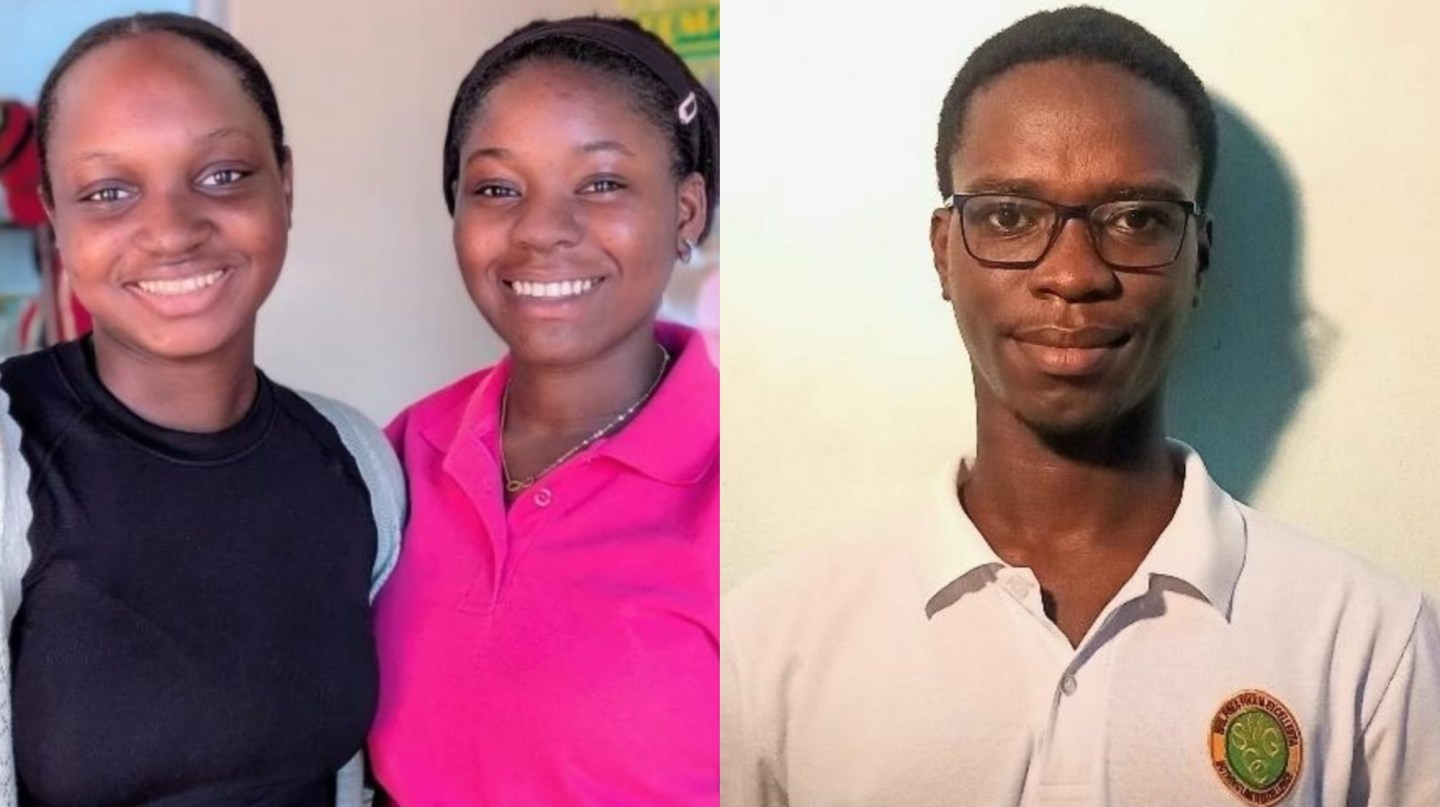
In a January 25 press release, host of the competition, the Caribbean Science Foundation (CSF) said the gold medal won by Saint Vincent and the Grenadines was captured in Level II of the Computer Coding Olympiad by Khamala Mars and Nya Scott of team “KarifKoders”.
“They tackled the challenge of cultural preservation with their project “GariGuru” which was an interactive game designed to teach primary school children in Saint Vincent and the Grenadines the basics of the Garifuna language,” the press release stated.
The bronze medal was also won in Level II of the Computer Coding Olympiad. LeBern Matthews earned it for his hurricane preparedness App,“Lookout,” which was designed to work both with or without internet connectivity to provide emergency contacts and essentials needed during a hurricane, the release stated.

Professor Cardinal Warde, the Interim Executive Director of the CSF said, “I am impressed by the level of achievement of the participants. However, it is clear that the CSF needs to do more to enhance the quantity and quality of robotics and embedded systems in the Region. To aid those Robotics & Electronics Systems teams that start early in preparation for the 2026 Olympiads, the CSF will issue a call for proposals to assist such teams in covering the upfront costs of components.”
The competing students also had a lot to say. Gold medalist Nya Scott of “KarifKoders” said, “We both wanted to thank the CSF and sponsors for organizing these Olympiads and creating this opportunity for young people in the Caribbean to explore STEM. Participating has improved our coding skills and critical thinking skills, but it has also allowed us to tackle real world issues affecting our country and Region”.
In the Science, Technology, Engineering and Math (STEM) Olympiads, individuals and teams representing educational institutions or themselves competed in Math, Computer Coding, and Robotics & Electronics Systems Olympiads at three different age levels (12 – 15, 16 – 18 and 19 – 21).
In the competitions, the focus was on rewarding inventiveness, as well as critical, logical and analytical thinking. In particular, the Math Olympiad was held in a Jeopardy-style format and covered the fundamentals in topics ranging from consumer arithmetic to vector calculus.

The Computer Coding Olympiad tasked applicants with creating apps, games, and websites aimed at solving a challenge faced by Caribbean communities. The challenges tackled by teams in the 2025 Olympiads included geohazards and climate change, cultural preservation, conservation science and ecology, inter and intra country transportation, food safety and security, safe after-hours transport for women and youth, and financial education. The Robotics & Electronics Systems Olympiad tasked the Level I applicants with building innovative systems from kits, whereas the Level III robotics and electronics systems teams were required to design and assemble their robots starting from the basic-components level.
A total of 264 students from 9 Caribbean countries registered for the 2025 Olympiads, making it the highest registration to date.
After the preliminary rounds, 41 teams (98 students) made it to the finals. There were 34 finalists in the Math Olympiad, 39 in the Computer Coding Olympiad, and 25 in the Robotics & Electronics Systems Olympiad. Medal certificates and cash prizes of US$ 500, 400, 300 and 200 were awarded to teams winning platinum, gold, silver, and bronze medals, respectively. The Medals and Awards Ceremony, held on Sunday 19 January 2025, revealed that Jamaica led the medal count with 10 medals, followed by Belize and Guyana with 4 each, and Barbados, Saint Lucia, Saint Vincent and the Grenadines and Trinidad and Tobago with 2 each.

 One News SVG