
The views expressed herein are solely those of the writer.
By Sherrika Shallow-John.
Economic Impact of Tariffs on Saint Vincent and the Grenadines’ Exports
The imposition of a 10% duty on Saint Vincent and the Grenadines (SVG) exports, in the name of trade reciprocity, would have a significant impact on the nation’s economy. Historically crop exports such as bananas, arrowroot, and nutmeg have been SVG’s mainstay. SVG has been diversifying its export base. In particular, the country has developed a medicinal cannabis sector, with lawful cultivation by Rastafarian farmers following decriminalization in 2018. SVG has also been looking to resuscitate its dasheen sector and exploring possibilities for the hot pepper market. This review addresses the potential effects of the proposed tariff on the economic climate of SVG, namely export performance, trade balances, and the overall economic stability of the nation.
Reduced Competitiveness of key Exports
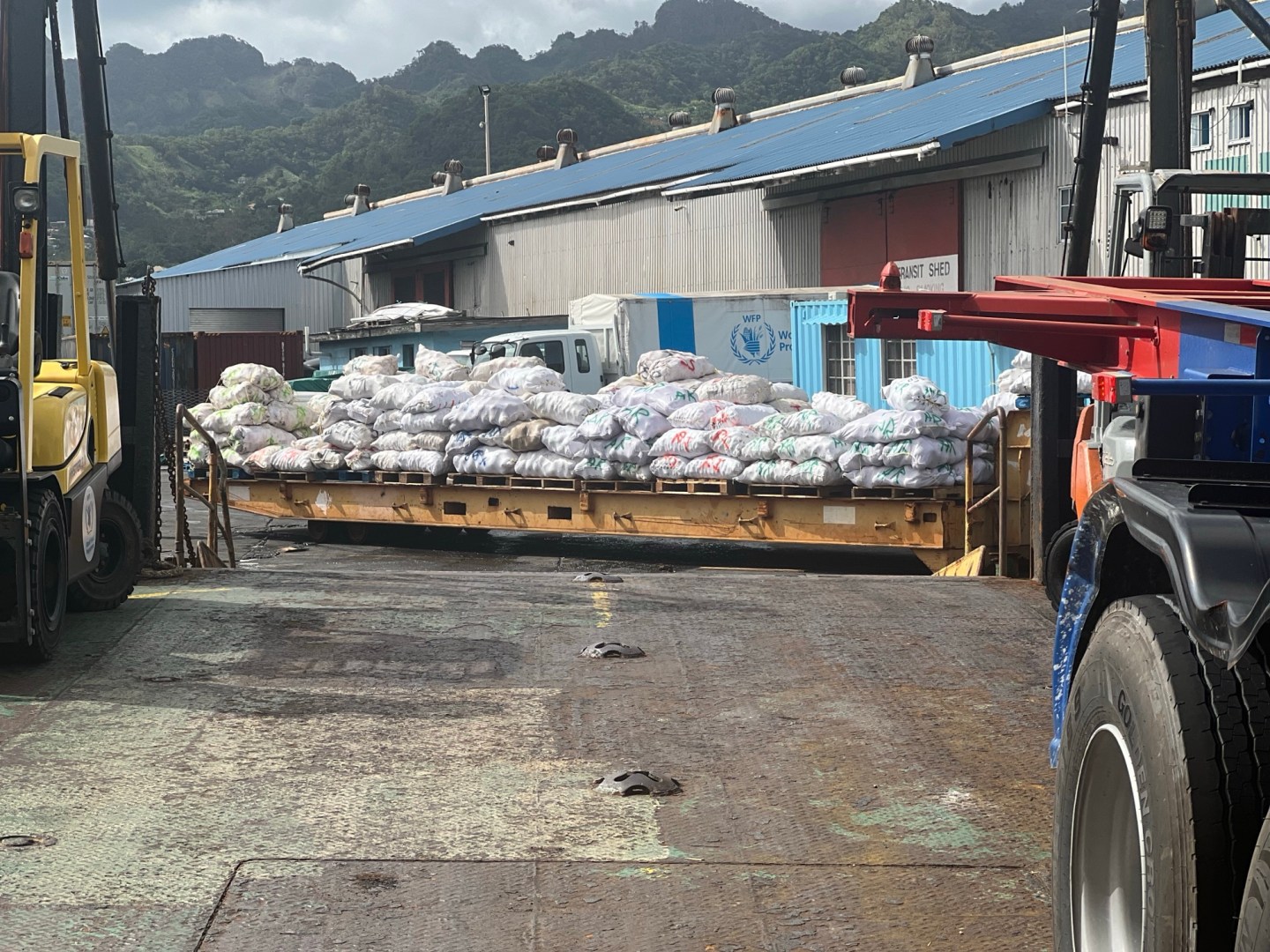
SVG’s economy is greatly reliant on agriculture, and bananas were a key export product in the past. Banana exports have been on the decline due to problems like the Black Sigatoka disease and the removal of trade preferences by Europe. Banana exports during 2010 totalled EC$13.8 million, down from EC$55.5 million in 1998. Root crops such as dasheen and eddoes, and fish are other major exports. A 10% tariff imposed on these would increase their price in the U.S. market, and they could become less competitive compared to products of a similar nature imported from countries not facing such tariffs. This price hike can lead to a decline in demand, hence affecting negatively on SVG’s farming industry and associated industries.
Decline in Export Revenues
The U.S. is one of our major trading partners. SVG exports to the U.S. totalled $287,000 in January 2025. Additional tariffs imposition would discourage American consumers from purchasing SVG products due to extra expenses, thus decreasing export revenue. The decline in revenues would not only impact exporters but would also send a ripple effect through the national economy, with consequences for the level of employment and incomes for export-dependent industries.
Widening Trade Deficit
SVG has always been running a trade deficit against the United States. For instance, in January 2025, the U.S. exported $12.2 million worth of goods to SVG and imported just $287,000, resulting in a trade deficit of around $11.9 million. Levying a 10% duty on SVG’s exports can further aggravate this imbalance. If exports to the U.S. decline due to reduced competitiveness and demand, while U.S. imports remain steady or increase, the trade deficit would further rise. This development would strain SVG’s foreign exchange reserves and hinder economic stability.
Tariffs’ Impact on Major Industries in St. Vincent and the Grenadines
The imposition of a 10% tariff on St. Vincent and the Grenadines’ (SVG) exports to America poses significant challenges to some of the country’s significant industries. Agriculture and agro-processing, manufacturing and specialty exports, and tourism-based products are most vulnerable to such trade restrictions.
Agriculture and Agro-Processing
Agriculture remains a pillar of SVG’s economy, with most of the crops being exported to foreign countries, mainly the United States. Root crops, fruits, and seafood are the main exports. The introduction of a 10% tariff would raise the cost of these products in the U.S. market, rendering them less competitive in prices compared to their counterparts from other nations that would not be subject to such tariffs.
Farmers and agribusinesses will also face reduced demand, leading to reduced production levels and revenues. This will drive producers to find alternative markets or create diversified products. This, however, comes with additional costs and risks, including adhering to alternative regulatory standards and establishing new distribution channels. Furthermore, the agro-processing industry, which processes raw agricultural commodities, will experience reduced profitability, which will discourage investment in innovation and technology.
Manufacturing and Specialty Exports
SVG’s manufacturing sector, while relatively small, produces goods such as beverages, textiles, and handcrafts, a considerable percentage of which end up in the U.S. market. Tariffs would increase the landed cost of these goods, making them less attractive to U.S. consumers and retailers. Small-scale manufacturers and artisans, who generally operate on small profit margins, would be disproportionately affected.
Lower demand can translate to lower production, potential firings, and even business closure. The higher cost also might discourage new business people from entering the manufacturing sector, stifling entrepreneurial activity and innovation. Producers would have to seek new markets or focus on domestic consumption, both of which are also problems in themselves.
Tourism-Related Products
Tourism is a very significant industry for us, with most tourists from North America. Many local businesses produce crafts, foods, and beverages specifically for tourists. Much of these products are also exported to the U.S., catering to consumers who desire Caribbean goods.
Tariff imposition may make the products expensive in the U.S., and their sales may fall. For instance, specialty food and handcrafts could be less competitive compared to the same or similar products abroad. Reduced demand would negatively affect small businesses and entrepreneurs whose sales are most critical. Additionally, a presumed price increase may deter tourists from purchasing these products, and hence, it could impact our local tourism economy.
Trade and Diplomatic Implications of St. Vincent and the Grenadines Instituting Tariffs
Instituting tariffs on exports from SVG has significant trade and diplomatic implications on its relations with the Caribbean Community (CARICOM), adherence to World Trade Organization (WTO) agreements, and diversification of trading partners from a strategic perspective.
The Stress on CARICOM and Bilateral Trade Agreements
Tariffs on SVG exports to the United States would compel CARICOM members, including SVG, to re-examine their trade relations with the United States. Historically, CARICOM countries have had preferential access to the United States market under initiatives like the Caribbean Basin Initiative (CBI). CARICOM countries exported approximately $9.76 billion in goods to the U.S. in 2023, and imported approximately $18.9 billion, which is a significant trade deficit. The slapping on of tariffs threatens to compound this imbalance, and CARICOM has tried to renegotiate on more favourable terms or attempt to find alternative markets. Recent talks, such as the Ninth Meeting of the Trade and Investment Council, have addressed particular trade concerns, e.g., those relating to the export of agricultural produce and rum. These exchanges underscore the fact that CARICOM must actively engage the U.S. if regional economic interests are to be safeguarded.
WTO Considerations
The U.S. tariff imposition can be interpreted by SVG and the other nations so affected as being in conflict with WTO principles, and they may turn to the WTO for resolution under its dispute settlement provisions. While CARICOM countries have largely participated in the WTO’s Dispute Settlement System as third parties in the past, there have been some direct engagements. For example, Antigua and Barbuda’s 2008 complaint against the U.S. in the US Gambling case recognizes the potential for small states to challenge trade measures that they believe are unfair. Still, the effectiveness of the WTO’s dispute settlement has been faced with challenges, including the partial unfunctioning of its appellate body since 2019. This makes it increasingly hard for small economies like SVG to effectively address grievances, highlighting the need for diplomatic solutions alongside formal dispute settlement mechanisms
Shift in Trade Strategies
As a response to negative trade measures, SVG can try to diversify its export markets to reduce its over-reliance on the U.S. Enhancing trade relations with the European Union (EU), Canada, and other Latin American and Caribbean partners can provide new sources of economic growth. The EU has been active in developing trade relations with Latin American and Caribbean countries, with potential opportunities for SVG. Similarly, Canada’s Export Diversification Strategy is dedicated to expanding its trading partners, which can align with the objectives of SVG. This can involve negotiating new trade agreements, familiarizing oneself with new market regulations, and promoting SVG’s export products to a new audience.
Rules of Origin implications
Perhaps the most critical component of this policy is the emphasis given to rules of origin, which determine whether goods for export qualify for preferential treatment under existing trade agreements or must pay the full 10% tariff.
Rules of origin are merely the process for determining the country of origin of a good. Rules of origin are required because preferential trade agreements, such as those between the U.S. and most Caribbean countries, allow eligible goods to enter duty-free. However, under the new tariff implementation and the threat of a more rigorous application of rules of origin, SVG’s export goods will need to prove themselves to be sufficiently “Vincentian” or regionally produced in order to avoid the new duty. This poses a significant problem for SVG, where many exports have components or inputs from extra-regional sources. For instance, agro-processed goods may have imported flavorings, preservatives, or packaging that, under more restrictive regulations, deem them ineligible for preferential origin status.
The implications of the policy change on SVG are numerous. Firstly, there is a high risk of reduced competitiveness of exports in the U.S. market. Vincentian goods that were already challenged by higher freight costs and low economies of scale could now be less attractive to American buyers due to the cost of the tariff. This will lead to lower demand and a resulting fall in export incomes, affecting farmers, producers, and other key stakeholders. Additionally, the U.S.-SVG trade deficit can widen further because SVG is struggling to maintain its exports while continuing to import from the U.S.
Second, the requirement of origin verification also creates an administrative burden on exporters, particularly SMEs that do not have the resources and know-how to cope with complex customs procedures and documentation. The cost of compliance may discourage some exporters altogether or lead to delays and rejection at the border, affecting reliability and customer relationships in the U.S. market.
However, the policy also presents a possibility for SVG to re-engineer its export strategy and improve its trade infrastructure. One such strategic response is to improve the use of regional inputs in production, thereby satisfying the origin requirement while, at the same time, promoting regional integration. Intra-CARICOM sourcing and production can be promoted to allow SVG companies to satisfy the origin status while, at the same time, improving regional supply chains. In addition, export diversification, particularly to markets to which SVG enjoys preferential trade agreements, such as the European Union through the Economic Partnership Agreement (EPA), can weaken the excessive dependence on the U.S. market.
SVG policymakers can also take proactive steps to offset the effect of the new tariff. These would include improving customs and trade facilitation infrastructure, training and supporting exporters, and investing in systems that simplify origin certification. SVG, in cordination with CARICOM, should also pursue targeted trade diplomacy to negotiate more flexible rules of origin or mutual recognition of origin status with the United States.
This imposition of a 10% tariff on Caribbean exports to the U.S., coupled with stricter enforcement of rules of origin, poses a significant threat to St. Vincent and the Grenadines. Although the policy is aimed at promoting trade reciprocity, its actual impact may be to disrupt the export opportunities of the smaller Caribbean economies. But with planning, regional cooperation, and targeted policy interventions, SVG can adapt to this evolving trade landscape, deepen its export base, and enhance its competitiveness in the global market.
Permissible Domestic Policy Responses to Trade Barriers
As St. Vincent and the Grenadines (SVG) navigates the problems of trade protection, particularly the proposed 10% tariff on its exports, domestic policy initiatives would be crucial in minimizing economic dislocations. The government must adopt a multi-pronged strategy in supporting local industries, enhancing competitiveness, and stimulating economic resilience. Three key areas are providing subsidies or export support, investing in value-added sectors, and forging regional trade partnerships.
Subsidies and Export Support
The most immediate policy response to counter the adverse effects of a tariff would be intervention by the government in the form of subsidies, tax refunds, or facilitation of trade. Export subsidies can offset the increased cost of the tariff, allowing Vincentian goods to be price-competitive in the world market. In addition, tax deductions for export-related expenses, such as reduced corporate tax rates for exporters or tax deductions for shipping and logistics, can also relieve the burden on businesses.
Trade facilitation can extend beyond direct financial incentives to encompass key steps that streamline procedures, reduce red tape, and build the capacity of exporters. Implementing these measures can significantly improve efficiency and lower costs for businesses engaged in international trade.
Simplifying Customs Procedures and Reducing Bureaucratic Delays
Simplification of customs procedures is at the heart of the facilitation of smoother cross-border transactions. Complex and time-consuming customs procedures dissuade trade by increasing delays and associated costs. By adopting standardized procedures and transparency, countries can speed up the transit of goods. For instance, the use of risk management techniques allows customs agencies to focus on high-risk shipments, thereby expediting the clearance of low-risk goods. Furthermore, single-window systems enable traders to submit all documentation necessary through one platform, preventing redundancy and enhancing coordination among agencies.
VSWIFT: Driving Digital Transformation in Trade Facilitation
Investment in digital infrastructure continues to shape the foundation of trade operation and strengthening export competitiveness in St. Vincent and the Grenadines. The VSWIFT initiative for digital transformation is a plan to simplify and streamline cross-border trade through integration of technology and automation. VSWIFT operates as a trade single window at the national level, enabling importers, exporters, and their representatives to electronically transmit, exchange, and process information required in import, export, and transit transactions.
By converting processes that were once paper-based and manual processes into digital forms, VSWIFT significantly reduces administrative delays, minimizes human error, and lowers transaction costs. It enhances transparency, improves compliance levels, and accelerates clearance times at the border, the keys to building a more competitive trading environment. In particular, VSWIFT implementation addresses international standards for trade facilitation and places SVG in a better position to meet the demands of evolving rules of global trade, including those relating to customs documents and evidence of origin.
In addition to digital infrastructure, there must also be ongoing investment in capacity building among exporters. As technology like VSWIFT transforms the trading environment, it is crucial that exporters be trained on the effective use of such platforms. This includes awareness of digital documentation, compliance with international trade regulations, and the application of technology for competitiveness and market access. Together, infrastructure expansion and exporter capacity building will be the basis of a strong, responsive trading environment that can withstand external shocks, such as the imposition of new tariffs, and take advantage of new opportunities in global markets.
Capacity Building Initiatives for Exporters
Capacity-building initiatives can include the delivery of technical assistance, international trade regulation training courses, and market intelligence services.
These initiatives enable local businesses to stay abreast of changing global trade trends, identify new opportunities for markets, and comply with international standards. For example, training modules in the utilization of electronic platforms and digital tools for commerce can facilitate exporters to reach broader markets more effectively. Therefore, an inclusive trade facilitation strategy that combines the simplification of customs procedures, investment in Automated systems, and comprehensive capacity-building initiatives can greatly add to the efficiency and competitiveness of exporters. Such measures not only reduce transaction cost and time but also allow businesses to compete favourably in the global market.
Investment in Value-Added Industries
Another key long-term strategy is the development of value-added industries. Instead of relying on raw material exports, SVG can encourage the processing of agricultural products into semi-finished or finished goods that tend to be more highly priced and less susceptible to trade restrictions.
For instance, instead of exporting fresh fruit, investment in agro-processing factories can enable the local production of fruit juices, dried fruit, or packaged snacks. Similarly, seafood exports could move from raw fish to pre-packaged fillets or canned seafood, which would be more competitive on foreign markets. Government incentives such as low-interest loans to agro-processors and tax holidays to companies that invest in value-added production would stimulate this sector. Stimulating public-private partnerships to improve local manufacturing capabilities could also serve to further strengthen SVG’s economic resilience.
Promotion of Regional Trade
Reducing dependence on the U.S. market through strengthened intra-CARICOM trade can provide a genuine alternative for SVG exporters. The Caribbean Single Market and Economy (CSME) provides the opportunity to increase trade within regional partners, making use of preferential trade agreements and eliminating barriers within the CARICOM grouping.
To capitalize on regional markets, the government can negotiate more Favorable trade agreements with CARICOM to secure greater access for SVG’s products. Improving logistics and transportation systems, such as, subsidizing inter-island shipping, improving port facilities, would make it easier and more cost=effective to get Vincentian products into neighbouring markets. Making it easier for companies to establish regional supply chains could also create new opportunities for cross-border trade and economic cooperation.
So as it stands, the proposed 10% tariff on SVG’s exports to the United States presents severe economic challenges that threaten the nation’s key industries, which are agriculture, manufacturing, and tourism-related businesses. These challenges are compounded by the potential loss of competitiveness of SVG’s exports, decline in export revenues, and deterioration of an already unfavourable trade balance.
To navigate these difficulties, SVG must follow a two-pronged strategy. This entails following aggressive domestic policies such as targeted subsidies and export facilitation schemes to encourage local industries. Investment in value-added production can enhance product appeal and neutralize the impact of tariffs. Additionally, expanding intra-CARICOM trade and seeking diversified trade alliances can reduce reliance on the U.S. market. Engagement with international trade bodies like the World Trade Organization (WTO) may also be necessary to address and negotiate these trade barriers.
By adhering to these strategic measures, SVG can progress towards mitigating the adverse effects of the proposed tariffs, fostering economic resilience, and preserving the livelihoods of individuals who depend on these critical industries.
Sherrika Shallow-John is a seasoned Customs professional with over 20 years of experience in the field. She holds a BSc in Border Management from Charles Sturt University and an MSc in Business Management (Logistics and Supply Chain) from Edinburgh Napier University.
 One News SVG