

The views expressed herein are solely those of the writer.
A summary of China’s President Xi Jinping speech at the fourth ministerial meeting of the China-CELAC forum and what it may mean for US-Caribbean relations.
In China’s President Xi Jinping speech to Latin American and Caribbean countries at the opening ceremony of the fourth ministerial meeting of the China-CELAC (the Community of Latin American and Caribbean States) Forum, he reminisced a little about the first ministerial meeting, highlighted the deepening of relations between China and CELAC and point towards deepening and strengthening relations between the two. For instance, President Xi opened his speech by saying:
“In 2015, LAC delegates and I attended the opening ceremony of the First Ministerial Meeting of the China-CELAC Forum in Beijing, which marked the launch of the China-CELAC Forum. Ten years on, with dedicated nurturing of both sides, the Forum has grown from a tender sapling into a towering tree. This fills me with deep pride and satisfaction.”
The president also noted that the bond between China the Latin American and Caribbean (LAC) region is rooted in history, despite the geographical distance between two: “. . .the bonds of our friendship stretch back through centuries. As early as in the 16th century, Nao de China, or “Ships of China,” laden with friendship, shuttled across the Pacific, marking the dawn of interactions and exchanges between China and the LAC region”. President Xi also noted that as “New China” established diplomatic relations with some LAC countries, cooperation between the two have deepened so much so that this close relationship has since “ushered in a historic era of building a shared future”.
He also touched on matters of sovereignty, national interest, external influence and interference. These themes were seemingly a jab at US foreign policy towards the region, while simultaneously defending China’s foreign policy towards the region and making the case that it is the better alternative to America’s sort of “big stick” foreign policy. For example, Xi Jinping stated that: “In the 1960s, mass rallies and demonstrations took place across China in support of the Panamanian people’s rightful claim to sovereignty over the Panama Canal. In the 1970s, during the Latin American campaign for 200-nautical-mile maritime rights, China voiced its resolute and unequivocal support for the legitimate demands of developing countries. For 32 consecutive times since 1992, China has consistently voted for the United Nations (U.N.) General Assembly resolutions calling for an end to the U.S. embargo against Cuba.” This is in stark contrast to US foreign policy, particularly in relation to the Cuba situation. For example, the Trump administration imposed sanctions in the form of visa-restrictions targeting Cuba medical assistance programme, which was an expansion of the Biden administration whose State Department had imposed sanctions on third-country officials who hired work brigades from Cuba (see article for more information: Scholar weighs in on US Visa Restrictions over Cuba’s medical-assistance programme – One News SVG). Additionally, the US continues to maintain its embargo on Cuba, though, President Barack Obama promised a “different” and a “more open approach to US–Latin American relations,” pledged “a new beginning with Cuba” and in 2015, restored diplomatic relations between the United States and Cuba (See: Rethinking the Caribbean Basin Initiative: A case study of US foreign policy toward the Caribbean – Quashie – 2023 – Latin American Policy – Wiley Online Library ). In the most recent General Assembly vote on the matter, specifically, UN General Assembly resolution, titled “Necessity of ending the economic, commercial and financial embargo imposed by the United States of America against Cuba,” was passed with an overwhelming support of 187 countries voting in favour, two against (Israel and the US), and one abstention (Moldova).
Again, in what seems to be a slight jab to the US, Xi stated that, “We [China and CELAC] ride the tide of progress together to pursue win-win cooperation”. This differs to America’s “zero-sum” approach in its foreign policy. The late Joseph S. Nye in his book, Soft Power and Great-PowerCompetition Shifting Sands in the Balance of Power Between the United States and China made reference to China’s “soft power” gains and how it could be good for both China and the world as soft power is not a zero-sum game whereby one country gains is another country’s loss: “China is far from the United States’ or Europe’s equal in soft power at this point,but it would be foolish to ignore the important gains it is making. Fortunately, these gains can be good for China and also good for the rest of the world. Soft power is not a zero-sum game in which one country’s gain is necessarily another country’s loss. If China and the United States, for example, both become more attractive in each other’s eyes, the prospects of damaging conflicts will be reduced. If the rise ofChina’s soft power reduces the chance of conflict, it can be part of a positive sum relationship” (Nye, 2023, p. 106). Joseph S. Nye also mentioned it in an earlier article in 1998 titled, Understating U. S. Strength in reference to Americans view of the “Japanese Challenge” in relation to the country’s economic rise at the time and the opportunities and challenges it presented, as they viewed Japan’s economic strength as a greater national challenge to that of the Soviet Union’s military power. For instance, Nye (1998) wrote:
“An increasing number of Americans believe that Japanese economic strength is a greater national challenge than Soviet military power. But economic competition is not a zero-sumgame where one country’s gain is its competitor’s loss. Japan has chosen the strategy of a trading state rather than of a military power. In this role Japanese growth not only challenges the United States but also benefits it through greater choice for American consumers and competition that keeps American industry on its toes. For example, the rise ofJapanese competition has had both a useful and a painful effect on the American automobile industry.”
I think the Trump administration should view China’s economic rise as both presenting a challenge to America (especially in the technology and manufacturing industry) and a benefit through greater choice for American consumers and to keep American industries on their competitive feet. But I digress.
President Xi Jinping further elaborated on the successful relationship thus far between China and LAC countries by noting some of the many infrastructural projects, jobs created, high-tech South-South cooperation, enhanced connectivity links and the lucrative trade agreements that has since been signed between China and the LAC region. For example, Xi Jinping noted in his speech:
“Under the framework of high-quality Belt and Road cooperation, the two sides have implemented more than 200 infrastructure projects, creating over a million jobs. The China-LAC satellite cooperation program has set a model for high-tech South-South cooperation. The inauguration of Chancay Port in Peru has established a new land-and-sea connectivity link between Asia and Latin America. China has signed free trade agreements with Chile, Peru, Costa Rica, Ecuador, and Nicaragua. Last year, trade between China and LAC countries exceeded US$500 billion for the first time, an increase of over 40 times from the beginning of this century.”
In announcing China’s “Five Program” with LAC countries, President Xi first seemingly took another jab at the Trump’s administration bullying and isolationist approach in its foreign policy and tariff wars: “There are no winners in tariff wars or trade wars. Bullying or hegemonism only leads to self-isolation. . . In the face of seething undercurrents of geopolitical and bloc confrontation and the surging tide of unilateralism and protectionism, China stands ready to join hands with our LAC partners to launch five programs that advance our shared development and revitalization, and contribute to a China-LAC community with a shared future.”
The Five Program are broken into five themes: 1). SolidarityProgram, which involves China and LAC supporting each other’s core interests and addressing each other’s major concerns and that may also involve China supporting LAC countries in international multilateral forums like the United Nations and the World Trade Organization. 2). Development Program: this will involve China supporting LAC countries to achieve global development initiatives and bolsteringcooperation between the two in traditional areas – such as infrastructure, agriculture and food, and energy and minerals. China will also increase imports of quality products fromLAC countries, and encourage its enterprises to expand investment in the region. In doing so, President Xi said that China will “provide a RMB66 billion yuan (equivalent to 9,161,196,000.00 USD) credit line to support LAC countries’ development”. 3). Civilisation Program: this involves upholding a number of key principles – such as equality, mutual learning, dialogue, and inclusiveness between civilizations, and champion humanity’s common values of peace, development, among others. Moreover, it involves a deeper understanding of each other’s culture and heritage through “joint archaeological projects, conservation and restoration of ancient and historic sites, and museum exhibitions”. 4). Peace Program: China supports maintaining the Latin America and Caribbean region as a “zone of peace” and called on both sides to “cooperate more closely in disaster governance, cybersecurity, counterterrorism, anti-corruption, narcotics control and combating transnational organized crime so as to safeguard security and stability in the region”. Lasty, 5). People-to-People Connectivity Program: in this program, Xi Jinping offered a few attractive benefits to LAC countries ranging from government scholarships to programs that will be rolled out over the next 3 years. For example, President Xi Jinping stated:
“In the next three years, China will provide CELAC member states with 3,500 government scholarships, 10,000 training opportunities in China, 500 International Chinese Language Teachers Scholarships, 300 training opportunities for poverty reduction professionals, and 1,000 funded placements through the Chinese Bridge program. We will initiate 300 “small and beautiful” livelihood projects, actively promote vocational education cooperation programs such as Luban Workshop, and support CELAC member states in developing Chinese language education.”
Those in Washington, especially those working in the foreign policy sector, should not ignore China’s growing influence and deepening relations with a region that is in close geographical proximity to the United States. Even more so, China’s foreign policy approach thus far with the region is an attractive alternative to the US’s hegemonic, big stick foreign policy towards the region. This was my part of my conclusion in my 2023 peer-reviewed article published in Latin America Policy titled, Rethinking the Caribbean Basin Initiative: A case study of US foreign policy toward the Caribbean:
“US–Caribbean relations are characterized by decades of mistrust and interventionism, prompted by the paternalistic US foreign policy toward the region. Historically, dating backto the Monroe Doctrine in 1823, US–Caribbean relations were primarily driven by the maintenance of US regional hegemonic power, achieved through the promotion of democracy and opposition to future colonization of any territory in the Americas, first by European powers and later through the prevention of the spread of communism.”
I would strongly urge the Trump administration to rethink its foreign policy approach to the region by having a more open-minded and friendly approach to trade with the region by ending the blanket 10% tariff on most Caribbean countries it imposed back in April days after US Secretary of State Marco Rubio visit to the region. Hence, why I stated in my article in 2023 that US-Caribbean relations for decades have been rooted in “mistrust,” among other things. I think this may have further vindicated my analysis, though, there is already sufficient evidence to substantiate my arguments in the article.The Trump administration should revamp the Caribbean Basin Initiative, so that it yields a more mutually beneficial outcome. More importantly, engage the region in a “positive-sum” game. Inevitably, the relation will be imbalance given the asymmetric power relations between the US and the LAC countries. Nevertheless, the US needs to start viewing us as equal partners and let us work together as such, so we can both achieve and tackle issues that is of core interest to us both. Two quote the Late Joseh S. Nye (2023): “. . . ecological interdependence poses an insurmountable obstacle to sovereignty, because the threats are transnational. Regardless of setbacks for economic globalization, environmental globalization will continue, because it obeys the laws of biology and physics, not the logic of contemporary geopolitics. Such issues threaten everyone, but no country can manage them alone. On issues like COVID-19 and climate change, power has a positive-sum dimension.”
In closing, though, my country St Vincent and the Grenadines does not have any formal diplomatic relation with the People’s Republic of China because we opted to have relations with the Republic of China (Taiwan) – one that has so far been hugely beneficial – I nonetheless welcome the keynote speech delivered by Chinese President Xi Jinping at the opening ceremony of the fourth ministerial meeting of the China-CELAC (the Community of Latin American and Caribbean States) Forum.
Contributor
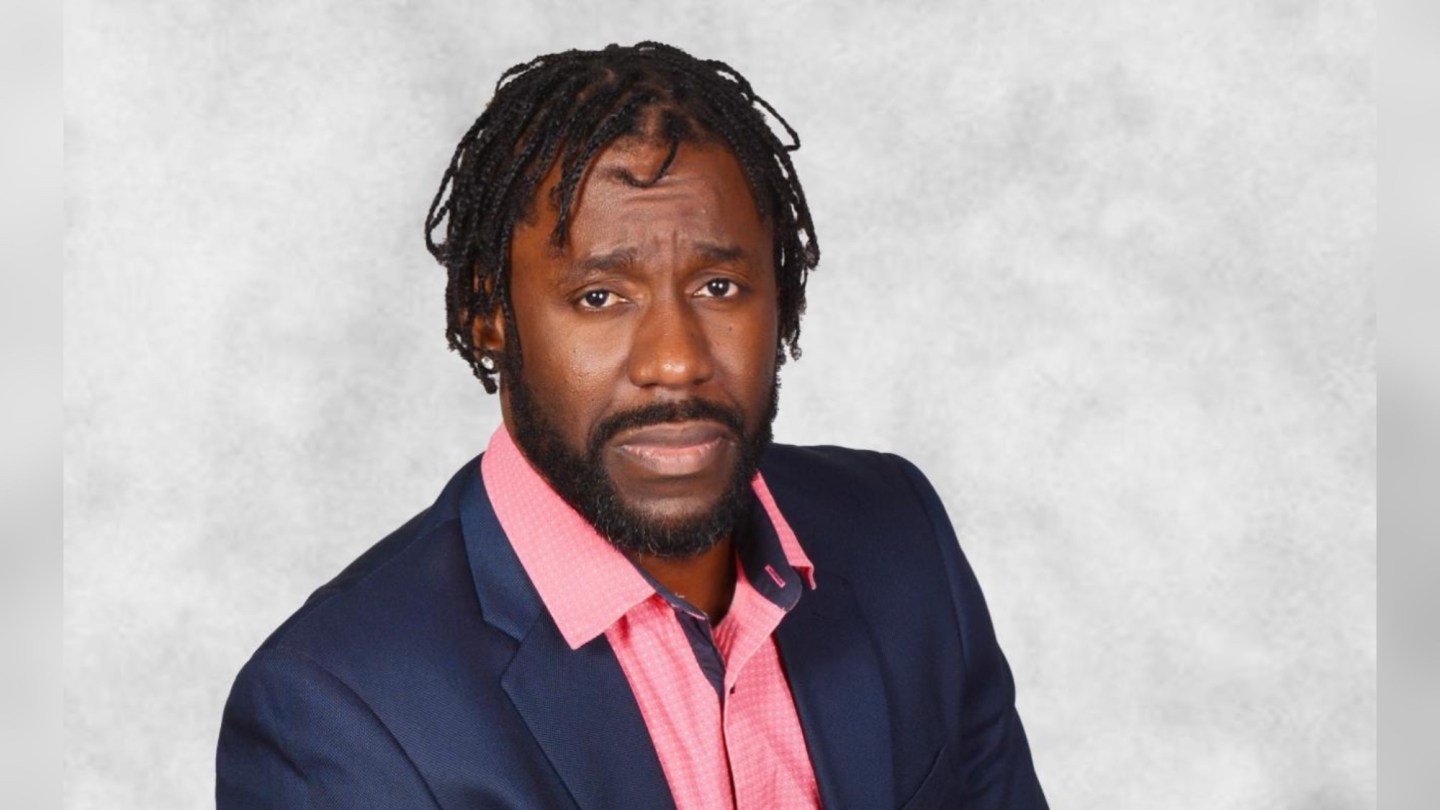
Emanuel Quashie is a Lecturer in International Relations at the University of the West Indies, Mona campus. He is also the author of Rethinking the Caribbean Basin Initiative: A case study of US foreign policy toward the Caribbean – Quashie – 2023 – Latin American Policy – Wiley Online Library
 One News SVG