

By Admin. Updated 8:27 p.m., Thursday, 4 September 2025, Atlantic Standard Time (GMT-4)
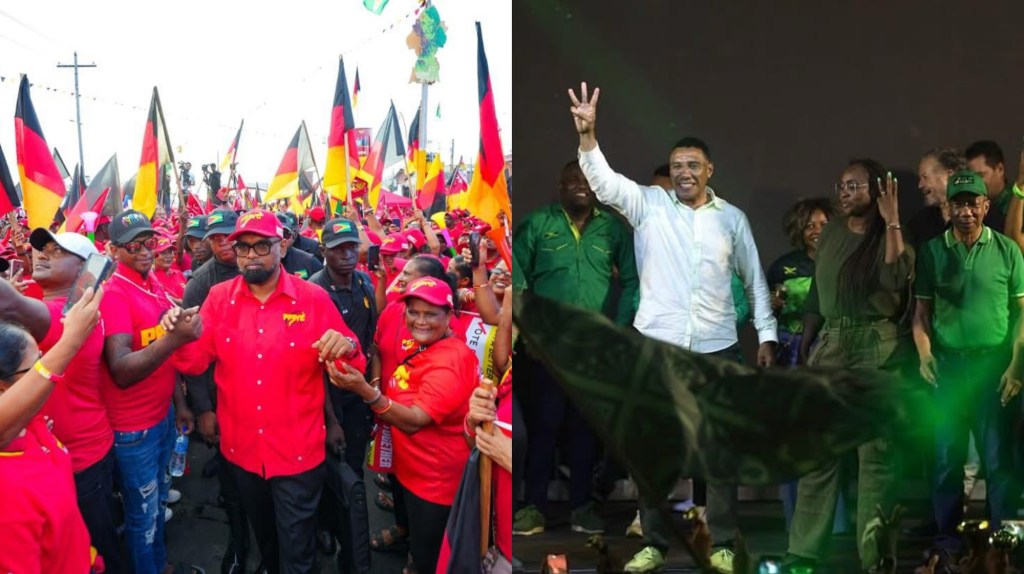
Preliminary results from general elections held in the CARICOM nations of the Cooperative Republic of Guyana and Jamaica indicate that voters in both countries have returned their incumbent political parties to power.
On September 1, the South American nation of Guyana, which employs a system of proportional representation, held its national and regional elections.
Preliminary results published by the country’s electoral commission, GECOM, show that the ruling People’s Progressive Party/Civic (PPP/C), led by Dr Irfaan Ali, was returned to office for a second consecutive term. Dr. Ali and his party are now poised to mange the country’s newly tapped oil resources for another five years and be in a position to determine whether it continues exponential economic growth it has experienced in recent years.
After the preliminary results, there were calls by opposition parties for a recount in Region 4, a populous area which includes the capital, Georgetown. Although GECOM authorised the recounts, reports indicate the results remained unchanged.
According to GECOM’s Statements of Poll, the PPP/C secured victory in eight of the country’s ten regions, with a preliminary total of 242,489 votes out of 438,423 valid votes cast. This represents 55.30 per cent of the valid votes.
The new We Invest in Nationhood (WIN) party came second with 109,180 votes, or 24.90 per cent of the valid votes. Led by businessman Azruddin Mohamed, on whom the U.S. imposed sanctions, WIN will now form the country’s main opposition in Parliament.
Followed by WIN was A Partnership for National Unity (APNU), the main opposition party before the 2025 elections, which received 77,873 votes. Other parties garnered significantly fewer votes, according to GECOM’s published data.
Meanwhile, Jamaica, which uses a first-past-the-post electoral system, held its general election on Wednesday, 3 September. Based on preliminary results, the incumbent Jamaica Labour Party (JLP), led by Dr Andrew Holness, won a historic third consecutive term. The party secured 34 of the 63 seats, representing a marked decline from the 49 seats it held following the 2020 elections.
The main opposition party, the People’s National Party (PNP), increased its representation, winning 29 seats, but ultimately lost the election.
The election was marked by a low voter turnout.
Opposition Leader Mark Golding conceded defeat.
END
 One News SVG