

The views expressed herein are solely those of the writer. Opinion pieces can be sent to us at onenewsstvincent@gmail.com
Article title: SVG’s Foreign Policy: My case for why we should vote for the Unity Labour Party in this year’s general elections.
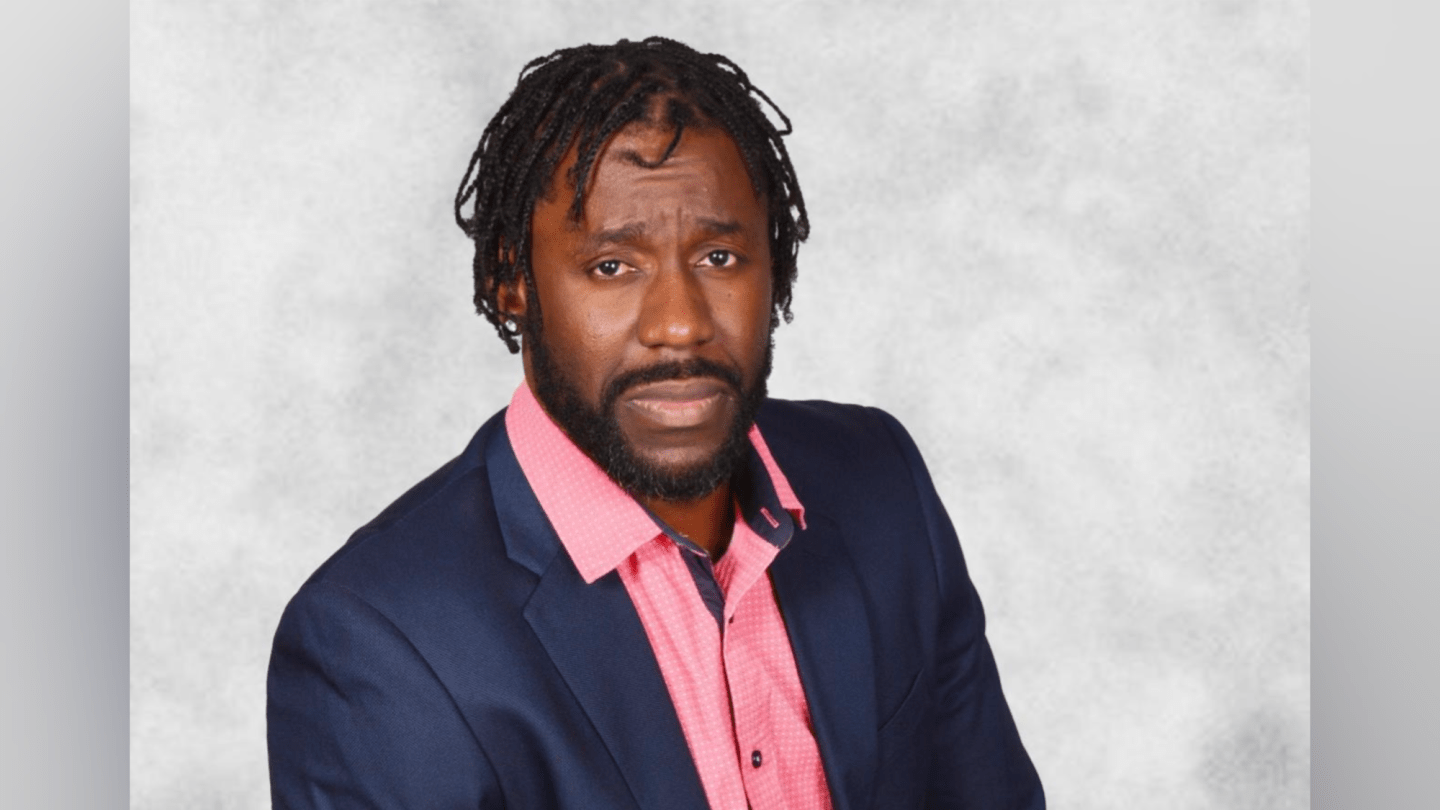
Contributor: Emanuel Quashie is a Lecturer of International Relations at the Department of Government at the University of the West Indies, Mona, Jamaica.
Foreign policy is undoubtedly an important facet of every country’s governance structure, particularly within the context of foreign relations whether bilateral, multilateral, regional or international. Hence, it is crucial that any party or leader in power have a robust foreign policy. Especially one that is harmonious and not incongruous. It is a fact that SVG’s foreign policy over the years has been a robust, principled, people-centered and harmonious one. First, foreign policy can be defined as the strategy governments use to guide their actions in the international arena. It can also be defined as the actions that leader of a state decides to pursue in a given relationship or situation. For instance, the United States foreign policy has been for a long time not to recognize the communist state of China until President Richard Nixon took an action to visit China and meet with Mao Zedong in Beijing, February 21, 1972. A failed foreign policy, however, is one that is inconsistent and oftentimes blurs the lines between friends and enemies by employing a reductive binary approach in their foreign policy. This type of unhinged, unprincipled and incoherent foreign undoubtedly and inevitably leads to confusion and chaos in the international realm.
For instance, the US foreign policy changes depending on who they are dealing with – such as in the case of Israel in which the United States has offered its unwavering support for the country’s military actions in the Gaza strip that has now been deemed a genocide by scholars of holocaust and genocide as well as reputable international organizations. For example, in December 2023, more than 55 scholars of the Holocaust, genocide, and mass violence deplore raised the alarm that Israel’s actions in Gaza raises the question of genocide, and called on scholars, programs, centers, and institutes in Holocaust and Genocide Studies to take a clear stance against Israeli mass violence. The following month, on January 31, 2024, the International Court of Justice (ICJ) found it plausible that Israel’s acts could amount to genocide and issued six provisional measures. In March 2024, Raz Segal, a Professor of Holocaust and Genocide Studies and Endowed Professor in the Study of Modern Genocide at Stockton University along with Luigi Daniele, a Senior Lecturer of International Humanitarian Law and International Criminal Law at Nottingham Law School (NTU) published a peer-reviewed article in the Journal of Genocide Research stating that the threshold for genocide has been crossed before October 7. On May 26, 2024, Human Rights Watch co-founder, Aryeh Neier who fled the Nazis as a child, even told CNN Fareed Zakaria that he has come to the conclusion that Israel is committing genocide in Gaza. on December 5, 2024, Amnesty International concluded following its extensive research that it has “found sufficient basis to conclude that Israel has committed and is continuing to commit genocide against Palestinians in the occupied Gaza Strip”. In May 2024, Amos Goldberg, Professor of Holocaust History at the Hebrew University of Jerusalem, said as it pertains to Israel’s actions in Gaza: “Yes, it is a genocide”. Melanie O’Brien, president of the International Association of Genocide Scholars, told the Dutch newspaper, NRC that Israel’s deliberate denial of food, water, shelter and sanitation was the key factor in her determination that the military campaign was a genocide.Two premier Israeli human rights organizations – B’Tselem and Physicians for Human Rights-Israel (PHRI) – published a report in July 2025 in which they concluded that Israel is in fact committing a genocide in the Gaza Strip. Also, A UN-mandated independent Commission of Inquiry in its report concluded that Israel has committed and is continuing to commit genocide against Palestinians in the Gaza Strip.
At the same United Nations body, the Hon. Dr Ralph Gonsalves stood tall among a vast majority of states who has also condemned Israel’s egregious military campaign in the Gaza Strip. For example, our beloved comrade leader, the Hon. Dr Ralph Gonsalves, Prime Minister of St Vincent and the Grenadines, spoke about the raging and unabating genocide in Gaza in his United Nations General Assembly address in which he skillfully with the sort of intellectual rigor he is well-known for, drew parallels between British colonial history of enslavement and genocide in the Caribbean to what’s unfolding in Gaza. He did so to emphasize the inevitable calamitous long-term damage that awaits the Palestinian people that will undoubtedly take centuries to repair. For example, Dr Ralph Gonsalves in his address stated that: “Over 200 years ago, the British committed large-scale genocide against the people of my country [St Vincent and the Grenadines] and we are still suffering, and enduring the historical legacies of underdevelopment. . . Similarly, the genocidal enslavement of African bodies in our Caribbean; in our hemisphere. It will take centuries for the pain, suffering and legacies of the current genocide of the Palestinians to be repaired. We in the Caribbean are today demanding justly reparations for the genocide and enslavement of African bodies, which occurred centuries ago.. . this madness that has been unfolding, unabating, must stop.”Thus sort of historical and intellectual rigor has won Dr Ralph Gonsalves admiration and reverence from leaders around the world and by extension cement SVG’s position in the history books on foreign affairs as an important voice, especially in times of exception.
Let us not forget his victory at the United Nations through his intellectual porous, astute leadership, sunny personality, charm and statesmanship on the international stage, St Vincent and the Grenadines became the smallest country – by far – to ever sit on the most powerful international seat: UN Security Council.Under our comrade PM, SVG developed a track record of principled solidarity with respect to the continent of Africa, which resulted in the creation of the A3+1. Guided by SVG’s foreign policy directive to deepen and strengthen our bonds with our African brothers and sisters and the wider Caribbean, SVG formed relationships with Niger, South Africa, and Tunisia (the three African countries on the UN Security Council when SVGjoined in 2020). SVG worked closely to coordinate all African-related matters on the Council’s agenda closely with the A3 member states.
Regionally. . .
Regionally, Dr Ralph Gonsalves is a highly respected leader and a staunch defender of our region’s history, culture, political and territorial independence, sovereignty and most importantly, our friends and neighbors. This was evident when he became the Pro-Tempore President of the Community of Latin American and Caribbean States (CELAC), which is composed of 33 sovereign countries in the Americas representing roughly 600 million people, and it was specifically created to deepen Latin American integration. This was another proud moment for Vincentians because SVG was once again making history in strategically important region in the world, despite our small size, as a result of our dear comrade leader statesmanship, we have been able to punch above our weight. The position was significant in many ways not least to further deepen Latin American and Caribbean integration and an important step for us as a region to reduce America’s influence on political, economic and security affairs in our region. After assuming the Pro-Tempore President of the Community of Latin American and Caribbean States (CELAC), our prime minister was able negotiate potential trade relations with other nations that is mutually beneficial to all contracting parties and SVG even received an EU grant of $11.3 million for regional integrationthrough the EU-CELAC relationship. Important to note also that St Vincent and the Grenadines along with St Lucia, the Commonwealth of Dominica, Grenada, the Republic of Vanuatu, the independent State of Samoa and the Republic of Trinidad and Tobago signed a short-stay visa waiver in May of 2015, which came into full force on May 1, 2023.
Another important and history-defining example of our dear comrade leader statesmanship was evident in the Venezuela-Guyana border dispute. While some CARICOM countries along with the United States supported Guyana in the border dispute with Venezuela, the vast majority of CARICOM member states opted for a more neutral stance on the matter chose peace talks as the avenue to deal with the matter as civilized men of civilized nations will do. This peace talk manifested in a dialogue at the Argyle International Airport in St Vincent and the Grenadines dubbed the “Argyle Summit” that was initiated by our very own Prime Minister Dr Ralph Gonsalves of St Vincent and the Grenadines, who was the then-Pro-Tempore President of the Community of Latin America and Caribbean States (CELAC)at the time and the Prime Minister Roosevelt Skerrit of the Commonwealth of Dominica, who facilitated talks between the President of Venezuela Nicolas Maduro and the President of Guyana Mohamed Irfaan Ali. The summit resulted in a Joint Declaration of Argyle for Dialogue and Peace between Guyana and Venezuela ending with Venezuela and Guyana agreeing to: “. . . directly or indirectly, will not threaten or use force against one another in any circumstances, including those consequential to any existing controversies between the two States.” This, of course, is in keeping with international law, specifically Article 2(4) of UN Charter, which has become customary rule that “prohibits the threat or use of force and calls on all Members to respect the sovereignty, territorial integrity and political independence of other States.”
As of October 1, 2025, we have also further deepened relations with Barbados, Belize and the Commonwealth of Dominica vis-à-vis fully freedom of movement. This means, citizens of either country now enjoy the right to enter, leave, re-enter, re-side, work, and remain indefinitely in the participating countries without the need for a work permit or residency permit. This deepened political and economic integration will no doubt promote peace, stability, democratic principles and foster an environment of entrepreneurship and job growth through ease of access to a wider market for all participating member state as well as shared qualifications and skills that are mutually beneficial to all contracting parties to the agreement.
As a defender of our friends, Dr Gonsalves took a principled position not only on the Venezuela-Guyana border dispute, but also in the defense of regional allies who succumbs to unwarranted attacks in hot pursuit of hegemonic goals – like, for example, in the case on February 25, 2025, when US Secretary of State, Marco Rubio put out a statement on the US Department of State webpage titled, “Expansion of Visa Restrictions Policy for Individuals Exploiting Cuban Labor” aimed at curtailing “human trafficking” in the form of ‘forced labour” in which the statement claims without empirical evidence that the Cuban government “continues to profit from the forced labor of its workers and the regime’s abusive and coercive labor practices. . .”. Helen Yaffe, a Senior lecturer at the University of Glasgow, and author of We Are Cuba! How a Revolutionary People have Survived in a Post-Soviet World and Che Guevara: The Economics of Revolution published by Yale University Press (2019) documented the extent and impact of the Cuban medical internationalism that was initiated in early 1960s. For example, Cuban medical professionals have been placed in around 60 countries, far more than the World Health Organisation (WHO) workforce. However, 27 of those (44%) the host government paid nothing, while the remaining 35 (58%) paid or shared the costs according to a sliding scale. Moreover, the medical professionals primarily work in under or unserved populations in the Global South – like, for instance, Cuba’s response to the Ebola outbreak in West Africa in which the small island (compared to the more rich resource developed countries) sent a total of 230 medical professionals to Sierra Leone (165) and Liberia and Guinea (83) to combat the Ebola outbreak. All this while heavy hitters like China, or former colonial powers – such as France and the United Kingdom did not step up, as they, along with richer countries, were more concerned about their security. Another article published by Reuters in 2020 titled, “Cuba sends ‘white coat army’ of doctors to fight coronavirus in different countries” provides yet another great example of Cuba’s goodwill and the island nation punching far above its weight in medical diplomacy by providing medical assistance to roughly 40 countries across 5 continents during the global pandemic. Regionally, on March 22, 2020, Jamaica welcomed 140 Cuban medical professionals to aid the small island nation in combating the COVID-19 pandemic that was composed of 90 specialist nurses, including for critical care, emergency, medical, surgical and primary care; 46 doctors, including internists and haematologists; and 4 therapists, according to Jamaica’s Ministry of Health and Wellness (March 22, 2020). In the case of St Vincent and the Grenadines, roughly 12 Cuban nurses along with 4 doctors arrived on the small island nation-state on March 27, 2020, as part of the government’s response to the pandemic. Therefore, it was not surprising to witness several CARICOM leaders coming to the defense of Cuba in the face of unfounded claims and slanderous attacks from the Trump’s administration. Cuba is considered the region’s family by history, geography and solidarity. I believe this latest attack on Cuba by the Trump administration might also be part of the broader US embargo on the country. An embargo that has been overwhelmingly rejected by almost every country in the world. For example, in a vote in the UN General Assembly on October 30, 2024, on resolution, titled “Necessity of ending the economic, commercial and financial embargo imposed by the United States of America against Cuba” was passed with 187 votes in favour (SVG is among the 187 votes in favour), 2 against (Israel and the US), and 1 abstention (Moldova). Hence, our comrade leader as a longtime friend of Cuba who has been there for us both in hard time and good times, took a bold stance to defend Cuba (our friend) in face of US false claims. For example, in a fiery speech on March 9, 2025, Dr Ralph Gonsalves stated that: “I was born a rebel. I was born with a rebel seed. I was a young rebel. I am today, an old rebel. . . I know we are not involved in any exploitation of any Cuban medical workers. And I know that the Cuban government is not involved either. . . And I believe that the Secretary of State is a good and decent man. I would not say anything bad about him. . . But if it is determined that you have to take away my visa, I want to say this publicly it will be reported. I am not looking for a fight with anybody, but we have to be honest and open. The hemodialysis, which we do in St Vincent at the Modern Medical and Diagnostic, without the Cubans there I would not be able to offer that service.” If it was not for Dr Gonsalves statesmanship in foreign policy, we would not garner the necessary medical assistance that so many Vincentians were able to benefit from before, during and after COVID-19.
Cuba has also assisted SVG beyond the medical realm, thanks to the stewardship of our comrade leader Dr Ralph Gonsalves. For example, a new partnership involving the Authorities of the Cuban Aviation Company of Airport Services (ECASA), Argyle International Airport (AIA), and the Embassy of Cuba in Saint Vincent and the Grenadines facilitated the arrival of Cuban engineers to join the expansion and modernization works at the Argyle International Airport (AIA). This new bilateral cooperation project is a perfect example of the ongoing strengthening of relations between Cuba and Saint Vincent and the Grenadines as well as the diversification of engagement between the two countries. Another way in which the proactive, pragmatic and people-centered foreign policy of the Unity Labour Party government guided by our comrade has benefited the people of St Vincent and the Grenadines is through the deepening of relations with Cuba over the years that resulted in an expansion of the Cuban-scholarship programme that was first initiated in 1998. The scholarship was initially limited to medical studies but has since expanded in size and scope – like, for example, in the 2023/2024 academic year alone, the government of the Republic Cuba granted 21 scholarships to Vincentians in the areas of Medicine, postgraduate Medical Studies (for graduates in Cuba), Stomatology, Nursing, Engineering and Health Technology.
During times of crisis, or times of exceptions that take place in this international anarchic system to which all sovereign nation states exist in a state of survival of the fittest, it is important to have a leader who can manage exogenous shocks that can have dire consequences for one’s state. Hence, this brings me to the current military build-up in our region reminiscent of the Cold War era. The Trump administration in hot pursuit of the US’s illusive “War on Drug” has launch several military attacks against vessels that they deemed are drug traffickers or to borrow a lexicon from the administration: “narco-terrorists”. These outlandish claims have yet to be proven. Nevertheless, US President Trump currently enjoys the explicit support of Trinidad and Tobago Prime Minister Kamla Persad-Bissessarwho once said: “I, along with most of the country, am happy that the U.S. naval deployment is having success in their mission. The pain and suffering the cartels have inflicted on our nation is immense. I have no sympathy for traffickers; the U.S. military should kill them all violently.” The Trinidad prime minister also stated that: “Our country has been ravaged by bloody violence and addiction because of the greed of the cartels. The slaughter of our people is fueled by evil cartel traffickers.” Some might be inclined to agree or even support Kamala Persad-Bissessar position, given the burgeoning gun violence that has rocketed the region in the past few years. However, the data says otherwise on this matter. For example, in a recent peer-reviewed journal article published in the European Journal of International Security by Dr Yonique Campbell, Professor Anthony Harriott, Dr Felicia Grey and Dr Damion Blake titled From the ‘war on drugs’ to the ‘war on guns’: South–South cooperation between Mexico and the Caribbean diagnoses the burgeoning gun violence epidemic permeating the Caribbean is as a result of the illegal trafficking of guns stemming from the illegal trafficking of guns from the US, given that an “estimated 60–90% of guns used in criminal acts in LAC are trafficked from the United States”. The article also offers practical solutions — such as a “ban on the sale of military-grade weapons to civilians” and “punitive measures against legitimate carriers that convey illegal weapons across national borders as well as monitoring and performance reviews.” Hence, the Trump administration should also declare a War on the illegal trafficking of guns from the US that is responsible for the bloody violence ravaging our communities and destroying and slaughter of our people as the Prime Minster of Trinidad and Tobago Kamala Persad-Bissessar stated in which she seems to blame the issue solely on “evil traffickers”.
Even the US government data does not support the Trump administration own claims. In fact, the 2025 National Drug Threat Assessment published by the US Department of Justice and Drug Enforcement Administration lists Mexican cartels as the major drug threat to America as it relates to methamphetamine and fentanyl as well as the cause of thousands of American death every year from drug overdose from drugs that are trafficked to the United States from Mexican cartels – such as Sinaloa and Jalisco New Generation Cartels (CJNG).
For example, the report reads: “Mexican cartels’ production, trafficking, and distribution of powerful illicit synthetic drugs, chiefly fentanyla and methamphetamine, represent a dire threat to public health, the rule of law, and national security in the United States. The Sinaloa and Jalisco New Generation Cartels (CJNG), together with their procurement, distribution, and financial support networks stretching across Latin America, China, and other key global nodes, remain the dominant threats for the trafficking of these and other drugs into the United States. In the 12-month period ending in October 2024, 84,076 Americans died from a drug overdose, according to the most recent available provisional statistics from the Centers for Disease Control and Prevention (CDC), underscoring the devastating effect these cartels have on our country.”
So, why is the US interested in Venezuela? Simple answer: regime change and oil. Former US Ambassador James Story, who served as both Ambassador and Charge d’Affaires to the Bolivarian Republic of Venezuela from July 2018 until May 2023 in an interview with 60 minutes seemingly disregarded international law and the sovereignty of Venezuela by openly stating the real reason (whether deliberately or unintentionally) why the US is about to launch what I think is a regime change war in Venezuela. James Story stated that: “This [Nicolas Maduro] is a very bad actor sitting on top of the world’s largest known reserves of oil. Plus the critical minerals that will fuel the 21st century economy. And he is in bed with our strategic competitors.”
Who is America’s strategic competitors that the former ambassador might be referring to? If I am to speculate, I believe it’s China and Russia. The two countries that Venezuela has very close relations. In fact, China is the largest importer of Venezuela oil, as the country directly and indirectly imports roughly 503,000 barrels per day (bpd) of Venezuelan crude and fuel, which is approximately 55% of Venezuela’s total exports (Aizhu and Liu, 2025).
In the same CBS 60 Minutes segment, however, the investigative reporter stated that “most fentanyl is produced in Mexico or China, and according to the DEA, Venezuela is not a major producer of cocaine either, but it is a transit route for it. You know who else is transit route for drugs – such as marijuana, cocaine, heroin, and even ecstasy? Trinidad and Tobago, according to the US Department of State, Bureau of International Narcotics and Law Enforcement Affairs (2014):
“Trinidad and Tobago’s location, porous borders, and direct transportation routes to Europe, West Africa, Canada, and the United States make it an ideal location for cocaine and marijuana transshipment. Marijuana is produced in Trinidad and Tobago and is the most widely used drug domestically, but other drugs, including cocaine, heroin, solvents, pharmaceuticals, and ecstasy, are also available.”
If Venezuela is not a major drug producer country, but like Trinidad is a transit route because of its ideal geographical location, then why not cooperate with the government of Venezuela on building a robust interdiction effort? Or even implement a Ship Rider-style Agreement between the USA and Venezuela. Our prime minister, being the astute statesman he is when it comes to foreign policy, has called on the US to end its unilateral militarization in our Caribbean waters. Prime Minister Dr Ralph Gonsalves called for the scaling back of actions and rhetoric which are so inimical to cordial unneighborly relations” and stated that SVG is deeply troubled by what he called the “foreign militarization in our waters.” He further opined: “Repeatedly, the countries of the Caribbean and Latin America have unanimously declared our area a zone of peace. We urge our American friends to abide by this declaration.” I and I believe most, if not all, Vincentians would agree with our prime minister on this matter. The use of unnecessary force in our zone peace will have a catastrophic ripple effect throughout the Caribbean.
Our prime minister is a man of high intelligence with vast and in-depth knowledge of our region’s history and has the foresight to predict that supporting US’s illegal militarization in our Caribbean waters and war of aggression against Venezuela will not be in SVG’s best interest. We cannot allow Venezuela to fall. If that happens, it will destabilize the entire Caribbean region. This is not hyperbole. This will be our reality in the Caribbean. We will have to deal with a massive immigration crisis, rapid decline in tourism and foreign direct investments, environmental degradation, increased energy cost (electricity, gas at home and at the pump, etc.), an increase in political violence in Venezuela as a result of warring factions in the country that will spill over to other countries in the Caribbean in the form of violent gangs and violent gangs that already exist in our Caribbean countries will become even more dangerous as they’ll now have even more easy access to high-powered weapons from Venezuela through local mercenaries who were supplied them by the US to aid Trump’s coup d’état attempt. We have seen this movie before in other parts of the word (Iraq, Afghanistan, Libya, etc.). Unnecessary war has severe consequences for everyone in close geographical proximity to the war. No sane and right-thinking Caribbean leader should support Trump’s illegal war against Venezuela.
Thanks to our comrade leader’s pragmatic and people-centered approach to foreign policy, we have been able to benefit tremendously from our relationship with Venezuela. For example, in 2017, the government of St Vincent and the Grenadines received a 50% debt forgiveness under the PetroCaribe oil initiative followed by a commitment by the Venezuelan government to forgive the rest of the PetroCaribe debt that was conservatively estimated at 4.2% of GDP. Staying true its word, Venezuela, in April 2022, fully forgive St Vincent and the Grenadines remaining debt to the PetroCaribe oil initiative, which at the time, was estimated to be roughly $189 million Eastern Caribbean dollars (EC$189 million). Hence, the importance of foreign policy, but one that is robust, principled, people-centered, pragmatic, harmonious and forward-thinking. This is the foreign policy of the Unity Labour Party.
Let us now move out of the region and travel to East Asia to talk a little bit about another dear friend of ours: Taiwan. The government of Saint Vincent and the Grenadines and Taiwan officially established diplomatic relations on August 15, 1981, when a communiqué was signed by Prime Minister Milton Cato and Sun Yun-suan (Premier of the Republic of China) of Taiwan. Hence, Taiwan has been a longtime friend to the people of St Vincent and the Grenadines. However, under the leadership of Hon. Dr Ralph Gonslaves, the relations between both countries strengthened and deepened in ways to the profound benefit of both parties, especially to the people of St Vincent and the Grenadines. For example, The Taiwan scholarship to St Vincent and the Grenadines commenced in the year 2004 as an initiative of Ralph Gonsalves and it is offered through the Ministry of Education (MOE) and the International Cooperation and Development Fund (ICDF). Since the inception of the programme in 2004, Taiwan has offered countless of scholarships to Vincentians, for example, between 2004 and 2018, Taiwan provided a total of 143 scholarships to St Vincent and the Grenadines. In August 2025, 30 Vincentians were recipients of the Ministry of Foreign Affairs (MOFA) Taiwan Scholarships and the International Cooperation and Development Fund (Taiwan-ICDF) Higher Education Scholarships.
In addition to scholarships, Taiwan has offered support in other areas – such as funding for the Rabacca Bridge that was built through a collaboration between our government and Taiwan, and it [Rabacca also known as Yurumein/Taiwan Bridge] officially opened in March 2007 as part of an $8.5 million project. Moreover, following the 2021 La Soufriere volcanic eruption, the bridge was severely damaged, and the government of the Republic of China (Taiwan) provided a grant of over $100,000 USD to aid in its repair as part of a broader $3 million USD rehabilitation and reconstruction budget. Taiwan also provided funding towards to the overall construction of the Argyle International Airport – such as a $15 million USD grant as well as a $10 million USD soft loan for the construction of roads, terminal building, and control tower in 2006. Taiwan continued to offer funding for various other airport-related matters – such as aviation security equipment and CCTV upgrades in 2023. Taiwan also provided to enable the installation of a solar power system at the desalination plant on the island of Bequia, which was part of a larger $200,000 USD initiative for Eastern Caribbean Solar Challenge projects. The list of help Taiwan has offered to St Vincent and the Grenadines is endless and would require an entire monologue dedicated specifically to exploring it at breadth and length. Nevertheless, it is evidently clear that the Ralph Gonsalves proactive, pragmatic and people-centered approach to foreign policy has yielded enormous benefits for the people of St Vincent and the Grenadines.
It is this same proactive and pragmatic foreign policy that saw us having major airlines landing at our Argyle International Airport that has been in operation for less than a decade (officially opened in February 2017). So far, major airlines like Virgin Atlantic, American Airlines, Delta, Air Canada, JetBlue, among others all provide scheduled flights to the airport. In fact, in 2025, the airport had record-breaking traffic with four of the major international airlines operating simultaneously that has prompted expansion plans in the near future. The same foreign policy approach resulted in the construction of the New Modern Kingstown Port, which was funded by a $25.6 million (Pound Sterling) equivalent to $32 million USD grant from the CDB-administered United Kingdom Infrastructure Fund, a $110 million USD loan from the Caribbean Development Bank (CDB) and a $43 million USD contribution from the Government of St. Vincent and the Grenadines.
The list of ULP and its leader foreign policy achievements are exhaustively long, and it is impossible to explore them all in this article. However, it is impossible to deny the unvarnished fact: ULP’s foreign policy is the sort of proactive, pragmatic, people-centered, principled, harmonious and forward-thinking approach that SVG needs to continue to reap the tremendous benefits that will continue to improve the lives and livelihoods of the people of St Vincent and the Grenadines. Therefore, on November 27, 2025, please place your x for the comrade leader and his professional team, so they can continue to work for us and lead us into the 21st century.
 One News SVG