

The views expressed herein are solely those of the writer and do not necessarily reflect the views of One News SVG.
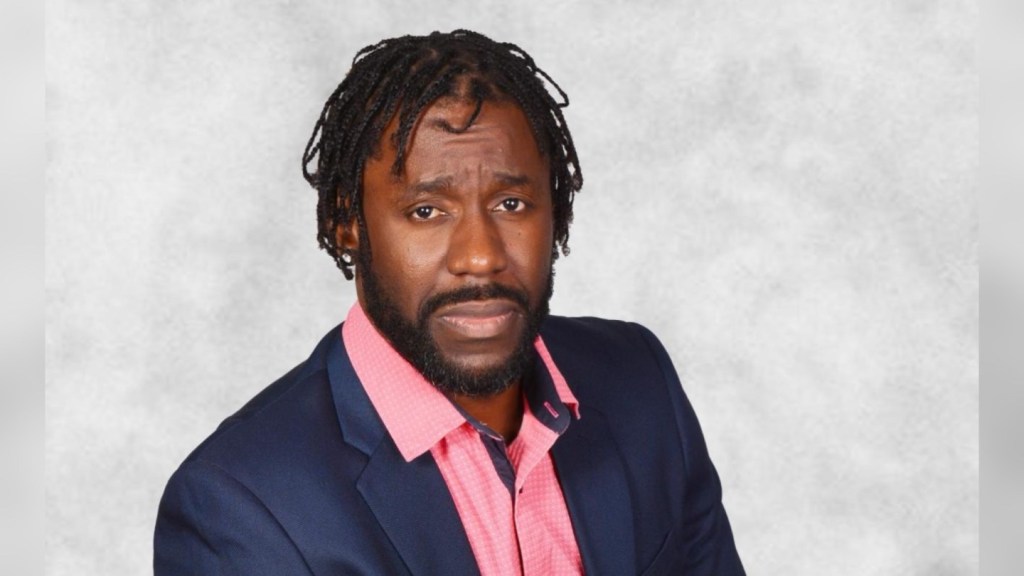
By Dr Emanuel Quashie.
Emanuel Quashie is a Lecturer of International Relations in the Department of Government at the University of the West Indies, Mona campus.
On January 3, 2026, US President Donald Trump announce in the early Saturday morning that he has bombed Venezuela (making it his 6th country he has bombed since taking office on January 20, 2025) and captured the nation’s president, Nicolas Maduro, along with First Lady Cilia Flores in a dramatic overnight military attack that followed months of heightenedtensions between the two nations. Since the attack, there have been many commentaries about this fluid situation with some statements seemingly attempting to “both-sides” the issue or take a more “balanced” approach not to appear bias or one-sided. Here’s the unvarnished fact: the war on Venezuela had absolutely nothing to do with “drug trafficking” and I have said this for months that it was about regime change and oil in Venezuela. Another fact is that Trump’s military action in Venezuela is a gross violation of international law. The principle of non-intervention in a sovereign state is rooted in customary international law the UN Charter, Article 2(4) and should be respected and adhered to regardless of one’s personal beliefs or feelings about a particular leader. Only time I believe this couldbe overridden is in cases that meets the definition of crimes that “shocks the conscience of mankind” as outlined in the Rome Statute of the International Criminal Court: Genocide (Article 6); Crimes Against Humanity (Article 7); and War Crimes (Article 8).
Another fact that I would also like to address is the reason why Venezuela is in the economic state it is in, which some commentators particularly in US mainstream media tend to conveniently omit in their analysis is that a large part of why Venezuela economy is in a mess is due mainly because of US imposed economic sanctions on Venezuela since 2015 targeting the financial and oil sector/PDVSA that cost the country’s economy a whopping $31 billion in revenue that resulted in hardship in the country. The US imposed those sanctions not out of concern for human rights, but as part of their concerted wider campaign to paint Venezuela as a failed state ruled by a ruthless dictator just like they did in Operation PBSuccess, which was a major propaganda and psychological warfare campaign launched against Guatemala’s democratically elected leader, Jacobo Árbenz, to paint him as a communist dictator.
Let us look at another regional case example. Manuel Noriega became a rising star to the US and was an asset to the Central Intelligence Agency (CIA) who assisted the US military interventions in the Americas at the time, until it was found out that he was a double agent for Cuba’s intelligence agency and the Sandinistas, the US government disowned Noriega, then the US disowned him and he became a dictator that they no longer wanted to work with anymore. Hence, they overthrew him and used drug trafficking and money laundering case against him. The US works with dictators once they support their agenda like Fatah el-Sisi who led a military coup in Egypt in 2013 and overthrow Egypt’s first democratically elected president Mohamed Morsi who was then imprisoned in horrible conditions that led to him collapsing in a Cairo courtroom and to his sudden death. Fatah el-Sisi has killed thousands and imprisoned thousands of his own citizens along with arresting anyone who dares to challenge him, which is why he always wins the presidential elections with roughly 90+% every time.
However, the US provides the tyrannical dictator with $1.3 billion in military aid annually. Trump even called Fatah his “favourite dictator” during a G 7 summit in 2019. The point is, even If Nicolas Maduro was a dictator for argument’s sake, the US doesn’t have any moral high grounds to stand on as it has both work with and installed dictators in countries around the world once they support US foreign policy agenda – like, for example, when the US overthrew democratically President Jacobo Arbenz of Guatemala in 1954 and installed military dictatorship of Carlos Castillo Armas, a move that was driven solely by US self-interest: anti-communism policy during the Cold War era and protecting the interest of a US company: United Fruit Company (UFCO) (now Chiquita) who would have lost huge lands and profits under President Jacobo Arbenzreforms. Unlike his predecessors, Trump and some US officials have been bizarrely candid about their true intention n Venezuela. For example, in 2017, former FBI Director Andrew McCabe stated in his book, “The Threat: How the FBI Protects America in the Age of Terror and Trump that Trump (in his first term as president) mentioned going to war in Venezuela for oil. In his book, the former FBI Director wrote: “I don’t understand why we’re not looking at Venezuela. Why we’re not at war with Venezuela? They have all the oil and they’re in our back door,” says President Donald Trump. In December 2025, Trump in assailing his predecessors for not pushing hard enough against Venezuela stated his true intentions: “They took our oil rights — we had a lot of oil there. As you know they threw our companies out, and we want it back.” In a recent press conference following the illegal abduction of Venezuela’s President Nicolas Maduro [On Saturday January 3, 2026], Trump made his intentions clear once more: “We’re going to have our very large United States oil companies, the biggest anywhere in the world, go in, spend billions of dollars, fix the badly broken infrastructure, and start making money for the country.” Even other US officials like former US Ambassador James Story, who served as both Ambassador and Charge d’Affaires to the Bolivarian Republic of Venezuela from July 2018 until May 2023 in an interview with 60 minutes stated that: “This [Nicolas Maduro] is a very bad actor sitting on top of the world’s largest known reserves of oil. Plus, the critical minerals that will fuel the 21st century economy. And he is in bed with our strategic competitors.”
The strategic competitors might be China and Russia. The two countries that Venezuela has very close relations. In fact, China is the largest importer of Venezuela oil, as the country directly and indirectly imports roughly 503,000 barrels per day (bpd) of Venezuelan crude and fuel, which is approximately 55% of Venezuela’s total exports. In 2018, Russia signed a deal worth over $6 billion to invest in Venezuela’s oil and gold sector. Following Venezuela’s economic crisis, Russia effectively became Caracas’s credit lifeline. Moreover, through mechanisms such as prepayment for oil deliveries, loan restructuring, and debt-for-oil agreements, Russia has helped to cushionVenezuela’s fiscal collapse while extending its influence in the region amidst US-Venezuela heightened tensions and in 2025, both countries signed a Joint Strategic Partnership Initiative to reaffirm their intent to coordinate under the OPEC+ framework, avoid predatory competition, and jointly stabilize global energy markets.
My concern is that this move is going to destabilize the region in ways that we are not prepared to handle. There is likely going to be a migration crisis likened to the 2015 EU migration crisis as a result of mass displacement and destabilizing conflicts in the Middle East (Syria civil war, Iraq war, etc.). A temporary disruption of travel by air and sea that may have negative economic implications for the region – a region that is already struggling financially. An increase in political violence in Venezuela as a result of warring factions in the country that will spill over to other countries in the Caribbean in the form of violent gangs, and violent gangs that already exist in our Caribbean countries will become even more dangerous as theyare likely to gain easy access to high-powered weapons from Venezuela from local mercenaries who will likely be supplied these weapons by the Trump administration in an attempt to quell the predicable political instability that is likely to incur from this dangerous decision. In addition, the Trump administration actions in Venezuela may cause calamitous damage to America’s regional standing and even help to make the case for China as amore attractive and alternative partner to the US revamped Monroe Doctrine approach towards the region. It may also further damage US global standing because as time goes on the situation is likely to turn into a major geopolitical disaster that may also serve as a breathing ground – sort of a recruitment camp for potential transnational terrorist groups who is likely to exploit the instability in the country and pose a terrorist threat to America. Similar to what I wrote in my book about how the Iraq war unified hostility towards America, became a source of radicalization for transnational terrorist groups and even played a crucial role in giving birth to the Islamic State of Iraq and Syria. Trump’s actions in Venezuela will likely result in growing negative opinions of America in the region that may result in leaders even garnering political support for deepening relations with China who might be viewed a better alternative to America.
I am still mildly hopeful that dialogue can prevail in remedying the situation, or we might see history repeat itself in Venezuela when in 2002, Hugo Chávez was ousted for a brief moment in an attempt coup, which involved the Venezuelan opposition with alleged support from the US; however, Chavez was returned to power after a couple days because of massive pro-Chávez demonstrations by his supporters and loyal military units that took to the streets, and eventually forcing the coup plotters to reverse course and reinstate Hugo Chavez as president. I would usually end with an appeal to CARICOM leaders, but not today, as Trump’s actions have proven that words of condemnation from CARICOM leaders, or any world leader as a matter of fact would not alter his decision. Rather, I would end by urging China to start playing by the current rules in this international anarchic system, or it may not only lose important allies and strategic partnerships but find itself in a containment policy designed by the Trump administration to hurt its economic ambitions and limit its economic power. Words of support and condemnation no longer matter. Time for China to end its policy of “non-intervention” and intervene to assist its friends in times of need.
END
 One News SVG
As always the behavior of the white men. Steal, Kill and Rape that all the good for. The true characteristics of Trump.
LikeLike