

By Val Matthias. Updated 1:51 p.m., Thursday, February 5, 2026, Atlantic Standard Time (GMT-4).
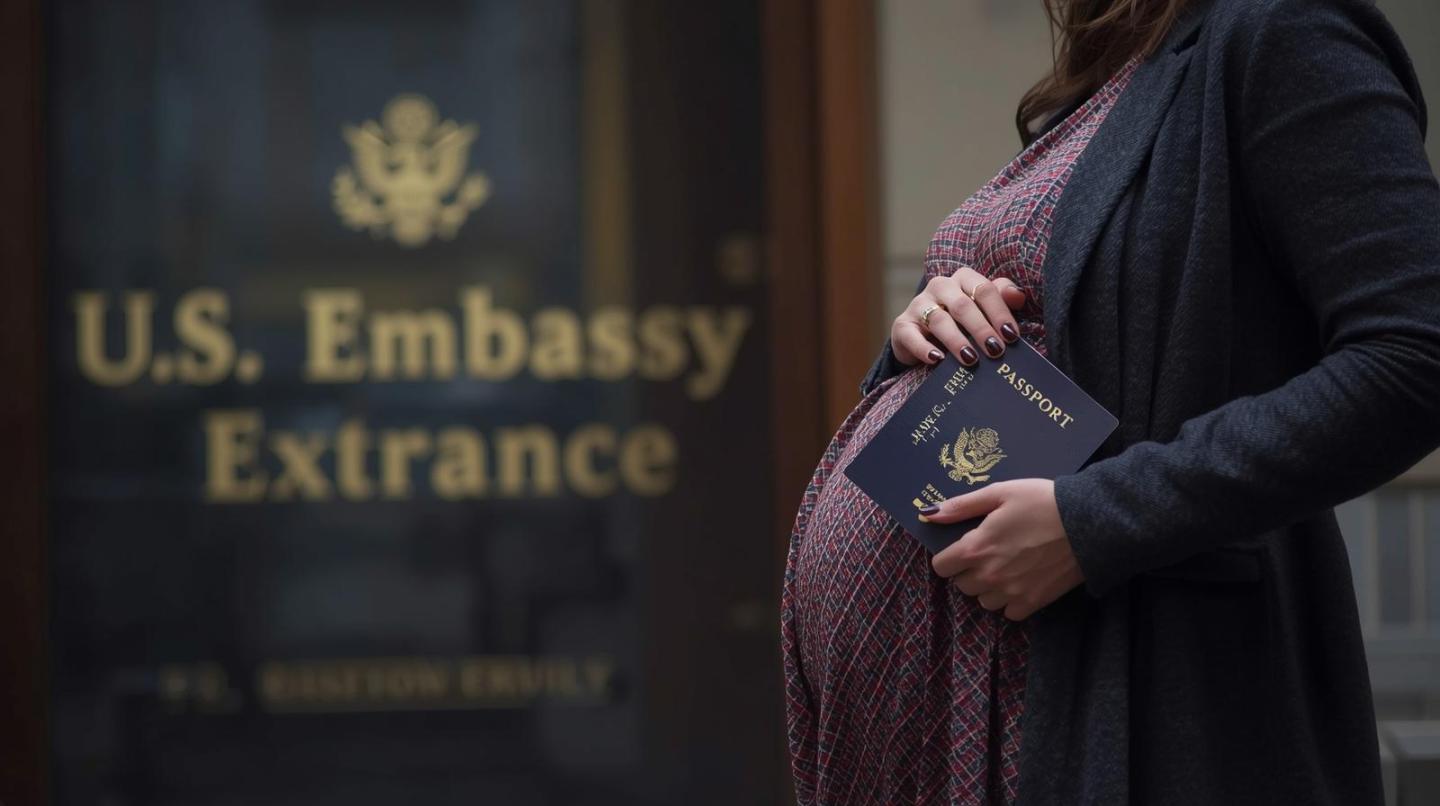
The United States has intensified enforcement of visitor visa regulations, directing consular officers to deny B‑1 and B‑2 applications if they believe the applicant’s primary purpose for travel is to give birth in the country to secure automatic citizenship for their child. The policy, reinforced in late 2025 and early 2026, targets what is commonly known as “birth tourism.”
Under the Primary Purpose Rule, traveling to the U.S. primarily for childbirth is not considered a legitimate activity under visitor visa categories, which are intended for tourism, recreation, or business meetings. Consular officers are instructed to presume an applicant’s intent is birth tourism if they believe the individual will give birth during their stay. Applicants must provide evidence that their primary purpose is unrelated to obtaining citizenship.
Pregnancy alone does not trigger automatic denial, but it does lead to closer scrutiny. Officers may rely on visual cues or information provided on the DS‑160 application form, such as references to “medical treatment,” to determine whether further questioning is necessary.

Exceptions remain for pregnant women traveling for legitimate reasons, including tourism, family visits, or business, provided they can demonstrate these are their primary motives. Those seeking medical care in the U.S. must meet strict requirements: proof that the treatment is unavailable in their home country, documentation from a U.S. healthcare facility agreeing to provide care, cost estimates, and evidence of the ability to pay without relying on public assistance.
The policy is designed to protect American taxpayers from covering childbirth costs through programs such as Medicaid. Violations carry serious consequences, including visa revocation, denial of future visa renewals, and permanent inadmissibility for misrepresenting travel intentions.
U.S. Customs and Border Protection officers at ports of entry also have discretionary authority to deny admission based on these factors. Pregnant travellers are advised to carry documentation such as a physician’s note confirming fitness to travel and expected delivery date, proof of comprehensive medical insurance covering maternity care, and evidence of strong ties to their home country to demonstrate intent to return.
The U.S. Department of State has underscored that the measures are part of broader efforts to ensure visitor visas are used for their intended purposes and to prevent misuse of the system through birth tourism.
END
Source: U.S. Department of State Advisory.



 One News SVG