
The views expressed herein are solely those of the writer.
Opinion: How does a national radio station’s main antenna collapse?Is this a case of poor maintenance by a statutory company that receives government subventions and reportedly generates millions in revenue, according to official statements?
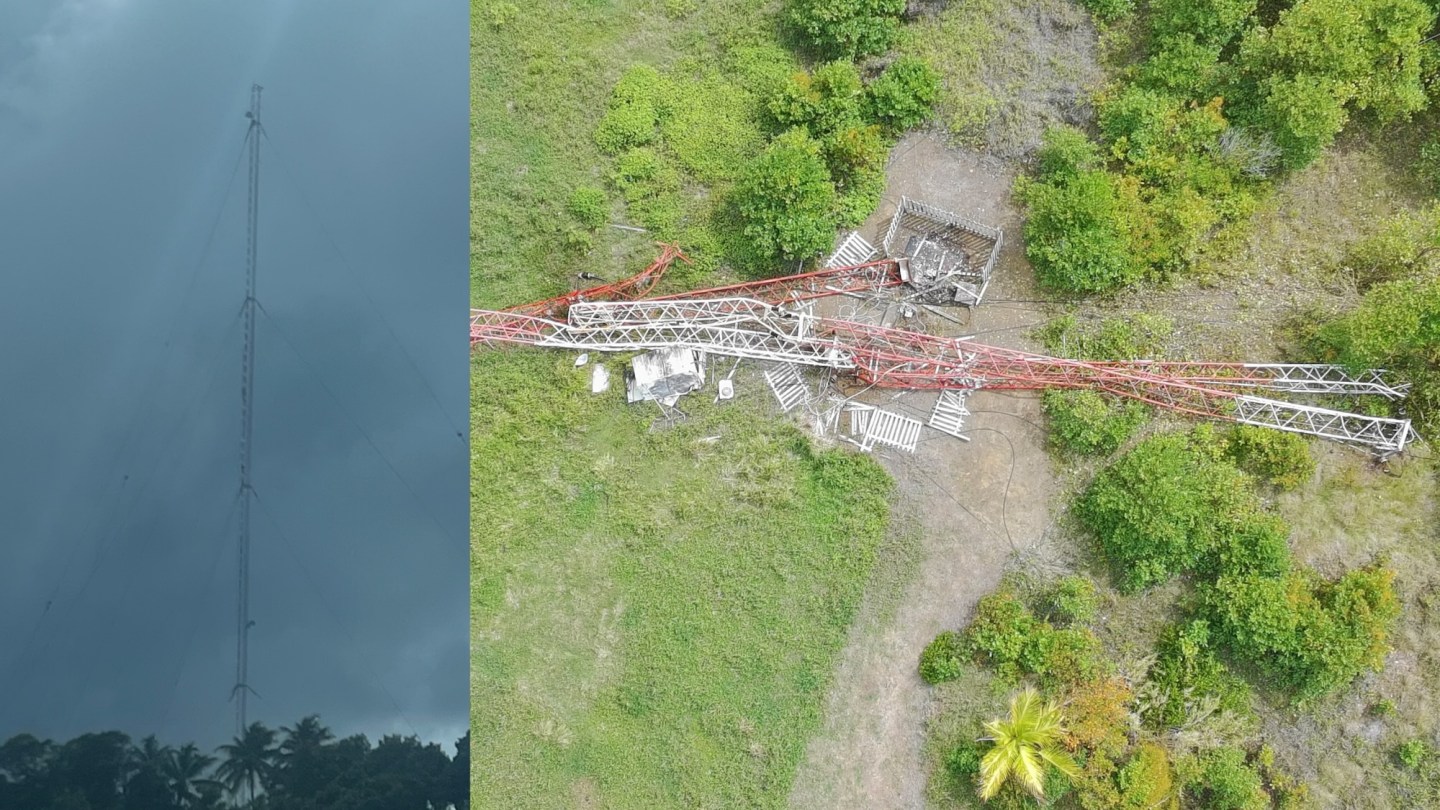
The station’s antenna in San Souci, which serves much of the windward side of the island, collapsed today (February 8). The windward side is prone to sea blast, which corrodes metal structures, but are there not measures to counteract rust and corrosion? Cell towers and antennas from telecommunications companies dot the windward side and remain standing. What went wrong?
Does this incident raise broader questions about maintenance practices nationwide?
We see roads ravaged by poor drainage and other factors left in deplorable condition or merely patched, leaving them almost as uncomfortable as before. Electrical poles sometimes rot at their bases, and government buildings suffer from collapsing ceilings, peeling paint, and mould growth, among other issues.
This prompts the question: Do we need to strengthen predictive and preventative maintenance?
Predictive maintenance uses data-driven technologies such as sensors, drones, and even AI analytics (from a more modern standpoint) to monitor equipment in real time, forecasting failures before they occur by detecting early signs like vibration anomalies or corrosion rates.
Preventative maintenance, by contrast, involves scheduled inspections, cleaning, and repairs based on manufacturer guidelines or historical data to avert breakdowns proactively.
For SVG’s government, adopting these approaches could transform infrastructure management: predictive tools could extend the life of coastal antennas and poles and other metal structures against sea blast, while preventative schedules would reduce emergency road repairs and building decay, saving millions in subventions and downtime.
In a disaster-prone nation like ours, this shift would enhance resilience, ensure reliable public services like broadcasting and power, and allocate budgets more efficiently (preventing incidents like today’s collapse from disrupting communication).
By Concerned Democrat
 One News SVG