

By Carlos Ernesto Rodríguez Etcheverry, Cuban Ambassador to St. Vincent and the Grenadines.
For decades, the story of Cuba’s relationship with the Caribbean has been one of solidarity, shared struggle, and mutual upliftment. In a region marked by small island economies and fragile infrastructures, Cuba’s contributions in healthcare, education, and technical cooperation have not just been symbolic — they have been lifesaving. These ties have often stood in stark contrast to the policy of hostility and aggression pursued by the United States, most notably in the form of the long-standing trade blockade against Cuba.
A history of cooperation and respect
Since the early years of independence for many Caribbean nations, Cuba has stood as a partner ready to share its expertise. Through medical missions and educational opportunities, Cuban professionals have worked across the Caribbean to strengthen health systems and build local capacity. Many governments in the region consider Cuban doctors essential, especially in rural communities — a sentiment repeatedly expressed by leaders in the Caribbean.
With regard to the relationship with Saint Vincent and the Grenadines. Diplomatic ties between Cuba and Saint Vincent were established in 1992, and over thirty years later the two nations celebrate a relationship grounded in brotherhood and cooperation. Officials from both countries have committed to deepening collaboration in technical, economic, and social development.
Beyond formal diplomacy, the government of Saint Vincent has publicly rejected unilateral coercive measures imposed by the United States and reaffirmed its support for sovereign equality and non-interference — principles enshrined in international law and the UN Charter.

Cuba’s role in the Caribbean
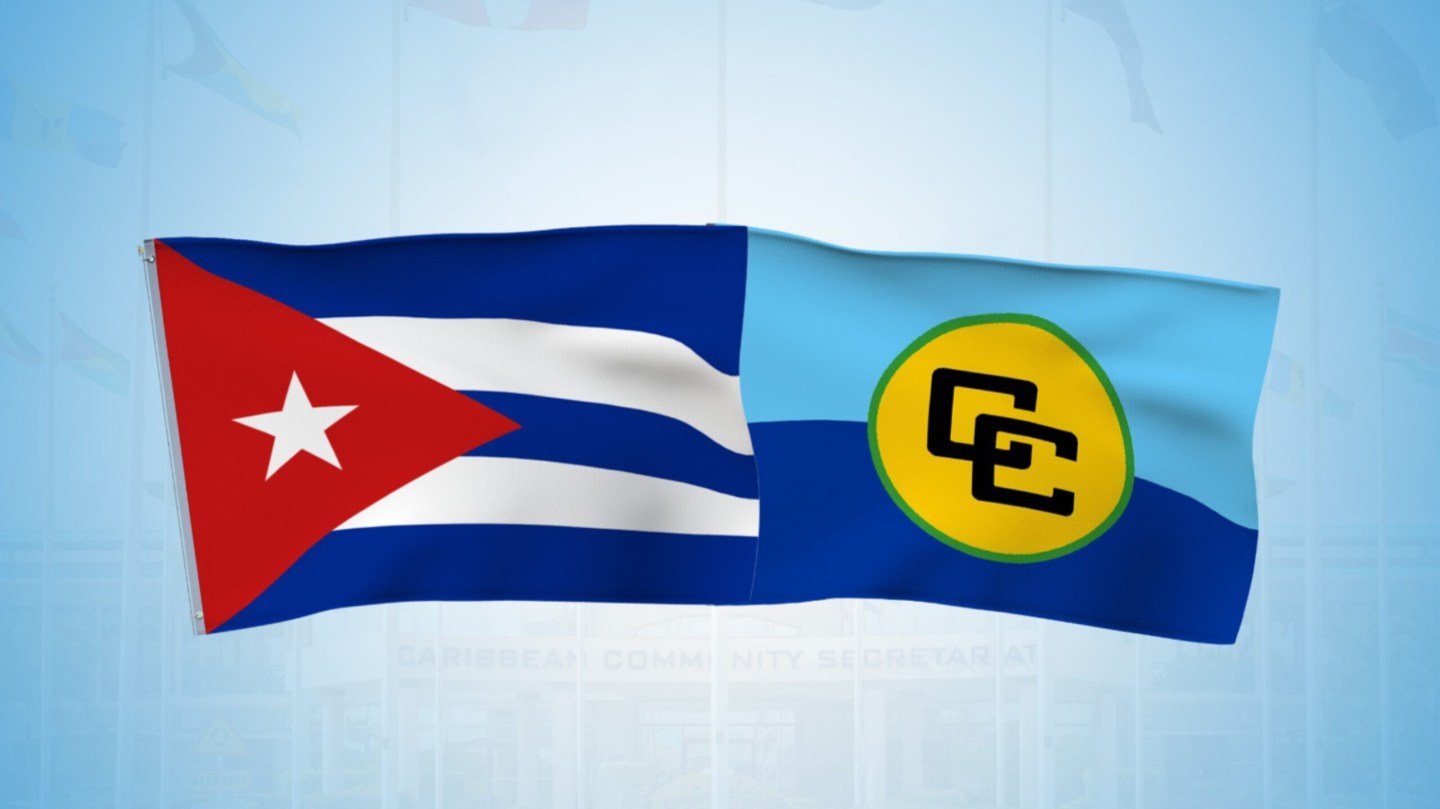
The broader Caribbean Community (CARICOM) and Cuba have built a relationship that is a model of South-South cooperation — one that centers shared needs rather than dominance. Through educational exchanges, technical assistance, and medical support, Cuba has played a role in advancing public health and human capital throughout the region. Caribbean leaders have often rebuffed attempts by Washington to delegitimize this cooperation, including claims that Cuban doctors represent “forced labor”, labeling such assertions as politically motivated and disconnected from the reality on the ground.
Cuban medical personnel in the Caribbean
Cuba has long deployed health professionals across CARICOM nations, strengthening healthcare capacity in countries with limited access to services. Region-wide, Cuban doctors, nurses and technicians number in the thousands, supporting hospitals, clinics, and public health efforts.
In SVG, Cuban medical professionals have been stationed since 1998, integrated into the local health workforce and providing clinical services and support — especially during emergencies such as hurricanes and the COVID-19 pandemic. This cooperation is publicly recognized by SVG leaders as essential to local health outcomes.
Scholarships and Higher Education
Cuba has offered scholarships to Caribbean students for decades, especially in health and technical fields.
Across the Caribbean, hundreds of students graduate from Cuban universities each year, contributing to national capacities in medicine, engineering, and public health.
For the 2023/24 and 2024/25 academic years, the Government of Cuba granted 38 scholarships to students from Saint Vincent and the Grenadines to study in Cuba. These cover key areas including Medicine, Postgraduate medical studies, Stomatology/dentistry, Nursing, Engineering, Health technology and some other non-medical careers.
This generous and sincere assistance reflects Cuba’s continued commitment to Vincentian education and development; despite the challenges the island faces as a result of the US unilateral coercive measures.
Over the years, more than 300 Vincentians have benefited from Cuban scholarships, many of whom returned home to work in essential sectors including healthcare and education.
Technical cooperation beyond health
Cuba’s cooperation with SVG has expanded beyond healthcare and education into technical support. For example, Cuban engineers have participated in development projects related to Argyle International Airport expansion and modernization, illustrating the diversification of bilateral engagement.
In 2023, SVG and Cuba signed a Memorandum of Understanding (MOU) to strengthen cooperation in tourism and hospitality training, further broadening opportunities for professional development among Vincentians. As a result of that MOU, Cuban experts travelled to SVG in 2025, where they conducted several workshops that contributed to capacity-building programs within the sector.
These cooperative exchanges have been part of South-South cooperation frameworks that emphasize mutual support among developing states.

Contrast with U.S. policy: Hostility and the blockade
This narrative of partnership clashes sharply with the U.S. approach to Cuba. Since 1960, the United States has maintained a comprehensive economic and trade blockade aimed at isolating Cuba economically and politically and at provoking a regime change in the island. What began during the Cold War has endured for over six decades and has been criticized internationally — including at the United Nations General Assembly, where most of the world repeatedly votes to condemn this nonsense and genocidal unilateral policy.
More recent U.S. measures have an even harsher tone. Under current policy, Washington has sought to restrict oil supplies to Cuba through tariffs and pressures on third-party suppliers, contributing to energy crises on the island. Public health services and essential sectors are increasingly strained under these conditions and the Cuban families are literally suffering from scarcity in many aspects, such as food and medicines supplies.
Moreover, U.S. actions such as visa restrictions aimed at governments that cooperate with Cuba’s medical missions have been met with resistance from Caribbean leaders who see these tactics as intrusive and punitive.
The difference between Cuba’s approach and that of the United States reflects more than policy disagreements — it highlights fundamentally different visions for international relations. Cuba and the Caribbean, for all their imperfections, have pursued relationships based on mutual respect and shared development goals.
Washington’s blockade, by contrast, is rooted in coercion and political leverage, which is again, illegal and criminal.
In an era of renewed geopolitical tension, the relationship between Cuba and the Caribbean remains a testament to the power of solidarity in the face of adversity. Despite enduring external pressure, these partnerships reflect enduring respect and common purpose.
The world would benefit from focusing not on confrontation but on dialogue, shared prosperity, and human dignity — values that have long defined Cuba’s ties with its Caribbean neighbors.
END
Opinion pieces can be sent to us at onenewsstvincent@gmail.com.
The editor recommends a maximum of 600-800 words per article.




 One News SVG