

The views expressed herein are solely those of the writer.
By The Hub Collective Inc.
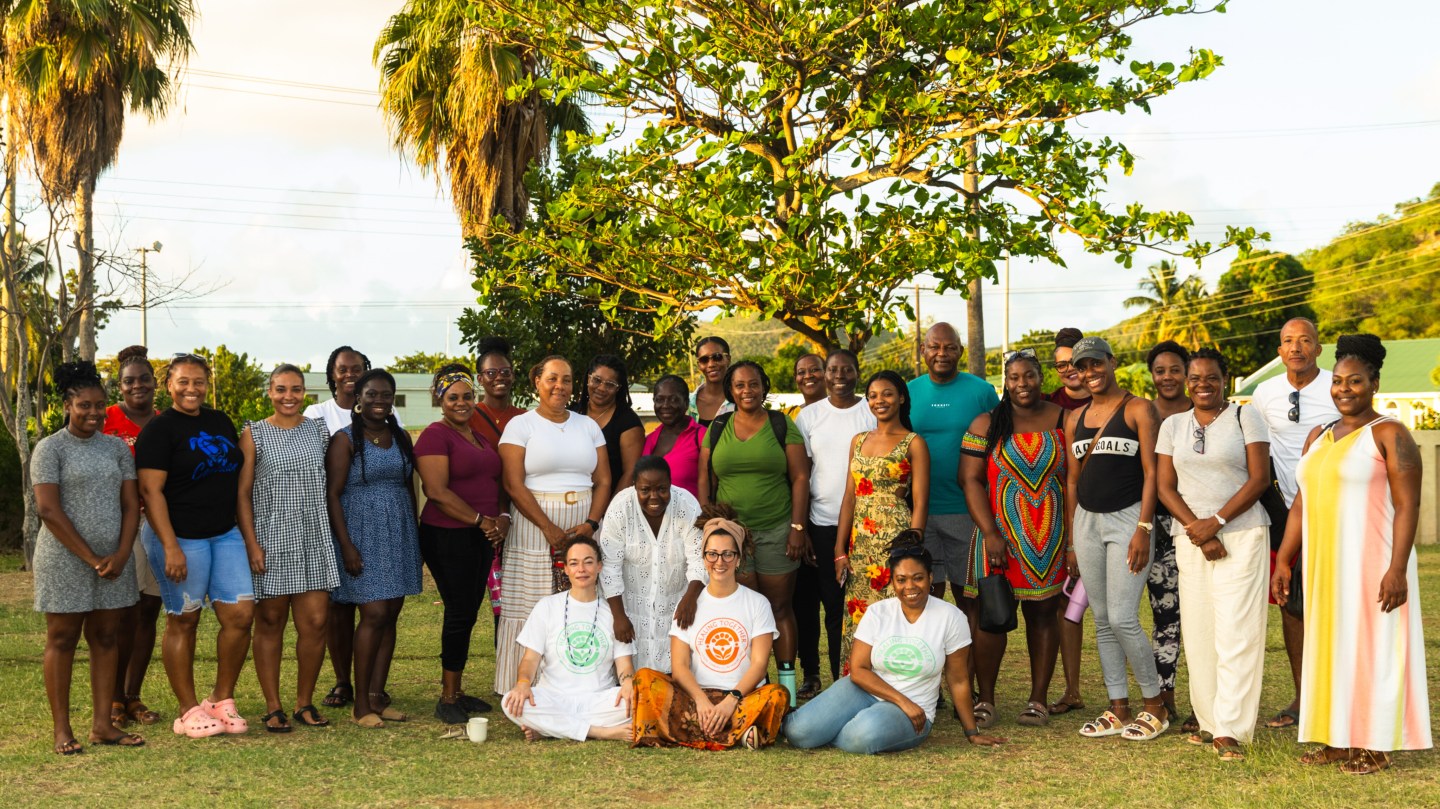
Over the past six months, communities across Saint Vincent and the Grenadines have been gathering in spaces shaped by honesty, care, and collective reflection. Led by The Hub Collective Inc. in partnership with MindTHRIVE Co., the Healing Together initiative has created culturally grounded environments where participants can explore emotional resilience, psychological first aid, and community-led healing practices. Emerging in response to a series of overlapping crises, including volcanic eruptions, hurricanes, economic strain, and climate anxiety, the programme recognises that recovery is not only structural but deeply relational.
Through psychological first aid training, nature-based and somatic workshops, one-on-one counselling, and collective dialogue, Healing Together has connected first responders, educators, community leaders, and the general public across four Grenadine islands. This work has been funded by Sol Relief and the Canada Fund for Local Initiatives, with the continuation of one-on-one counselling sessions made possible by the Grenadines Initiative. Their USD $6,000 contribution will strengthen access to professional care.
In this interview with the Grenadines Initiative, The Hub Collective reflects on the motivations behind the initiative, the needs shaping its approach, and the lessons emerging from moments of vulnerability and shared growth. Their insights offer a glimpse into how grassroots leadership, cultural knowledge, and collective presence are helping redefine what healing can look like in a Caribbean context.

Grenadines Initiative: For those new to this, what is the work that you’re doing, and what is your core mission?
The Hub Collective: The Hub Collective is a community-rooted nonprofit based in Bequia, Saint Vincent and the Grenadines. Founded in 2017 by artists, entrepreneurs, and social activists, it emerged from a shared recognition of the need for creative, healing-centred, and environmentally-conscious spaces for youth and communities across the Grenadines. The organisation strengthens intergenerational connection, preserves cultural heritage, and advances climate resilience through creative expression, ecological stewardship, and collective care. Working at the intersection of the arts, healing, and the environment, The Hub Collective fosters creative confidence and supports equitable, place-based transformation grounded in local knowledge, collaboration, and long-term community well-being.
Healing Together is a community-based psychosocial support initiative led by The Hub Collective Inc. in partnership with MindTHRIVE Co. It was created in response to the compounded and layered traumas affecting communities across St. Vincent and the Grenadines. The initiative provides safe, culturally grounded spaces where individuals can process grief, stress, and uncertainty while building practical resilience tools. Through workshops, creative practices, and access to one-on-one therapy, Healing Together strengthens emotional literacy and collective care. Rooted in Caribbean traditions of storytelling, gathering, and intergenerational exchange, the programme recognises that recovery is relational. Healing Together supports communities to rebuild trust, agency, and well-being from the inside out.
Grenadines Initiative: What needs did you see that have inspired/shaped your approach?
The Hub Collective: Our approach to Healing Together was shaped by a long awareness of the layered pressures facing communities in Saint Vincent and the Grenadines. First, we recognised how the post-colonial condition continues to place strain on mental health, particularly for young people navigating limited social services and shifting economic realities. Over time, we witnessed increasing emotional fatigue, anxiety, and disconnection within our communities. This was intensified by a series of overlapping crises, including the 2021 La Soufrière eruptions, the COVID-19 pandemic, and the devastating impacts of Hurricane Beryl. Together, these events created a polycrisis that deeply affected confidence, stability, and a sense of collective well-being. Prior to the genesis of Healing Together, we had already been reflecting on how to design programming that could respond to these realities (e.g., Reversing Scarcities of the Mind and Spirit (2021-23) and Creative Recovery Summer Camp (2021-23)). Our aim became to create accessible tools, safe spaces, and culturally grounded practices that support resilience, strengthen community expression, and help people navigate ongoing social and environmental change.

Grenadines Initiative: Who are the primary participants?
The Hub Collective: The primary participants in Healing Together are first responders and community leaders who play essential roles in supporting others’ well-being. This includes teachers, nurses, police officers, fire service personnel, local organisers, and individuals connected to nonprofit or community-based organisations. We also welcome those who may not hold formal titles but who are actively holding space within their communities, whether through mentorship, advocacy, or strategic thinking. The project is designed to be inclusive and responsive, creating opportunities for anyone who feels called to deepen their capacity for care, leadership, and personal growth. By bringing together people who are already engaged in service, Healing Together strengthens networks of support and equips participants with tools that can ripple outward into families, workplaces, and the wider social landscape.
Grenadines Initiative: What are some of the most pressing challenges you’re seeing?
The Hub Collective: What we are witnessing is rooted in chronic and layered trauma, the pervasive presence of violence in its many forms, and a profound, collective experience of grief. These realities shape the emotional and social landscape of our communities, influencing how people relate to themselves, to each other, and to the future. Rather than isolated issues, they are interconnected conditions that require compassionate, trauma-informed, and culturally-grounded responses that prioritise healing, safety, and long-term resilience.
We are also concerned about the visible withdrawal of men from cultural and social spaces, which affects intergenerational connection and collective well-being. It is worth noting that 17.5% of our participants have been men since the initiative’s inception. At the same time, many people struggle to fully express themselves or commit to their emotional and psychological development, often due to stigma and limited support systems. The absence of accessible, well-resourced social services continues to reinforce harmful taboos, where mental health is still framed through fear or labelled with derogatory language. Through our work, we aim to shift this narrative by emphasising that mental health is not synonymous with illness, but rather a fundamental part of being human. With greater education, care, and open dialogue, we believe communities can reclaim healthier, more compassionate ways of understanding themselves and each other.
Grenadines Initiative: What role do community relationships and peer support play in healing?
The Hub Collective: Community relationships and peer support sit at the heart of healing because they allow us to stand as witnesses for one another through care, honesty, and accountability. Without these bonds, people often move through life as isolated individuals, a condition intensified by the pressures of late-stage capitalism. By consciously rebuilding networks of trust and mutual support, we strengthen interdependence and create spaces where individuals can speak truthfully about their experiences. This practice is not symbolic. It is a grounded way of living that nurtures sisterhood and brotherhood through shared responsibility, respect, and integrity. Accountability becomes central, guiding how we listen, respond, and grow together. When communities understand their collective needs and challenges, they can organise, strategise, and act with clarity. Through this relational approach, healing becomes a shared process that prepares us not only to face present realities but also to navigate future crises with resilience and collective strength.

Grenadines Initiative: What moments from this work have stayed with you most?
The Hub Collective: One moment that has stayed with us most deeply was our final gathering in Canouan, when an unexpected wave of expressive grief surfaced. Many participants were carrying profound loss, navigating illness and the passing of parents, siblings, friends, and other loved ones without having had adequate space to process these experiences. The depth of emotion revealed how urgently communities need safe, structured environments where grief can be acknowledged and held collectively. We were also struck by how many people spoke about isolation and the difficulty of finding genuine camaraderie or trusted spaces with clear agreements around care and respect. Being welcomed into such raw and vulnerable moments was both humbling and transformative. As facilitators, we were not separate from the process. We, too, were holding our own grief, and the shared environment allowed for mutual healing. These encounters reminded us that healing is embodied and relational, unfolding through honest expression and collective presence.
Grenadines Initiative: How do you measure success?
The Hub Collective: We understand success in both measurable and deeply qualitative ways. On one level, it can be tracked through participation, the number of people reached, and the consistency of engagement across sessions. Our efforts thus far have resulted in offering 14 days of Psychological First Aid training and four somatic and nature-based workshops to a total of 114 participants across the Grenadine islands of Bequia, Canouan, Mayreau and Union Island. Of these participants, 83 have received certificates of completion. We have also published 6 newspaper articles and delivered over 120 one-on-one counselling sessions via our Mental Health Professional Referral Network.
However, the more meaningful indicators of success are often subtle and relational. Success is creating safe, open spaces where individuals feel able to show up as their authentic selves and speak honestly about their experiences. Because the programme is culturally grounded and shaped by the lived conditions of our communities, its impact cannot be defined solely by numbers. It is also reflected in the growing feedback that affirms the urgent need for this work and recognises its role as a platform for collective evolution and healing. When participants continue to return, contribute, and take active steps toward their own transformation, we see this sustained engagement as a powerful measure of success.
Below are a few heartfelt testimonials from participants:
“My heartfelt gratitude to Jessica, Holly, and Kimmette for guiding us through these Healing Together sessions. The focus on psychological first aid over the three days was deeply needed, not only for our community but for me personally. The experience aligned with exactly what I needed, allowing me to reconnect with familiar faces and welcome new ones into a circle of care. The openness, wisdom, and compassion shared helped us grow together in healing.”
“When I walked into the room, I saw unique, powerful women, each fully in her element, breathing life into the space. I kept thinking, “You cannot look like your struggle,” and wondered why not? Being with you reminded me that strength is not only about pushing through, but about truly living who you are. I keep replaying your energy in my mind because I draw strength from authenticity and light. You are all beautifully crafted, and being in your presence was a reminder of grace, power, and purpose. Thank you.”
“Thank you to the Healing Together team for creating a space where many of us could begin or continue our healing. Through this journey, I received additional counselling sessions and want to acknowledge my counsellor. I was hesitant at first, but quickly felt safe, heard, and free from judgment. Choosing yourself is empowering. Cheers to all of us as we continue unlearning and relearning together.”
Grenadines Initiative: What motivates you to do this work?
The Hub Collective: What motivates us most is the depth of the relationships that have formed through this work and the courage participants bring when they choose to show up fully as themselves. We are constantly reminded that many of the needs we are responding to have long existed without adequate attention, which gives us a strong sense of purpose. Healing Together is not only about programmes or workshops. It is about building social and human infrastructure from the ground up, strengthening the emotional and relational fabric of our communities. In a multi-island nation like Saint Vincent and the Grenadines, geography can sometimes create fragmentation, but this work allows us to weave threads of connection across the Grenadines and cultivate a shared sense of belonging.
We are motivated by the understanding that we are not operating in isolation and that the work must remain responsive rather than prescriptive. Participants themselves shape the process, and their willingness to engage deeply inspires us to keep evolving. We believe that services centred on healing, emotional literacy, and community care are essential for any society that hopes to grow in a healthy and sustainable way. There may not always be a traditional return on investment, yet when people feel supported and empowered, the impact returns tenfold through increased confidence, collaboration, and compassion.
Seeing individuals move through grief, vulnerability, and transformation is profoundly grounding. It reminds us to reflect on our own systems and to remain rooted in what is true for our cultural context rather than chasing external trends. Ultimately, what sustains us is witnessing people reclaim their agency, reconnect with one another, and contribute to a collective future shaped by care, integrity, and shared humanity.
Grenadines Initiative: Who has funded this work to date and in what capacity?
Sol Relief, the Canada Fund for Local Initiatives (CFLI), and the Grenadines Initiative have supported this work in complementary ways. Sol Relief helped seed early trauma-informed programming and counselling pathways in the Pilot Phase that shaped the Healing Together model. CFLI provided primary programme funding to expand workshops, therapy access, and community resilience activities across the Grenadines. The Grenadines Initiative specifically supported the provision of one-on-one therapy sessions, thereby strengthening participants’ access to individual mental health care.
Grenadines Initiative: How can readers, partners, or supporters contribute meaningfully to this work?
The Hub Collective: Readers, partners, and supporters can contribute meaningfully to this work in several ways. First and foremost, continued fundraising and financial support are essential to ensuring that Healing Together can grow sustainably and reach more communities across the Grenadines and the wider country. Those connected to donor networks or philanthropic spaces can help amplify our efforts by introducing the project to potential funders who believe in community-centred healing. Supporters can also follow and share our ongoing work through Facebook and Instagram, where we actively document the programme’s impact and invite wider participation.
Equally important is advocacy. As our national landscape evolves, we hope that the government of St. Vincent and the Grenadines, decision-makers, and public institutions will recognise the value of this work and invest in it over a sustained period of time as a vital form of social infrastructure. Building relationships with individuals who wield economic, social, and cultural influence can strengthen Healing Together’s foundation and expand its reach. Beyond funding, meaningful contributions also come through solidarity, collaboration, and spreading awareness. As more people engage with and believe in this vision, we move closer to a future where Healing Together can stand on its own and continue nurturing collective wellbeing.
—
As this series closes, we invite Vincentians to reflect on the kind of society we want to build together. Healing cannot remain the work of a few. It asks for community participation, accountability, and a shared commitment to emotional well-being. We encourage readers to show up, support local initiatives, and take this work seriously as part of our collective future. Stronger, more compassionate communities begin when each of us chooses to engage with care and intention.
—
About the organisations
The Grenadines Initiative is a non-profit, non-denominational charity dedicated to providing social, educational, and medical assistance to individuals and charitable organisations. It focuses on supporting access to quality education to build community, ease poverty and social pressures, enhance equality, and support agency through asset-based community development. The initiative offers various programs, including tutoring, scholarships, and wellness initiatives, to improve educational outcomes and support the community. It is a registered charity in Canada and has partnerships with other organisations based in Bequia, St. Vincent and the Grenadines.
The Hub Collective (The Hub) is a community-rooted nonprofit based in Bequia, Saint Vincent and the Grenadines. Founded in 2017 by a group of artists, entrepreneurs, and social activists, The Hub was born from a deep awareness of the urgent need for creative, healing-centred, and environmentally conscious spaces for youth and communities in the Grenadines. Our mission is to strengthen intergenerational connection, preserve cultural heritage, and build climate resilience through creative expression, ecological stewardship, and collective care. The Hub works at the powerful intersection of Arts, Healing, and the Environment to ignite creative confidence and drive equitable, place-based transformation.
The Canada Fund for Local Initiatives (CFLI) is a funding program designed and run by the Government of Canada to support small-scale, high-impact projects in developing countries. It is managed by Canadian embassies and high commissions, aiming to strengthen local partnerships and promote bilateral relations.
END
Opinion pieces can be sent to us at onenewsstvincent@gmail.com.
The editor recommends a maximum of 600-800 words per article.


 One News SVG