

By Val Matthias. Updated 2:51 p.m., Tuesday, March 3, 2026, Atlantic Standard Time (GMT-4).
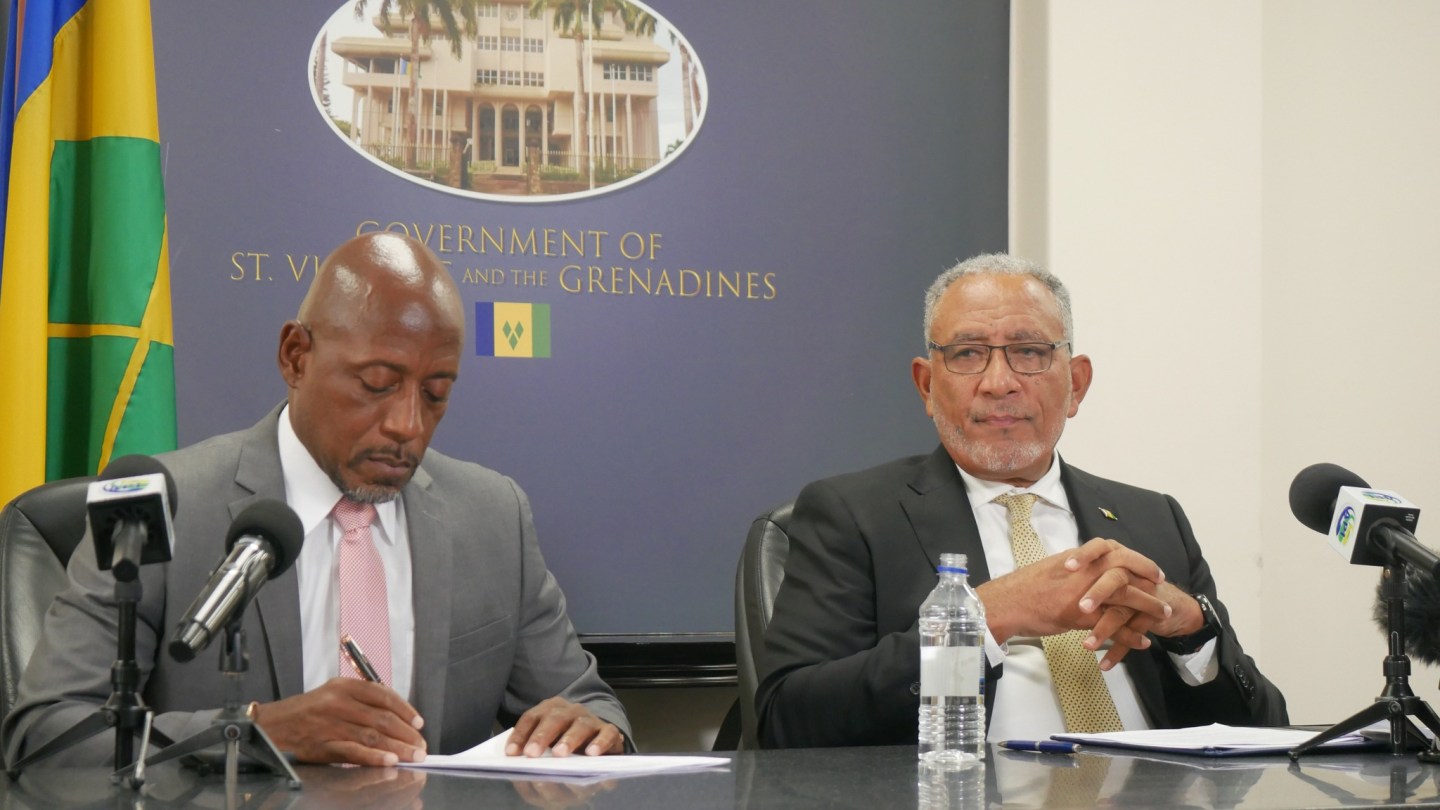
Prime Minister Dr. Godwin Friday has insisted that St. Vincent and the Grenadines will only consider participating in a U.S. migrant transit programme if strict safeguards are in place.
Speaking at a press conference after the 50th Regular Meeting of CARICOM Heads of Government, Dr. Friday said Washington has asked regional governments to accept third country nationals deported from the United States and to serve as transit points for migrants intercepted at the southern border.
Dr. Friday explained that discussions with U.S. Secretary of State Marco Rubio and embassy officials centred on proposals to use Organization of Eastern Caribbean States (OECS) countries, including St. Vincent and the Grenadines, as temporary holding locations. He emphasised that any such arrangement must be “clearly defined, transparent, and manageable” for small island developing states.

Among the conditions outlined were, clear data on the volume of migrants expected in transit. , defined timeframes for how long individuals would remain on Vincentian soil, clarification of the legal status of migrants while in transit, safeguards and contingency plans for individuals who cannot be repatriated Protocols to address domestic political and social sensitivities.
“These are matters that have been of concern to all members of CARICOM, not just the OECS countries,” Dr. Friday said.

However, Opposition Leader Dr. Ralph Gonsalves has taken a harder line, urging the government to reject Washington’s request outright. Speaking on Star Radio in January, Gonsalves said St. Vincent and the Grenadines and other CARICOM states should “tell the U.S. no to refugees and deportees,” warning that such arrangements could pose serious national security risks. He criticised the government for appearing open to technical discussions, arguing that even small numbers of migrants could create cumulative challenges over time.
The United States has been pressing Caribbean nations to assist in managing migration flows, particularly amid record arrivals at its southern border. While CARICOM leaders have signalled willingness to engage, the sharp contrast between Dr. Friday’s cautious openness and Dr. Gonsalves’ outright rejection highlights the political sensitivities surrounding the issue in St. Vincent and the Grenadines and the wider region.
END


 One News SVG