

By Val Matthias. Updated 5:24 p.m., Wednesday, March 4, 2026, Atlantic Standard Time (GMT-4).
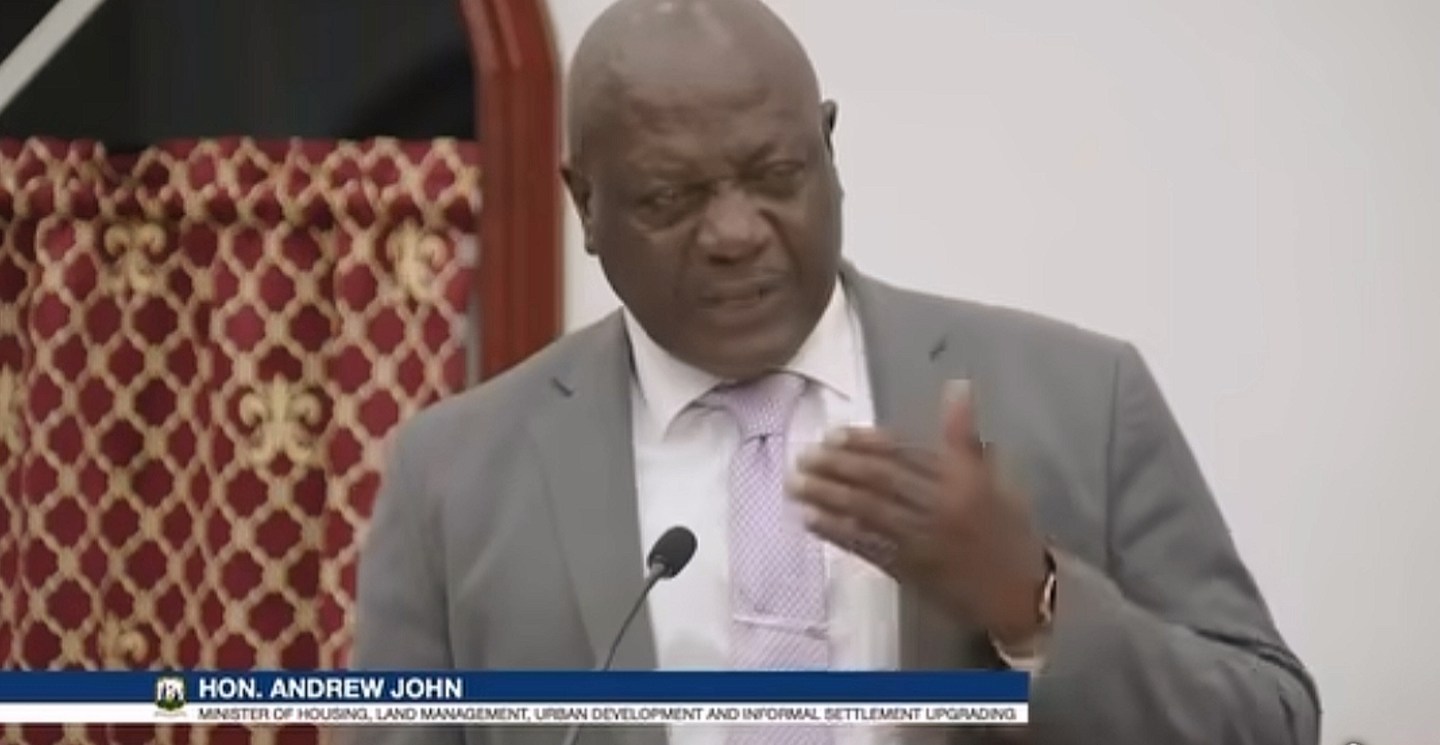
The Minister of Housing, Land Development, Urban Development and Informal Settlement Upgrading Andrew John, has disclosed that a review of the official housing displacement list in the Southern Grenadines uncovered cases where families already living in homes were still being counted as displaced.
“When we initially took office, there were up to 700 families listed as displaced,” Minister John said during a radio interview. “But what we observed, we were able to cut that in two, right down the middle. A lot of those persons had homes already in some of the other places, but they were being accommodated for whatever reason. It had a lot to do with politics.”
The minister explained that the list was compiled through collaboration between the Ministry of Housing, NEMO, Mobilisation, and National Security. Following the review, the number of families still displaced has been reduced to about 300, with approximately 270 continuing to receive rental support through government programmes.

Minister John criticised what he described as “pussyfooting” and politically motivated delays under the previous administration, which he said left many residents in tents on Union Island and Mayreau or in unfinished homes. He pledged that the new government would place the Southern Grenadines “on the front burner” of its housing agenda.
To accelerate recovery, the ministry has outlined several initiatives, which include reopening warehouses in Union Island and Bequia to distribute building materials more efficiently; local assessments led by community representatives to identify urgent needs; partnerships with sponsors and the Red Cross, who have pledged windows and doors for 200 homes; World Bank support, with funds being reallocated to assist housing recovery; and Saudi Fund financing, which the Minister said could provide up to 200 new homes once finalised.
Minister John emphasised that many homes were left incomplete, with only roofs installed, and assured residents that shipments of materials would resume shortly to finish construction. “The people have already waited long enough,” he said.

Hurricane Beryl devastated the Southern Grenadines two years ago, leaving hundreds of families displaced. While some repairs were initiated, progress stalled, and many residents remained in temporary shelters or unfinished houses.
The new administration has pledged to regularise informal settlements, improve housing infrastructure, and ensure that affected families can return to safe and permanent homes.
END



 One News SVG