
The views expressed herein are solely those of the writer and do not necessarily reflect the views of One News SVG.
Reform UK promises to suspend visas and withhold aid to countries that demand reparation, if elected: A Sober Response
In March of this year, the UN voted to recognise the trafficking and enslavement of Africans as ‘gravest crime against humanity’ and called for reparations to address the legacies of this crime. Not all states, however, saw the value in voting in favour of this non-binding resolution. As expected, the United States, Israel and Argentina voted against the resolution, while several others, primarily European states, abstained from voting.
On 7 April, Reform UK’s (a far-right political party, characterised by its ‘anti-everything decent’ stance – anti-immigration, anti-European Union, anti-Islam, anti-EDI) Home Affairs Spokesperson, Zia Yusuf (whose parents were Sri Lankan Muslims who emigrated to the UK in the early 1980s), issued a chilling warning that Reform UK, if elected, would stop the issuance of visas to citizens from any country that demands reparation from the UK for its role in the transatlantic slave trade.
Mr. Yusuf gave several reasons for his party taking this hard-line stance, and I hope to respond to each of these as respectfully as I could. First, he argues that the very call for reparations is ‘insulting’. What Mr. Yusuf failed to state, however, is that the UK, and, indeed, many of the other European nations that engaged in slavery, have never apologised for slavery, offering only ‘regret’ for their role in the transatlantic slave trade. Is the failure to offer even an apology for the greatest crime against humanity not ‘insulting’? Even more, is it not ‘insulting’ for African peoples who endured the gravest injustice of all time to not receive (even posthumously) formal recognition for having been:
• treated as property, not humans; bought, sold, and traded, denied their names, the use of their languages, religion, and cultural identity?
• thrown overboard when resources became scarce, and the subject of insurance claims by slave traders?
• brutally killed often with no legal consequences?
• routinely beaten, whipped, and mutilated?
• frequently subjected to rape and other forms of sexual exploitation, including forced breeding?
• forced to work long hours (often from sunrise to sunset or longer) under extreme heat, little rest, and poor nutrition?
• forcibly separated from husbands, wives, and children?
• forbidden from learning to read or write?
• forced to live in constant fear, humiliation, and control?
Is it not ‘insulting’ that the descendants of these peoplehave had to:
• carry in their very DNA the tangible evidence of the rapes committed against their ancestors?
• start building from the ground up with no property, no money, no social capital and no institutions to work with after the pillaging formally ended?
• endure a range of non-communicable diseases owing to poor nutrition and poor healthcare facilities as legacies of slavery and colonialism?
• maintain a sense of self-worth amidst the destruction of their cultural, religious and linguistic identity owing to rampant racism?
• constantly receive threats of visa suspensions and the withdrawal of foreign aid?
Second, Mr. Yusuf lamented the fact that the UK issued3.8million visas to the nationals of states that seek reparation and these states have received over £6.6billion in foreign aid over the last two decades. To implicitly suggest that visas and foreign aid somehow obviate the need for reparations is narcissistic at best, and violently innocent at worst. As a preliminary point, the nationals of states that seek reparation did not obtain these visas as of right; they have had to cross significant evidential hurdles (including showing clean criminal records and enough financial resources to support their stay) to obtain visas. In any event, nationals of states that seek reparation represent only a small fraction of persons seeking British visas; by far, significantly more visas are issued to nationals of China, Turkey and Saudi Arabia, countries that are not seeking reparation from the UK.
On the question of foreign aid, Mr. Yusuf, who holds a BSc in International Relations from LSE, should know that both former colonial and non-colonial powers give aid, and that aid is not in and of itself reparation for harms inflicted. In fact, in most cases, foreign aid is offered by wealthier countries as part of their commitment to international comity, the principles of ethical humanitarianism, and diplomatic soft power. Indeed, anyone with an International Relations degree would know that hegemony works best when a powerful state is able to dangle the proverbial carrot before the gazing eyes of less powerful states. In any event, a number of countries with no colonial ties to the UK andtherefore no claims for reparation receive significantly more aid from the UK, including Ukraine (£270m), Afghanistan (£192m), Ethiopia (£182m) and Syria (£159m). More crudely, the £6.6 billion in foreign aid, even if it were to be treated as reparations payment, as a percentage, represent approximately 0.0367% of the £18 trillion owed in reparations. Ultimately, the rhetoric of visas and foreign aid strikes a chord with Christopher Bollas’s ‘violent innocence’ theory, which argues that those who inflict the greatest injustices on others are often the ones to be most fixed and obdurate in their denial of unsettling aspects of their actions, while projecting guilt onto the ‘Other’, as a defencemechanism to protect a self-image of being ‘all good’.
Third, Yusuf contends that countries that demand reparations have ignored the fact that ‘Britain made huge sacrifices to be the first major power to outlaw slavery and enforce this prohibition.’ Not only is this claim only partly true, but its implications are deeply unsettling. Indeed, it must be remembered that no one forced Britain, a major power, to make slavery legal in the first place; it was a political and economic decision to racialise African peoples, and then pass laws (including the infamous Slave Codes) to treat them as property. To thus suggest that passing laws to end slavery after having introduced those laws in the first place justifies not making reparation is intellectually feeble at best, and morally bankrupt at worst. It goes without saying, by parity of reasoning, that a person who starts a fire and then pours water on it after it has all but destroyed everything in its path does not escape liability because he decides to put out the fire. If Nazi Germanyhad ended the Holocaust and not the Allied Forces, would Mr. Yusuf have been emboldened to argue today that Nazi Germany owed no reparations? I think not. So, why does he feel emboldened to argue that because Britain contributed to ending slavery after legitimising the institution of slavery in the first place it should be absolved from making reparations to the descendants of formerly enslaved people? Suffice it to say, the argument that ‘Britain made huge sacrifices’ to end slavery, without recognising local resistance in this connection, fundamentally trivialises and marginalises the sterling efforts made by enslaved people, many of whom were killed in the process, to end slavery, including the Maroon Rebellion (Jamaica), Bussa’s Rebellion (Barbados), and the Berbice Rebellion (Guyana).
Finally, Mr Yusuf argues that the ‘bank is closed and the door is locked’ for countries that want to ‘use history as a weapon to drain our treasury’. Again, Mr. Yusuf shows great intellectual dishonesty in his effort to satiate his populist agenda. First, reparation for slavery has never been about just monetary compensation. Indeed, CARICOM’s ten-point reparations plan has always emphasised, inter alia, a full formal apology, recalibrating cultural institutions, addressing the public health crisis, ameliorating illiteracy, and psychologicalrehabilitation. And even where monetary compensation is rightly added to the mix, let’s not forget that no amount of compensation can substitute for the millions of African lives lost during the slave trade.
Relatedly, Mr. Yusuf fails to appreciate that many of the same banks that he identifies as now being ‘closed’ (Barclays, HSBC and Lloyds, etc) were among the UK banks that had strong links to slavery. Many of these banks had directors that owned slaves, gave loans and other support to plantation owners, and received and capitalised on the proceeds of slavery.
Meanwhile, on the question of reparations being a ‘weapon to drain our treasury’, may I remind Mr. Yusuf that it was the Slave Compensation Act 1837 which awarded roughly £20 million (around £16.5bn–£18tn today) to around 3,000 plantation owners, not the enslaved. This payout, totalling 40% of the Treasury’s annual budget at the time, was paid out for the loss of ‘property’, with the loan finalized only in 2015. Let thatsink in; up to 2015, the UK was structurally complicit in a continuing legitimisation of slavery through reparations payments to plantation owners, yet 11 years later, Mr. Yusuf has the audacity to claim that ‘The United Kingdom is not an ATM for ethnic grievances of the past.’
To conclude, while there are arguments to the effect that slavery was lawful at the time and therefore the UK bears no responsibility for same, it is important to remember what one of the progenitors of international law, Thomas Acquinas, in the 1300s, said about unjust laws: ‘an unjust law is no law at all (Latin: lex iniusta non est lex). The Slave Codes, in accordance with Acquinas’s analysis, would therefore have been fundamentally illegitimate laws, as their purpose was not for the common good, and their burden was not equal and applicable to all. Gustav Radbruch, a German legal philosopher (1878–1949), who developed the Radbruchformula after WWII to address Nazi-era laws, similarly argues that certain laws are illegitimate where they cause an ‘intolerable degree’ of injustice, at which point they become ‘statutory lawlessness’ and cease to be valid law. By all sensible and decent historic and, indeed, modern accounts, the Slave Codes were most certainly ‘statutory lawlessness’, and slavery was not merely ‘ethnic differences’ of the past. It was the greatest crime against humanity the world has seen.
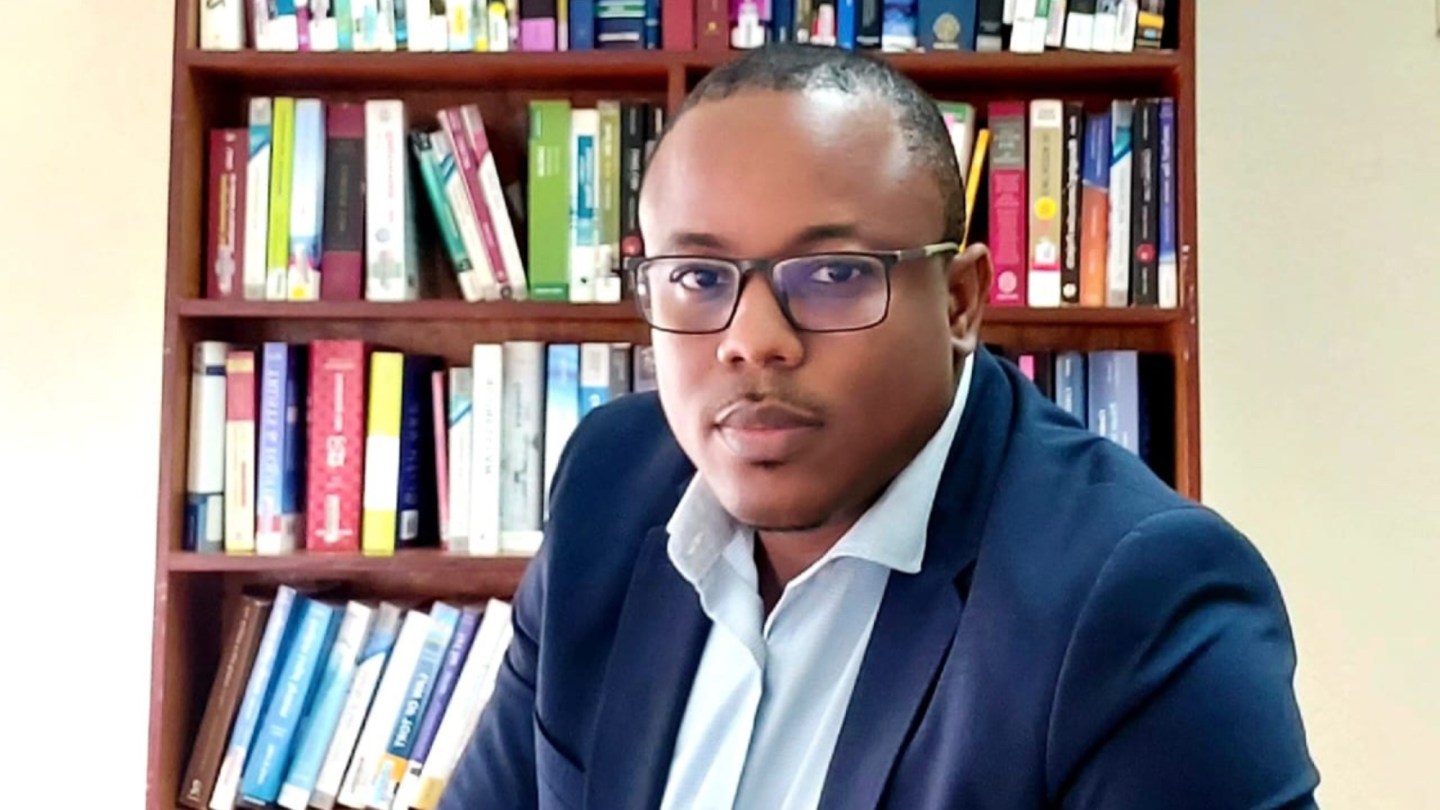
Dr. Jason Haynes holds a Master’s in International Human Rights Law (with Distinction) from the University of Oxford, and a PhD in International Law from Durham University. He is a National Scholar, Chevening Scholar, and Commonwealth Scholar.
 One News SVG