

By S.Browne. Updated 1:30 p.m., Friday, April 10, 2026, Atlantic Standard Time (GMT-4).
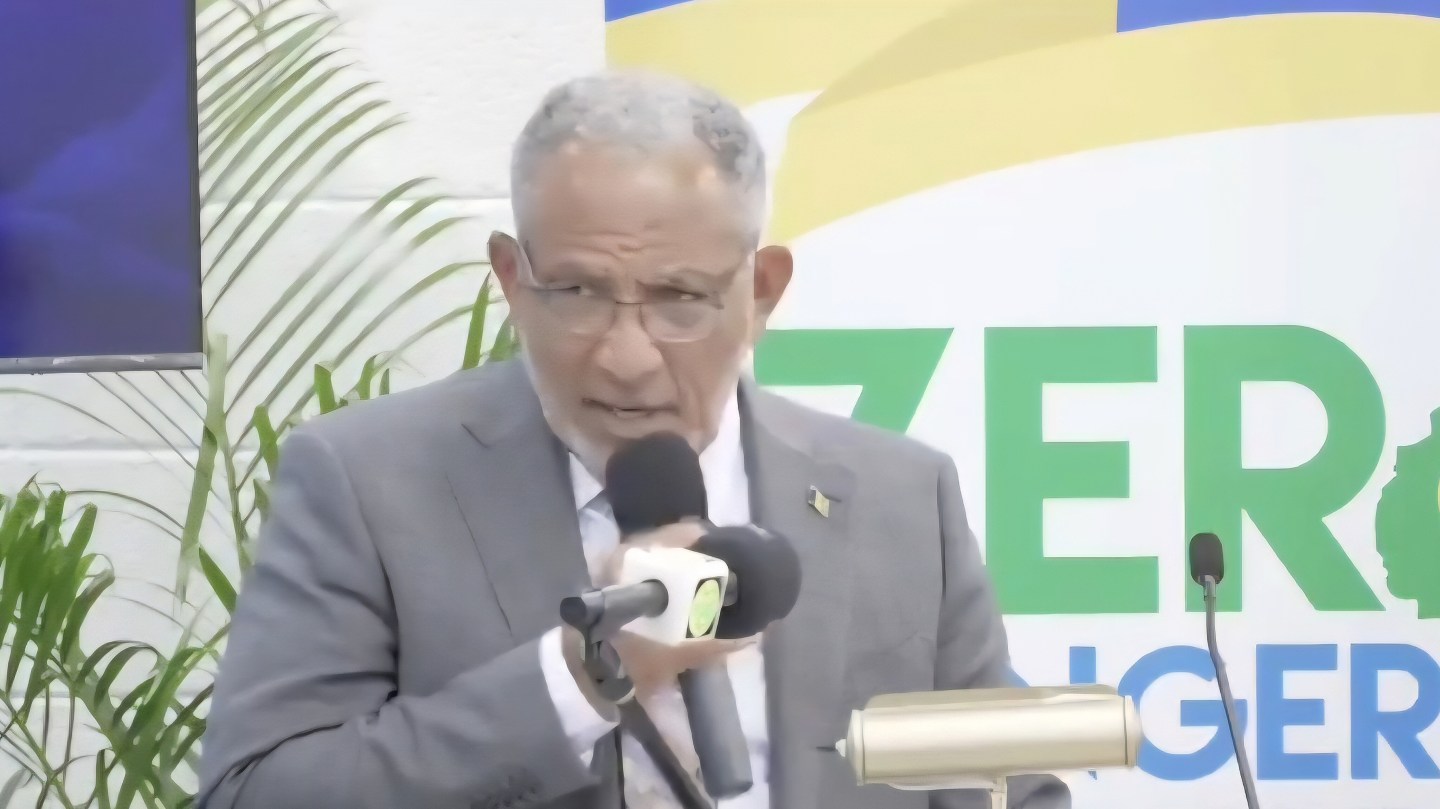
Prime Minister Dr. Godwin Friday has called for a shift in how St. Vincent and the Grenadines approaches food security, urging that the country move from efforts to reduce hunger toward building a system that can sustain long-term stability.
Speaking at the 10th anniversary of the Zero Hunger Trust Fund, held on Thursday, April 9, 2026 at the UWI Global Campus, the Prime Minister said the next decade must be defined not by ongoing intervention, but by achieving and maintaining a reality in which no citizen goes to bed hungry.
While acknowledging the work of the Fund over the past ten years, he pointed to ongoing vulnerabilities, including the country’s heavy reliance on imported food, exposure to global price fluctuations, and the impact of climate-related events on local production. He noted that more than one in three Vincentians lives in or near poverty, making food security closely tied to broader economic conditions.
The Prime Minister emphasised that food security does not exist in isolation, but is linked to employment, income, and national resilience. As such, he outlined the need for a more integrated approach, in which the Zero Hunger Trust Fund becomes part of a wider framework that includes agriculture, education, and social protection.
Central to this approach is improving the connection between farmers and markets. He said that creating reliable systems to link producers with schools, hotels, and businesses would give farmers the confidence to increase production, knowing there is a stable demand for their goods.
The Prime Minister also stressed the importance of strengthening school feeding programmes and encouraging greater engagement with agriculture at the school level. He suggested that involving students in food production can help them better understand where food comes from, while also fostering interest in agriculture as a potential career path.

The Prime Minister further called for increased emphasis on backyard and household food production, noting that past generations relied more heavily on growing their own food. He urged greater support from the Ministry of Agriculture to assist households in this area, particularly through technical guidance and extension services.
Addressing challenges within the agricultural sector, he highlighted the need to tackle issues such as crop theft, improve irrigation systems, and expand access to resources and expertise. These measures, he said, are necessary to rebuild confidence among farmers and ensure sustained production.
He also pointed to ongoing government efforts to address immediate pressures, including financial support for vulnerable households and investments in climate-resilient water infrastructure aimed at improving agricultural productivity.

The Prime Minister urged a shift in mindset across both government and society, emphasising that progress will depend on practical action rather than explanation. “Excuses don’t solve problems. Solutions do,” he said.
He reaffirmed the government’s commitment to ensuring that all citizens have access to nutritious food while positioning food security as a central pillar of the country’s long-term development.
END




 One News SVG