

By S.Browne. Updated 3:57 p.m., Monday, June 22, 2026, Atlantic Standard Time (GMT-4).
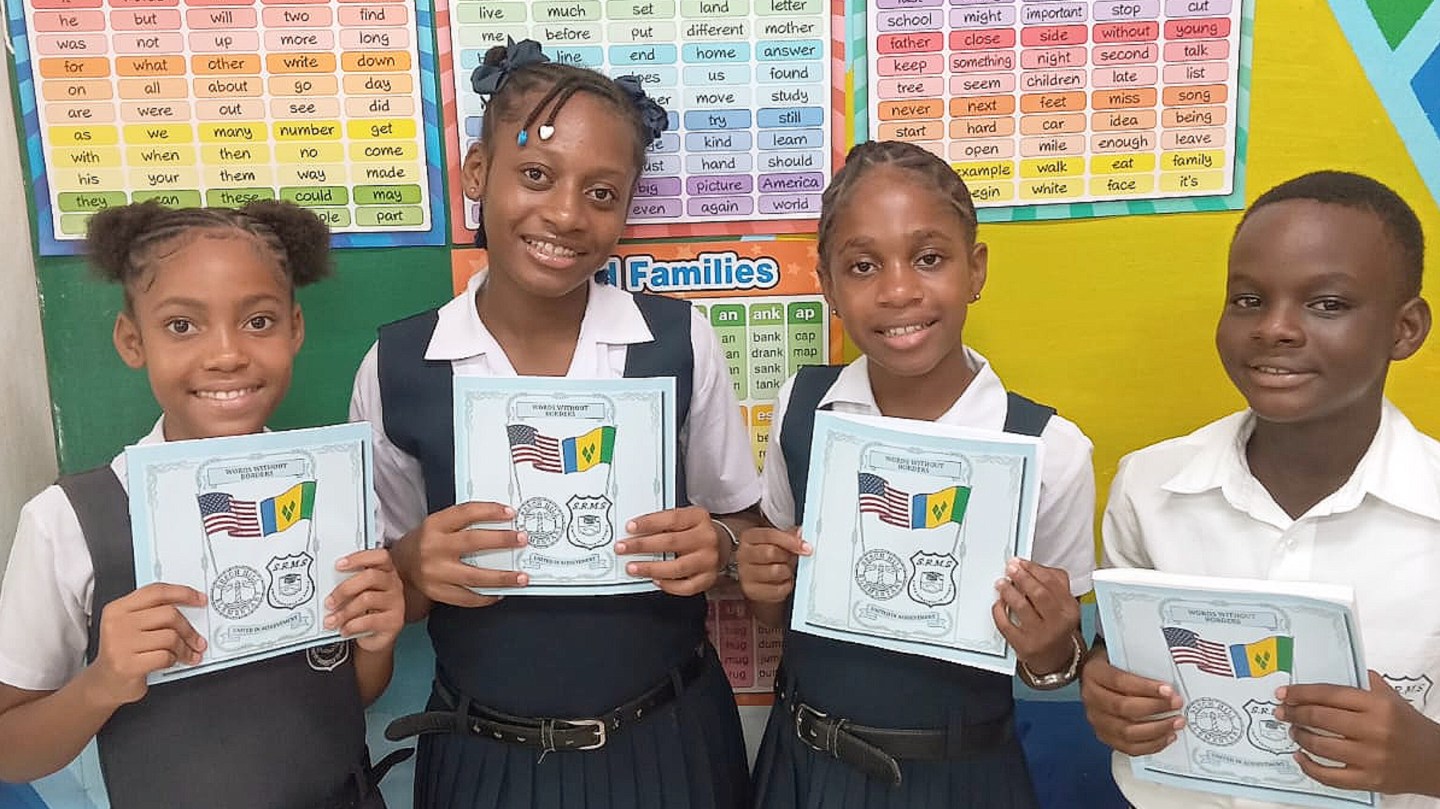
Students at the South Rivers Methodist Primary School have strengthened their literacy skills and broadened their cultural understanding through a pen pal initiative with a school in the United States, culminating in the production of a student-led publication titled Words Without Borders.
The project was developed in collaboration with Beech Hill Elementary School in South Carolina, United States, connecting pupils from both countries through an extended exchange of handwritten letters over several months.
South Rivers Methodist Primary School Principal Roslyn Johnny said the programme was designed to provide students with an authentic audience for their writing while strengthening core literacy skills. She added that the project also responded to the growing dominance of digital communication, with an emphasis on reintroducing more personal and reflective forms of written correspondence.

The initiative was also inspired by previous student-led literacy work, including Little Pens, Big Dreams, produced by pupils of Barrouallie Government School, which highlighted the value of publishing student writing as a tool for motivation and engagement.
According to Johnny, the partnership between the two schools began through a professional connection between teachers who shared a common interest in creating meaningful cross-cultural learning opportunities for students beyond the classroom.
Over several months, students exchanged letters in which they described their daily lives, traditions, and personal experiences. The exchanges encouraged pupils to pay closer attention to language, structure, and expression, knowing their writing would be read by peers in another country.
“The pen pal exchanges gave students a real audience and a real purpose for their writing,” Johnny said.
“They were communicating with friends in another country, and this motivated them to put forward their best effort.”

She added that the initiative had a noticeable impact on students’ confidence and enthusiasm for writing, particularly among those who previously experienced challenges in literacy development.
One of the most memorable exchanges involved students sharing aspects of Vincentian culture, including local expressions such as “Par ya dey” and “me nah know,” which were explained to their counterparts in South Carolina. The exchange sparked curiosity and engagement, highlighting both linguistic diversity and cultural identity.
Students who participated in the programme reflected positively on the experience.
Hailley Small said, “I was able to build a meaningful friendship while learning about a different culture and improving my communication skills.”
Jelani Hackshaw said, “Over the past few months, I was able to learn and appreciate the differences and the similarities of American and Vincentian culture.”
Eliza Cruickshank said, “I would like to thank my pen pals for writing back to me, understanding my culture, and the things I love. In return, I really understood their culture and the things that they liked. This programme has helped me learn about South Carolina, Kazakhstan, and the United States of America.”
Nayeli Williams said, “The pen pal programme was an amazing experience. I made friends with people whom I never thought I would meet and who live more than 1,000 miles away.”
The publication Words Without Borders is intended for both public and educational use. Its target audience includes primary and secondary school students, educators, parents, and individuals interested in literacy development, cultural exchange, and student learning outcomes.
Johnny said the project demonstrates the value of cross-cultural collaboration and the role of literacy in connecting young people across geographical boundaries.
She added that the publication stands as a celebration of student voice, creativity, and the power of communication to bridge cultures and strengthen understanding between communities.
END


 One News SVG