

By Val Matthias. Updated 9:17 a.m., Tuesday, June 9, 2026, Atlantic Standard Time (GMT-4).
A leading Caribbean criminologist has argued that colonial-era systems continue to shape education, policing and corrections across the region, contributing to persistent crime and violence.
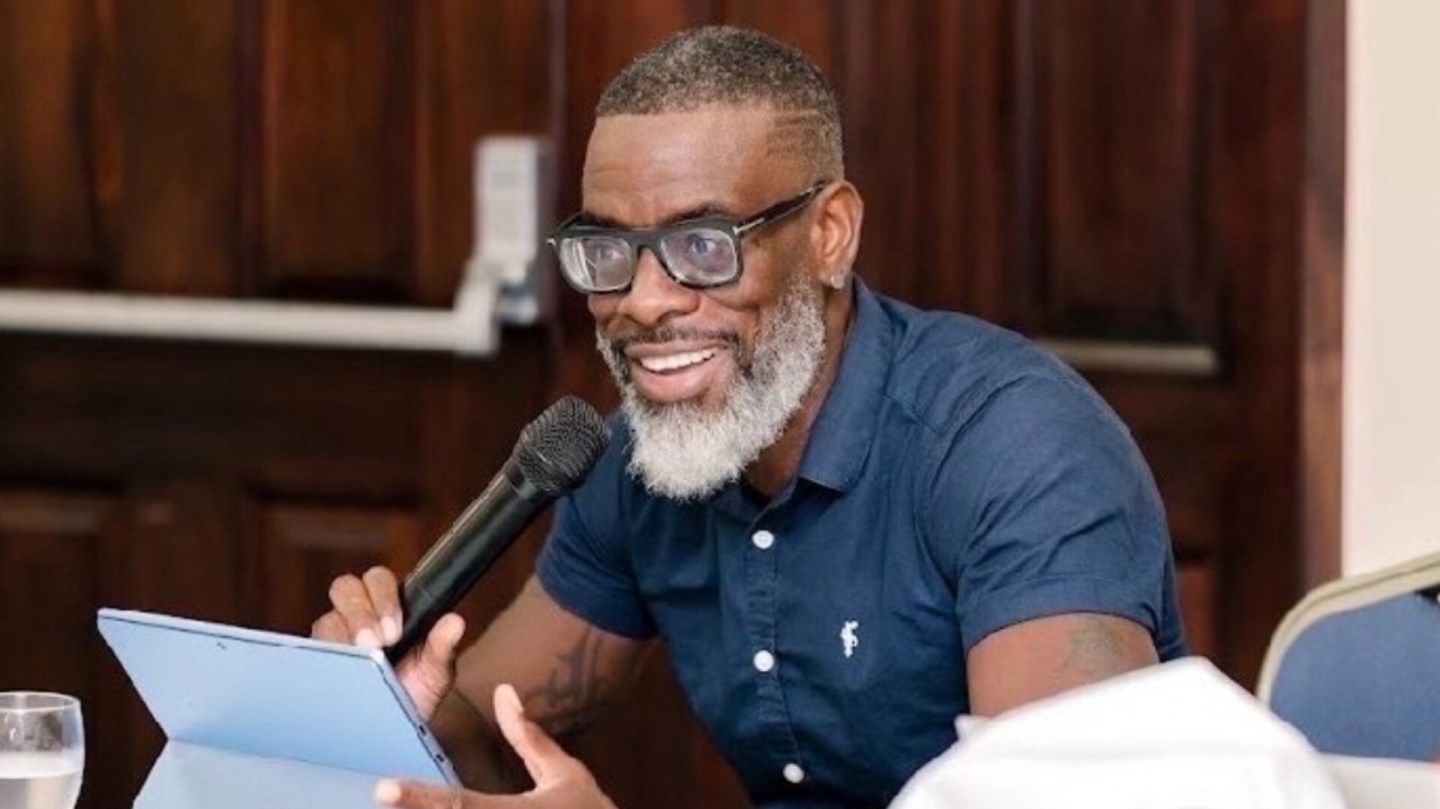
Speaking in his inaugural professorial lecture, Postcolonial Reflections on the Regional Crime Problem, Corin Bailey said Caribbean societies remain significantly affected by their colonial history and warned that continued reliance on systems of exclusion and oppression was undermining efforts to tackle crime.
Professor Bailey, Director of the Centre for Criminal Justice and Security, said structural inequalities embedded within institutions were leaving many vulnerable people excluded from opportunities and increasing their likelihood of coming into contact with the criminal justice system.
He pointed to the education system as one example, arguing that schools often reproduce broader social inequalities.
Using Jamaica as a case study, he highlighted disparities between public and private schools and entry requirements that concentrate top-performing students in a select group of institutions.
According to Professor Bailey, this system disadvantages many capable students from poorer backgrounds, trapping some in cycles of poverty and increasing their risk of becoming involved in crime.

“The post-colonial environment has created fragmentation and exclusion,” he said.
“There are large portions of Caribbean society that have and are being failed by structural inequalities that are embedded within institutions that have been handed down to us by imperial powers.”
The criminologist also criticised what he described as a paramilitary and coercive style of policing in the region.
He argued that this approach, inherited from Britain’s colonial administration, had often deepened tensions between law enforcement and marginalised communities rather than reducing crime.
Professor Bailey rejected the notion that expanding police numbers alone would improve crime detection, saying there was little evidence to support such a link.
Instead, he argued that governments had historically relied too heavily on crime suppression measures while neglecting social approaches to crime prevention.

“My belief is that there has been a historical over-reliance on a security-focused approach,” he said, adding that repeated spikes in crime had often been met with harsher policing despite limited success.
He also criticised the continued use of corporal punishment, describing it as a legacy of British colonial and penal policies.
Professor Bailey said corporal punishment exposed children to social and psychological harms and conflicted with the principles of the United Nations Convention on the Rights of the Child, which has been signed by most English-speaking Caribbean countries.
The academic extended his criticism to prison systems, arguing that harsh punishment and incarceration had failed to deter offending or reduce repeat offending.
“The notion that the harsher the penalty the more positive the impact is an erroneous one,” he said. “If our intention is to prevent crime, then we are doing it wrong.”
Professor Bailey, who was promoted to professor in 2022 following years of research on crime, violence and social inequality, called for a wider regional discussion on alternatives to traditional criminal justice approaches.
An advocate of restorative justice, he said Caribbean countries needed to confront difficult questions about the systems they inherited and whether they were helping or hindering efforts to create safer societies.
He argued that addressing inequality, exclusion and social disadvantage would be essential if the region hoped to make lasting progress in reducing crime and violence.
END
About the Author
This article was written and submitted by freelance journalist Mr. Val Matthias, a trained communicator with more than two decades in the media sector. All supporting materials for this story have been presented, vetted, and verified. Mr Matthias can be reached at valmatthias188@gmail.com.



 One News SVG